
- By Nashtech PEB Team
- May 15, 2026
- 0 Views
What is Rigid Frame Structure?The Backbone of Every PEB Building
When you see a warehouse or a large industrial building the first thing you notice is how big it is. What you might not notice is what is holding the whole building together. The thing that makes the building strong is the frame system. This is especially true for pre engineered buildings. Without the frame system you would not be able to have big open spaces inside the building.
Today a lot of factories, warehouses, manufacturing units are built using rigid frame structures in PEB. This is because industries need buildings that're strong, practical and can handle the work that needs to be done inside them. Rigid frame systems are better than the way of building things, which used a lot of columns and thick concrete. The rigid frame system makes it possible to have open space inside the building and it is more flexible and stronger.
Table of Contents
- What is a Rigid Frame Structure?
- Why Rigid Frame Structures are Important in PEB Buildings
- How a Rigid Frame Works
- Main Components of a Rigid Frame Structure
- Why Rigid Frames are Common in Industrial Buildings
- Difference Between Rigid Frame and Conventional Structures
- Why Rigid Frame Structures are Ideal for Warehouses
- How Rigid Frame Design Improves Structural Efficiency
- Industries Commonly Using Rigid Frame Structures
- Why Future Expansion is Easier in Rigid Frame Buildings
- Common Mistakes in Rigid Frame Planning
- Why Professional Structural Design Matters
- Why Rigid Frame Structures are the Backbone of PEB Buildings
- Future of Rigid Frame Structures in Industrial Construction
- Conclusion
- FAQs
What is a Rigid Frame Structure?
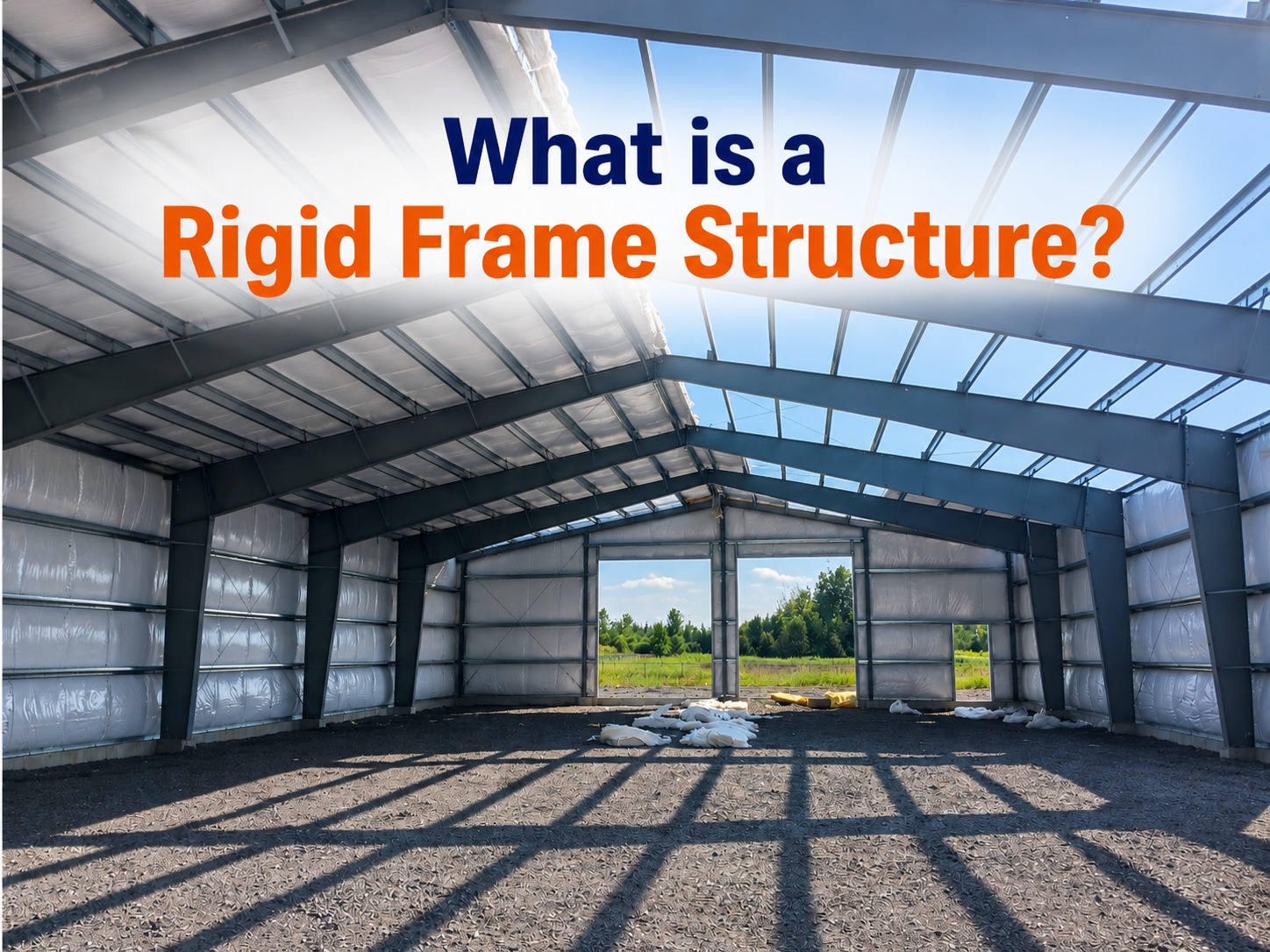
A rigid frame structure is a type of building where the beams and columns work together to support the building to resist loads together as a single unit.
In simple terms, the connections between the structural members are strong enough to transfer bending forces and maintain stability without depending heavily on additional support walls.
In most, rigid frames form the main load-bearing skeleton of the building.
The system generally includes:
- Steel columns
- Rafters or beams
- Rigid beam-column connections
- Base plates and anchor bolts
These components work together to support the building against different types of loads.
Why Rigid Frame Structures are Important in PEB Buildings
A modern industrial building is expected to handle much more than just roof weight.
The structure must support:
- Wind loads
- Roof loads
- Operational loads
- Crane loads in some industries
- Future expansion possibilities
This is why rigid frame design in PEB buildings becomes extremely important.
The rigid frame acts as the primary structural backbone, helping the building remain stable while also allowing larger internal spaces with fewer columns.
Read More: PEB Structures for Automobile Manufacturing Plants in India
How a Rigid Frame Works
In a rigid frame system, the beam and column connections are designed to behave like a continuous structure.
Instead of acting independently, all structural members share the load together.
For example:
When wind pressure acts on one side of the building, the rigid connections help distribute that force through the entire frame system instead of concentrating stress at one point.
This improves:
- Structural stability
- Load distribution
- Building strength
That is why industrial rigid frame structures are widely used in large-span steel buildings.
Main Components of a Rigid Frame Structure
Columns
Columns transfer building loads safely to the foundation.
In most PEB frame structures, steel columns are designed according to building height, span, and operational requirements.
Rafters or Beams
Rafters connect with the columns and support roof loads.
They also play a major role in maintaining the rigidity of the entire frame system.
Beam-Column Connections
These are the most critical parts of the rigid frame system.
Unlike simple pinned connections, rigid joints transfer bending moments and help the structure behave as one connected unit.
Base Plates and Anchor Bolts
These components connect the steel columns to the foundation and ensure stability at the base level.
Why Rigid Frames are Common in Industrial Buildings
Large industrial buildings need open internal spaces for:
- Machine movement
- Storage operations
- Production workflow
- Material handling
Too many columns inside the building create operational limitations.
This is one reason why rigid frame steel buildings are preferred in warehouses and factories.
Rigid frames help create larger clear spans while still maintaining structural strength.
Difference Between Rigid Frame and Conventional Structures
Traditional RCC buildings usually depend heavily on multiple support points and thicker structural sections.
In comparison, PEB rigid frame systems are designed to optimize steel usage while maintaining strength.
Some key differences include:
|
Conventional Structure |
Rigid Frame PEB Structure |
|
More internal columns |
Larger open spans |
|
Longer construction time |
Faster installation |
|
Heavy RCC sections |
Optimized steel sections |
|
Difficult future expansion |
Easier modification |
This is why industries increasingly prefer pre engineered steel buildings for industrial projects.
Why Rigid Frame Structures are Ideal for Warehouses
Warehouses require efficient movement and storage planning.
A rigid frame structure allows:
- Wider floor space
- Better rack planning
- Easy forklift movement
- Flexible storage layout
For logistics and warehouse operations, these advantages become very important.
That is why many PEB warehouse structures use rigid frame systems as their primary structural design. Explore the smart engineering behind modern industrial spaces with our PEB Warehouse Design guide.
How Rigid Frame Design Improves Structural Efficiency
One major advantage of rigid frame systems is efficient load distribution.
Instead of concentrating stress in one location, the structure spreads forces across connected members.
This helps reduce:
- Structural instability
- Excessive material usage
- Uneven load behavior
Experienced companies involved in PEB structural design focus heavily on rigid frame optimization because it directly affects both performance and cost efficiency.
Industries Commonly Using Rigid Frame Structures
Warehousing & Logistics
Large warehouses require open spaces without unnecessary obstructions.
Manufacturing Units
Factories need efficient layouts for machinery and production movement.
Automobile Plants
Automobile industries often use large-span rigid frame PEB buildings integrated with crane systems.
Steel Fabrication Units
Heavy industrial operations require strong structural systems capable of handling operational loads.
Commercial Industrial Buildings
Many commercial steel structures also use rigid frame systems for flexibility and expansion capability.
Why Future Expansion is Easier in Rigid Frame Buildings
Industrial businesses often expand gradually over time.
One practical advantage of PEB rigid frame structures is that future expansion becomes easier compared to conventional RCC buildings.
Additional bays and sections can often be integrated into the existing structure with better coordination.
This flexibility is one reason industries prefer steel building systems.
Common Mistakes in Rigid Frame Planning
Ignoring Operational Requirements
A building designed only for appearance may create workflow problems later.
Structural planning should match operational use.
Poor Load Calculation
Rigid frame performance depends heavily on accurate load calculation.
Improper design may affect long-term stability.
Underestimating Future Needs
Some businesses plan only for present operations and later face limitations during expansion.
Why Professional Structural Design Matters
A rigid frame may appear simple visually, but the engineering behind it is extremely detailed.
Structural engineers usually evaluate:
- Building span
- Wind load
- Roof load
- Crane load if applicable
- Seismic conditions
- Future expansion possibility
This is why experienced PEB construction companies spend significant time during the structural planning stage.
Good design improves both safety and operational efficiency.
Why Rigid Frame Structures are the Backbone of PEB Buildings
Without rigid frame systems, most large industrial PEB buildings would require far more internal support columns and heavier structural sections.
Rigid frames allow:
- Large clear spans
- Faster construction
- Better structural efficiency
- Flexible layouts
- Easier integration with crane systems
This combination makes them the foundation of modern PEB steel structures.
Future of Rigid Frame Structures in Industrial Construction
Industrial construction is moving toward smarter and faster building systems.
As warehousing, logistics, and manufacturing sectors continue expanding in India, demand for:
- Large-span industrial buildings
- Flexible warehouse spaces
- Steel construction systems
will continue increasing.
Because of this, rigid frame structures in PEB will remain one of the most important structural systems in industrial development.
Conclusion
A rigid frame structure is much more than a steel skeleton inside a building. It is the primary system responsible for stability, strength, and load distribution in modern industrial construction.
Understanding how rigid frame structures work in PEB buildings helps businesses plan warehouses and industrial facilities efficiently. Rigid frames are really important for strength and future expansion.
Industrial projects need construction and better layouts. Rigid frame systems are the backbone of pre engineered buildings. They will stay that way as projects keep demanding speed and flexibility.
FAQs
1. What is a rigid frame structure in PEB?
It is a structural system where beams and columns are rigidly connected to support loads together.
2. Why are rigid frame structures important in warehouses?
They provide large open spaces with fewer columns, improving storage and movement efficiency.
3. Which industries commonly use rigid frame PEB buildings?
Warehousing, manufacturing, automobile, logistics, and heavy engineering industries commonly use them.
4. Why are rigid frame systems preferred over traditional structures?
They offer faster construction, better space utilization, and easier future expansion.
Recent Post
Copyright ©2025 All Rights Reserved by nashtechpeb.com