
- By Nashtech PEB Team
- May 14, 2026
- 0 Views
What is Crane Gantry System in PEB? When Do You Need One?
Not every industrial building works the same way. Some factories mainly require open production space, while others constantly move heavy materials, machine parts, or industrial equipment from one section to another. In such environments, manual handling slows down operations and also increases safety risks. This is where a crane gantry system in PEB becomes important. Many modern industrial buildings now include crane systems as part of their structural planning itself.
Over time, many industries such as engineering, automotive manufacturing, fabricating, metal processing and heavy machinery are relying heavily on PEB crane systems for the movement of materials. Instead of relying entirely on forklifts or ground-level transportation companies are more inclined to use overhead crane support as it enhances workflow and decreases the amount of work. However, a crane gantry system isn't something that can be easily added on later with no prior planning. The structure of the building has to be constructed to accommodate the crane load correctly.
Table of Contents
- What is a Crane Gantry System?
- Why Crane Systems are Common in PEB Structures
- How Crane Gantry Systems Work Inside PEB Buildings
- Industries That Commonly Use Crane Gantry Systems
- When Do You Actually Need a Crane Gantry System?
- Why Crane Planning Must Happen Early
- Important Factors in Crane Gantry Design
- Difference Between Normal PEB and Crane-Supported PEB
- Advantages of Crane Gantry Systems in PEB Buildings
- Common Mistakes Businesses Make
- Why PEB Structures are Ideal for Crane Systems
- Future Demand for Crane-Supported PEB Buildings
- Conclusion
- FAQs
What is a Crane Gantry System?
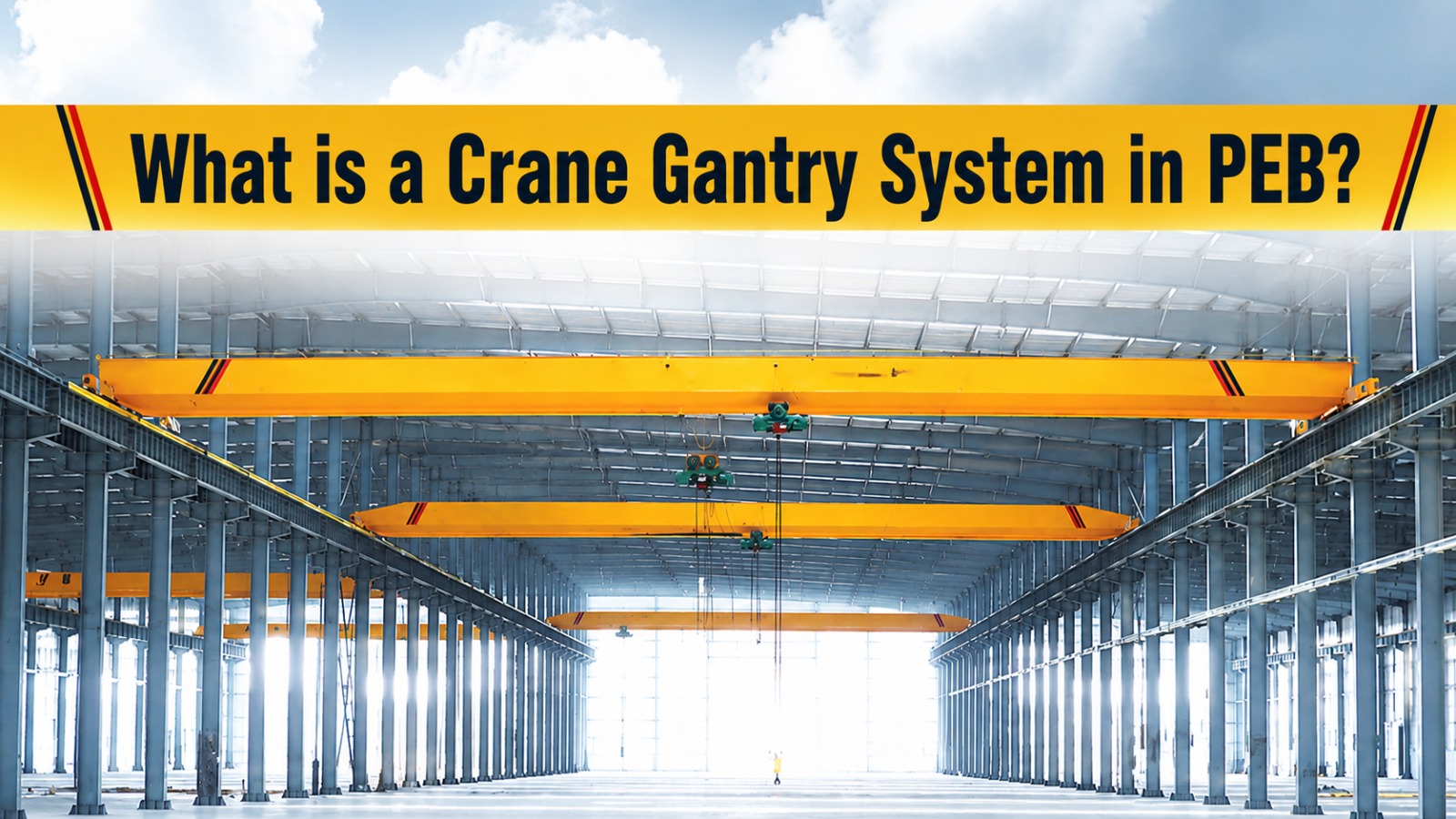
A crane gantry system is a type of structural system utilized in industrial structures for lifting and moving heavy objects. It typically is used to support overhead cranes that move in a horizontal direction across the building, while transporting loads. In simple terms, the gantry is the frame on which the crane can operate.
A typical system usually includes:
- Gantry girders
- Crane rails
- Supporting columns
- Brackets and runway beams
- Overhead crane arrangement
These systems are widely used in industrial PEB buildings where heavy material handling is part of daily operations.
Why Crane Systems are Common in PEB Structures
Modern industries want faster workflow and better internal movement efficiency.
In many factories, materials need to move repeatedly between:
- Production lines
- Machine stations
- Storage areas
- Loading sections
Handling these loads manually or through ground equipment alone becomes inefficient over time. That is why crane-supported PEB structures have become common in industrial construction.
PEB buildings work especially well for crane systems because steel structures can be designed specifically for crane loads during the planning stage itself.
How Crane Gantry Systems Work Inside PEB Buildings
Within a warehouse or factory, the crane typically moves by rails that are mounted on the gantry girders.
The system allows movement in multiple directions:
- Horizontal movement along the building length
- Cross travel movement
- Vertical lifting movement
This makes heavy material handling much faster and safer.
In properly planned PEB crane building design, the crane movement becomes part of the operational workflow rather than an additional arrangement.
Industries That Commonly Use Crane Gantry Systems
Automobile Manufacturing Units
Automobile factories constantly move machine components, engines, molds, and heavy assemblies.
That is why many PEB structures for automobile plants include overhead crane systems during initial construction itself.
Steel Fabrication Plants
- Steel fabrication industries handle heavy steel sections and fabricated components daily.
- Crane gantry systems improve movement efficiency and reduce manual handling effort.
Engineering and Machinery Units
Heavy engineering industries often use cranes for machine installation, maintenance, and production operations.
Industrial Warehouses
Some warehouses handling heavy inventory also require crane systems for loading and internal movement.
Manufacturing Facilities
Large manufacturing plants use crane systems to improve workflow between different production stages.
When Do You Actually Need a Crane Gantry System?
Not every warehouse or factory requires a crane system.
The requirement usually depends on:
- Material weight
- Frequency of movement
- Production type
- Operational workflow
- Machine handling requirements
If heavy loads are moved regularly inside the facility, installing a gantry crane system in PEB becomes practical. For lighter storage operations, standard warehouse layouts may be sufficient without crane support.
Why Crane Planning Must Happen Early
One mistake some businesses make is assuming cranes can be added later without structural planning.
In reality, crane loads directly affect:
- Column design
- Beam strength
- Structural stability
- Foundation requirements
This is why experienced companies involved in PEB crane structure design plan crane load requirements during the early design stage itself.
Without proper planning, adding crane systems later becomes difficult and expensive.
Important Factors in Crane Gantry Design
Crane Capacity
- The crane’s lifting capacity plays the biggest role in structural planning.
- A building designed for a small crane will differ significantly from one supporting heavy industrial loads.
Span and Building Width
- The width of the building affects crane movement and girder design.
- Larger spans require stronger support systems.
Hook Height Requirement
- Industries handling tall equipment or machinery may require higher hook movement clearance.
- This directly impacts building height planning.
Frequency of Crane Operation
- Some cranes operate occasionally, while others run continuously throughout the day.
- Frequent operation creates different structural load conditions.
Dynamic Load Consideration
- Unlike static storage loads, cranes create moving loads and vibration forces.
- Proper industrial crane gantry design accounts for these dynamic effects.
Difference Between Normal PEB and Crane-Supported PEB
A standard warehouse structure and a crane-compatible PEB building may look similar externally, but structurally they are quite different.
A crane-supported structure generally requires:
- Stronger columns
- Additional bracing
- Gantry beam systems
- Reinforced structural support
This ensures the building safely handles crane movement and lifting operations.
Advantages of Crane Gantry Systems in PEB Buildings
Faster Material Handling
- Crane systems reduce the time required for internal movement of heavy materials.
- This improves operational speed inside industrial facilities.
Reduced Manual Effort
Instead of relying heavily on labor or forklifts, industries can move heavy loads more efficiently through overhead systems.
Better Space Utilization
- Overhead crane movement keeps floor space more open and organized.
- This improves workflow and machine placement flexibility.
Improved Safety
Proper crane systems reduce the risks associated with manual handling of heavy industrial materials.
Efficient Production Workflow
Industries using heavy machinery often achieve smoother production movement through crane-supported operations.
Common Mistakes Businesses Make
Underestimating Future Requirements
- Some industries install smaller crane systems initially and later face operational limitations.
- Planning future expansion early helps avoid this issue.
Ignoring Structural Coordination
- The crane system and building structure must work together.
- Poor coordination during design creates operational and structural problems later.
Focusing Only on Crane Cost
- Many businesses compare only crane prices while ignoring structural support requirements.
- A well-planned PEB crane system focuses on both operational efficiency and structural stability.
Why PEB Structures are Ideal for Crane Systems
Steel structures provide flexibility in industrial design. This is one reason why pre engineered buildings with crane systems are widely preferred for factories and industrial facilities.
PEB structures allow:
- Easier crane integration
- Faster construction
- Better span flexibility
- Easier future modifications
This combination makes them highly practical for industries handling heavy operations.
Future Demand for Crane-Supported PEB Buildings
Industrial automation and manufacturing growth are increasing the need for efficient material handling systems.
Industries today focus heavily on:
- Faster workflow
- Reduced downtime
- Safer operations
- Better internal movement systems
Because of this, crane gantry systems in industrial PEB buildings are expected to become even more common in the coming years.
Conclusion
A crane gantry system is much more than an additional industrial feature. In many factories and heavy industrial units, it becomes an essential part of daily operations.
Knowing the circumstances under which a crane gantry system in PEB is required actually helps companies plan their buildings more effectively. From the design of the structure to the load-planning for cranes, every aspect must cooperate to ensure safety, efficiency in operation as well as long-term performance.
Leading peb structure manufacturer in India help industries build safer and more efficient crane-supported facilities.
As industrial projects grow more technologically advanced and production-focused, well-designed PEB cranes systems will continue to be an essential component of the current industrial infrastructure.
FAQs
1. What is a crane gantry system in PEB?
It is a framework for structural support within the PEB structure that supports overhead cranes to handle materials.
2. Which industries use crane gantry systems?
Automobile manufacturing plants, steel fabrication units, manufacturing facilities typically use them.
3. Why is crane planning important in PEB structures?
Crane loads affect structural stability, column design, and building performance, so planning must happen early.
4. Can crane systems be added later in a PEB building?
But it can be more complicated and expensive if the structure was not originally designed to handle crane loads.
Recent Post


Copyright ©2025 All Rights Reserved by nashtechpeb.com