- By Nashtech PEB Team
- Aug 14, 2026
- 0 Views
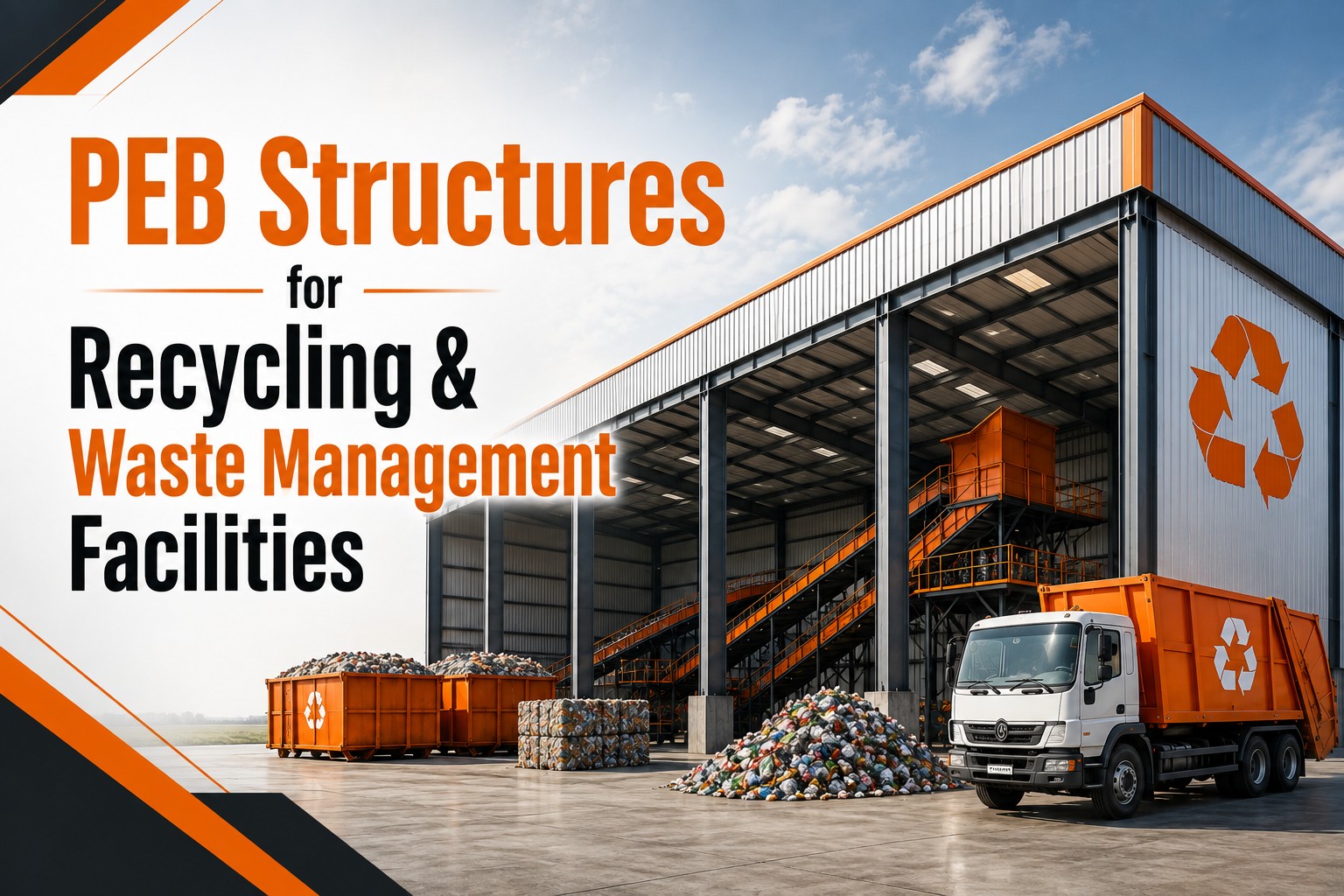
PEB Structures for Recycling & Waste Management Facilities
India's recycling and waste management sector is expanding as cities generate more municipal waste, industries look for better disposal systems, and businesses place greater emphasis on recovering reusable materials. But a recycling facility needs more than an open yard with a roof. It needs space for sorting, processing, equipment, vehicle movement, temporary storage and finished material handling. This is where PEB structures for recycling plants offer a practical solution.
A well-planned steel building can provide the open floor area and structural flexibility required for recycling operations while allowing the facility to expand as processing capacity increases. From dry-waste sorting centres to metal recycling units and material recovery facilities, a PEB waste management facility can be designed around the actual workflow rather than forcing the operation into a fixed building layout.
Table of Contents
- PEB Recycling & Waste Management Facilities at a Glance
- Why PEB Structures Work Well for Recycling Plants
- Designing a PEB Recycling Plant Shed
- Clear Span and Height Requirements
- Ventilation is Especially Important
- Roofing and Wall Cladding
- Structural Requirements for Recycling Machinery
- Fire Safety in Waste Management Facilities
- PEB Industrial Shed for Recycling Applications
- Recycling Warehouse Construction in India
- How Much Does a PEB Recycling Plant Cost?
- Construction Process
- Benefits of Using PEB for Recycling Facilities
- Conclusion
- FAQs
PEB Recycling & Waste Management Facilities at a Glance
|
Requirement |
PEB Solution |
|
Sorting area |
Large clear-span floor space |
|
Processing machinery |
Customized structural design |
|
Waste storage |
High-volume warehouse space |
|
Truck movement |
Wide openings and loading areas |
|
Ventilation |
Louvers and roof ventilators |
|
Future expansion |
Additional bays can be planned |
|
Fire safety |
Detection and firefighting systems |
|
Weather protection |
Durable roofing and wall cladding |
Why PEB Structures Work Well for Recycling Plants
Recycling facilities have a different working environment from conventional warehouses. Materials arrive continuously, machinery operates for long hours, and workers need clear movement around sorting and processing equipment.
A pre engineered building for recycling plant applications can provide:
- Wide column-free working areas
- High clear heights
- Large entry and loading openings
- Flexible equipment layouts
- Faster construction
- Easy future expansion
The structure can also be designed around conveyors, shredders, balers, compactors and other processing equipment.
Designing a PEB Recycling Plant Shed
A PEB recycling plant shed should be planned around the complete material flow. Waste should be able to move from unloading to sorting, processing and storage without unnecessary crossing of vehicles and workers.
Important areas may include:
- Waste receiving zone
- Sorting area
- Processing section
- Equipment area
- Recovered material storage
- Finished goods storage
- Staff and office areas
This approach makes the building more useful than simply constructing the largest possible shed.
Clear Span and Height Requirements
Recycling plants often use large machines and conveyors that require considerable floor space. Internal columns can interfere with equipment positioning and material movement.
A PEB structure can therefore be designed with large clear spans and suitable heights.
|
Facility Area |
Typical Design Consideration |
|
Sorting hall |
Open floor space |
|
Processing area |
Equipment clearance |
|
Storage |
Height for stacking |
|
Loading zone |
Large door openings |
|
Machinery section |
Equipment and maintenance access |
The final dimensions should always be based on the actual machinery and operating process.
Check Out: PEB Column Spacing
Ventilation is Especially Important
Waste processing can generate dust, heat, odour and airborne particles. Good ventilation should therefore be considered during recycling plant building construction.
Depending on the facility, the building may incorporate:
- Turbo ventilators
- Ridge ventilation
- Louvers
- High-level openings
- Natural daylighting
For facilities handling specific types of waste, mechanical ventilation or specialized air-handling systems may also be required.
Roofing and Wall Cladding
The roofing and wall cladding system protects the facility from rain, heat and other weather conditions. Since recycling operations can continue throughout the year, durable roofing is important.
Depending on the project, the building may use:
- Pre-coated steel roofing
- Insulated roof panels
- Wall cladding
- Skylights
- Gutters and downpipes
The right combination depends on the local climate, internal operating conditions and type of waste being processed.
Structural Requirements for Recycling Machinery
A recycling facility may contain heavy equipment such as shredders, balers, conveyors and compactors. These machines can introduce significant operational loads and vibration.
Therefore, the PEB structure for waste management should be designed after understanding:
- Machinery weight
- Equipment locations
- Dynamic loads
- Maintenance access
- Crane requirements
- Conveyor arrangements
Equipment foundations may need to be designed separately from the main building foundation.
Fire Safety in Waste Management Facilities
Fire prevention deserves particular attention because some waste streams contain combustible materials such as paper, plastics, packaging and textiles.
A PEB waste management facility may require appropriate:
- Fire extinguishers
- Hydrant systems
- Sprinklers
- Fire detection
- Emergency exits
- Fire access routes
Storage arrangements should also maintain suitable access for emergency response.
PEB Industrial Shed for Recycling Applications
A PEB industrial shed for recycling can be customized for different waste streams rather than following one standard design.
|
Recycling Application |
Building Requirement |
|
Plastic recycling |
Processing and raw material storage |
|
Metal recycling |
Heavy equipment and vehicle access |
|
Paper recycling |
Large storage and sorting areas |
|
Textile recycling |
Sorting and bale storage |
|
E-waste processing |
Segregated processing and storage |
|
Municipal waste |
Receiving and sorting areas |
The building design should reflect the material being handled and the equipment being installed.
Check Out: Types of PEB Structures Used in Industrial Construction
Recycling Warehouse Construction in India
Storage is a major part of recycling operations. Incoming materials often need temporary storage before sorting, while recovered materials may need to remain on-site before dispatch.
For recycling warehouse construction India, PEB offers useful advantages such as:
- Large storage areas
- Flexible internal layouts
- High stacking clearance
- Large vehicle-access doors
- Easy extension
A warehouse can also be connected directly to the processing area, reducing unnecessary movement of materials.
How Much Does a PEB Recycling Plant Cost?
The PEB recycling plant cost cannot be determined accurately from area alone. A basic storage shed will have very different requirements from a fully equipped recycling plant.
Major cost factors include:
|
Cost Factor |
Why It Matters |
|
Building size |
Determines material quantity |
|
Height and span |
Affects structural design |
|
Steel specification |
Influences structural cost |
|
Roofing and cladding |
Depends on required performance |
|
Machinery loads |
May require additional design |
|
Insulation |
Adds to building specification |
|
Ventilation |
Depends on process requirements |
|
Fire protection |
Varies with waste type |
|
Doors and openings |
Large access points can affect cost |
|
Foundation |
Depends on soil and equipment loads |
A detailed project brief is therefore necessary before requesting a quotation.
Construction Process
Waste management facility construction generally follows a structured sequence.
Site Assessment
The site is checked for soil conditions, access, drainage and available utilities.
Engineering
The building is designed around operational requirements, loads, machinery and local conditions.
Fabrication
Steel components are manufactured and inspected before dispatch.
Foundation
Civil foundations and equipment bases are prepared according to the approved design.
Erection
The steel frame is assembled at the site.
Roofing and Cladding
Roofing, wall panels, ventilation, gutters and other accessories are installed.
Final Setup
Machinery, electrical systems, fire protection and internal facilities are completed according to the project scope.
Benefits of Using PEB for Recycling Facilities
The biggest advantage is flexibility. Recycling businesses can change their processing capacity, machinery and storage requirements over time, so the building should not become a limitation.
PEB can offer:
- Faster construction
- Large usable floor areas
- Customizable layouts
- Lower material wastage
- Easier expansion
- Durable steel construction
- Lower routine maintenance
For growing recycling businesses, this flexibility can be particularly valuable.
Conclusion
Modern recycling facilities need buildings that can handle heavy equipment, continuous material movement, large storage volumes and changing operational requirements. PEB structures for recycling plants provide a practical way to create this infrastructure while keeping the building flexible for future growth.
From a PEB recycling plant shed to a large material recovery facility, the design should be based on the waste stream, machinery, storage requirements, ventilation and fire safety needs. Cost should also be evaluated as a complete project rather than through a simple per-square-foot figure.
With proper engineering and site planning, a pre engineered building for recycling plant operations can provide a durable, adaptable and efficient facility for India's growing waste management sector.
FAQs
Is PEB suitable for recycling plants?
Yes. PEB structures can provide large clear-span areas, equipment space, storage capacity and future expansion options for recycling operations.
What affects PEB recycling plant cost?
Building size, height, steel specification, machinery loads, roofing, ventilation, fire protection and foundation requirements all affect the final cost.
Can PEB buildings be expanded later?
Yes. Expansion can be considered during the original design so additional bays or operational areas can be added more easily.
Is ventilation important in recycling facilities?
Yes. Recycling processes can generate heat, dust and odours, making proper natural or mechanical ventilation an important part of facility design.
Recent Post
Copyright ©2025 All Rights Reserved by nashtechpeb.com