
- By Nashtech PEB Team
- Jul 20, 2026
- 0 Views
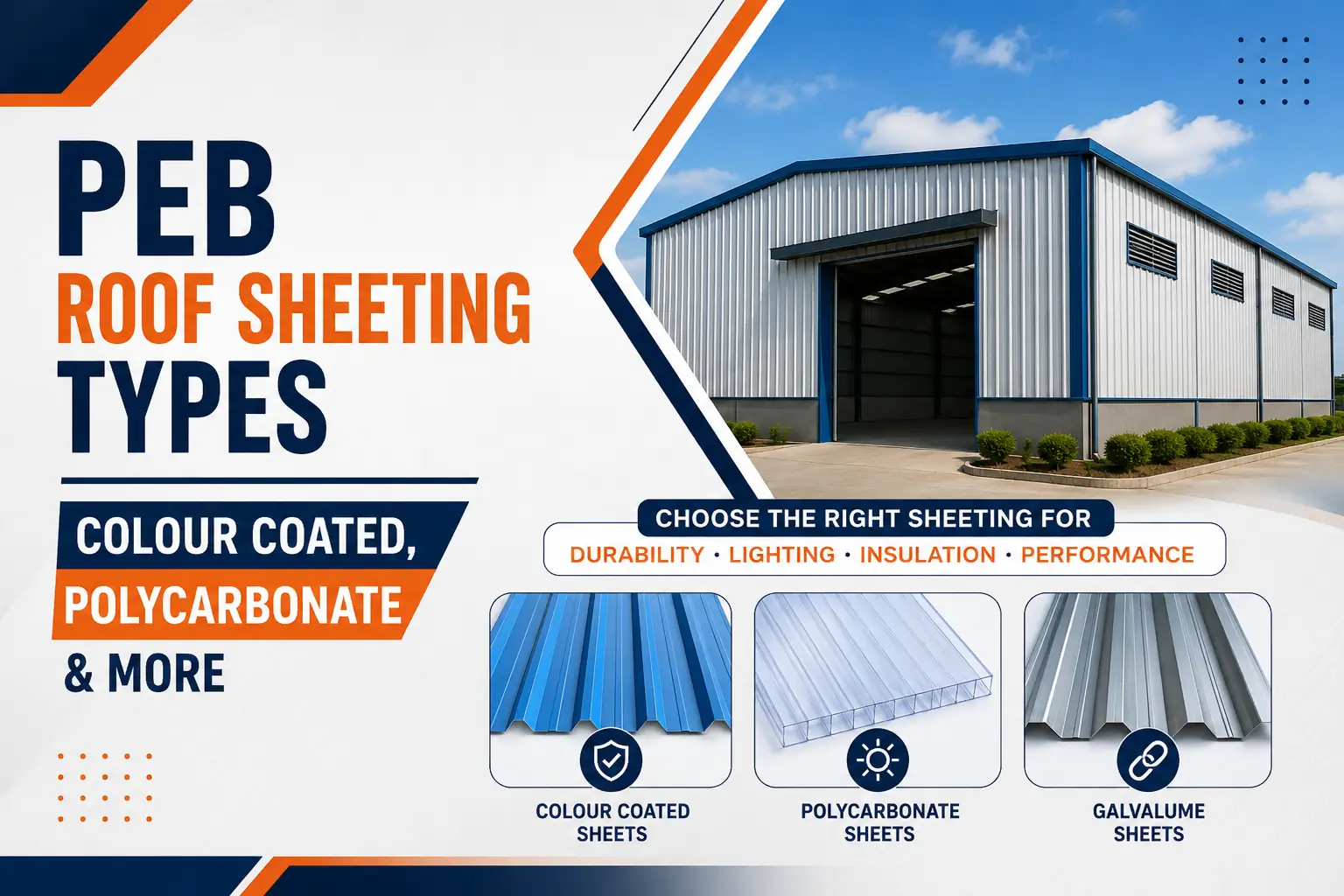
PEB Roof Sheeting Types – Colour Coated, Polycarbonate & More
Stand under a warehouse roof during a heavy downpour sometime and you'll hear exactly why the sheet choice matters more than most people assume. Some roofs sound like a drum solo gone wrong. Others barely make a sound. Some roofs let in soft daylight that cuts your electricity bill in half. Others turn the whole shed into an oven by noon. All of that difference comes down to one decision that often gets rushed at the end of a project, picking the right roof sheet.
I've noticed a pattern over the years. People spend weeks debating column spacing, foundation depth, and steel grade, then treat the roofing sheet as a last minute checkbox, whatever the contractor has in stock. That's backwards. The sheet sitting over your head deals with sun, rain, corrosion, and temperature swings every single day for the next couple of decades. which is exactly why our Getting the PEB roof sheeting types right actually matters as much as anything else in the structural plan.
So let's go through the options properly, what each one is good for, where it falls short, and roughly what it costs.
Table of Contents
Colour Coated Roof Sheets, the Default for a Reason
Walk past almost any industrial park in India and you'll see colour coated roof sheets everywhere. Choosing the right combination of roofing and cladding not only protects your PEB building from harsh weather but also improves energy efficiency, durability, and long-term maintenance costs. There's a reason they've become the standard choice for PEB roofing sheets across the country. These are galvanized or galvalume steel sheets with a colour coating applied on top, usually a polyester or PVDF based paint system that resists fading and corrosion far better than bare galvanized steel would on its own.
PVDF coatings tend to hold their colour longer and handle UV exposure better, which matters a lot in regions with intense summer sun. Polyester coatings are cheaper and still perform reasonably well for general industrial use, just with a shorter color life expectancy before you start noticing chalking or fading.
For most warehouses, colour coated sheets hit a good balance of durability, appearance, and cost. They're also easier to source quickly since almost every steel roofing sheets manufacturer stocks them in standard profiles and thicknesses.
Polycarbonate Roofing Sheets, Letting the Light In
Polycarbonate sheets are the ones you usually spot as translucent strips running across an otherwise metal roof, and there's a good reason architects keep specifying them. They let natural daylight flood into the warehouse, which genuinely cuts down on daytime electricity usage for lighting, something that adds up fast across a large industrial shed running two or three shifts.
The trade-off is that polycarbonate roofing sheets aren't meant to cover an entire roof. They're typically used as skylights or light strips combined with steel sheeting, usually somewhere between five and ten percent of total roof area depending on how much natural light the space needs. They also don't offer the same insulation value as insulated metal sheets, so in very hot regions, too much polycarbonate coverage can actually work against you by letting in heat along with the light.
PEB Roof Cladding, Beyond Just the Roof
While roof sheets get most of the attention, PEB roof cladding for walls deserves equal thought. Wall cladding faces different pressures than roof sheeting, less direct sun exposure but more risk from ground level moisture, splashback, and physical impact from vehicles or equipment moving around the building.
Trapezoidal profile sheets are common for walls because the ribbed shape adds structural rigidity without needing thicker material. In coastal regions, cladding needs a heavier corrosion resistant coating since salt laden air eats through standard coatings noticeably faster than inland locations.
Insulated Sandwich Panels for Industrial Roof Sheets
For warehouses where temperature control genuinely matters, cold storage, pharma, food processing, plain colour coated sheets often aren't enough on their own. This is where insulated sandwich panels come in, essentially two metal skins with a PUF or rockwool core bonded in between. These industrial roof sheets do double duty, acting as both the weatherproof outer layer and the thermal barrier in one single installation, which actually saves installation time compared to fixing separate insulation later.
They cost more upfront than standard colour coated sheets, sometimes noticeably so, but for temperature sensitive storage the energy savings alone usually justify it within a few years of operation.
Read More: Insulation Options for PEB Warehouses
So Which One Actually Works Best?
If someone asks me what's the best roofing sheets for PEB warehouses, honestly, there isn't one universal answer. It genuinely depends on the warehouse's purpose.
- For general dry goods storage, standard colour coated galvalume sheets with a PVDF top coat are usually the sweet spot between cost and performance.
- For warehouses needing daylight for shop floor work, add polycarbonate skylight strips to a standard metal roof rather than going fully translucent.
- For temperature sensitive storage, insulated sandwich panels are worth the extra spend.
- For coastal or high humidity regions, upgrade the coating grade regardless of which sheet type you pick, since corrosion resistance matters more there than almost anywhere else.
Read More: PEB Structures for Food Processing Plants in India
A Quick Word on PEB Roof Sheet Price in India
Pricing varies a fair bit depending on gauge thickness, coating type, and current steel prices, which do fluctuate. As a rough range, standard colour coated galvalume sheets typically run somewhere in the range of Rs 400 to Rs 700 per square meter depending on thickness and coating quality, while insulated sandwich panels can run significantly higher, often two to three times that, given the added core material and manufacturing process.
Polycarbonate sheets are priced differently since they're sold by thickness and UV protection grade rather than gauge, and tend to be a smaller line item overall since they only cover a fraction of total roof area.
Request a breakdown of different costs, including coating grade, installation costs and material costs. When you get a quote all in one, it's difficult to determine whether you are comparing apples to apples with the vendors.
Final Thought
While roof sheets don't have the showmanship associated with column design or foundation engineering, they are always at work unglamorous day-in and day-out, while the building is standing. Invest a little more time in picking the right mix for your warehouse, rather than the easiest or quickest to procure, and you'll find the difference in comfort, operating expenses and how the roof will look 10 years from now.
FAQs
What are the most common PEB roof sheeting types used in India?
Colour coated galvalume sheets are by far the most common, followed by insulated sandwich panels for temperature sensitive facilities and polycarbonate strips used as skylights alongside standard metal sheeting.
Are polycarbonate roofing sheets durable enough for industrial use?
Yes, when used correctly as skylight strips rather than full roof coverage, quality polycarbonate sheets with UV protection can last well over a decade with minimal maintenance.
What is the average PEB roof sheet price in India?
Standard colour coated sheets generally fall between roughly Rs 400 and Rs 700 per square meter, while insulated sandwich panels cost considerably more due to the added insulation core.
Is it worth paying extra for insulated sandwich panels?
For temperature sensitive storage like cold chain, pharma, or food processing, yes, the energy savings usually make up for the higher upfront cost within a few years.
How do I choose steel roofing sheets for a coastal location?
Go with a higher grade corrosion resistant coating regardless of which sheet type you choose, since salt laden air significantly speeds up wear on standard coatings near the coast.
Recent Post
Copyright ©2025 All Rights Reserved by nashtechpeb.com