
- By Nashtech PEB Team
- Jul 15, 2026
- 0 Views
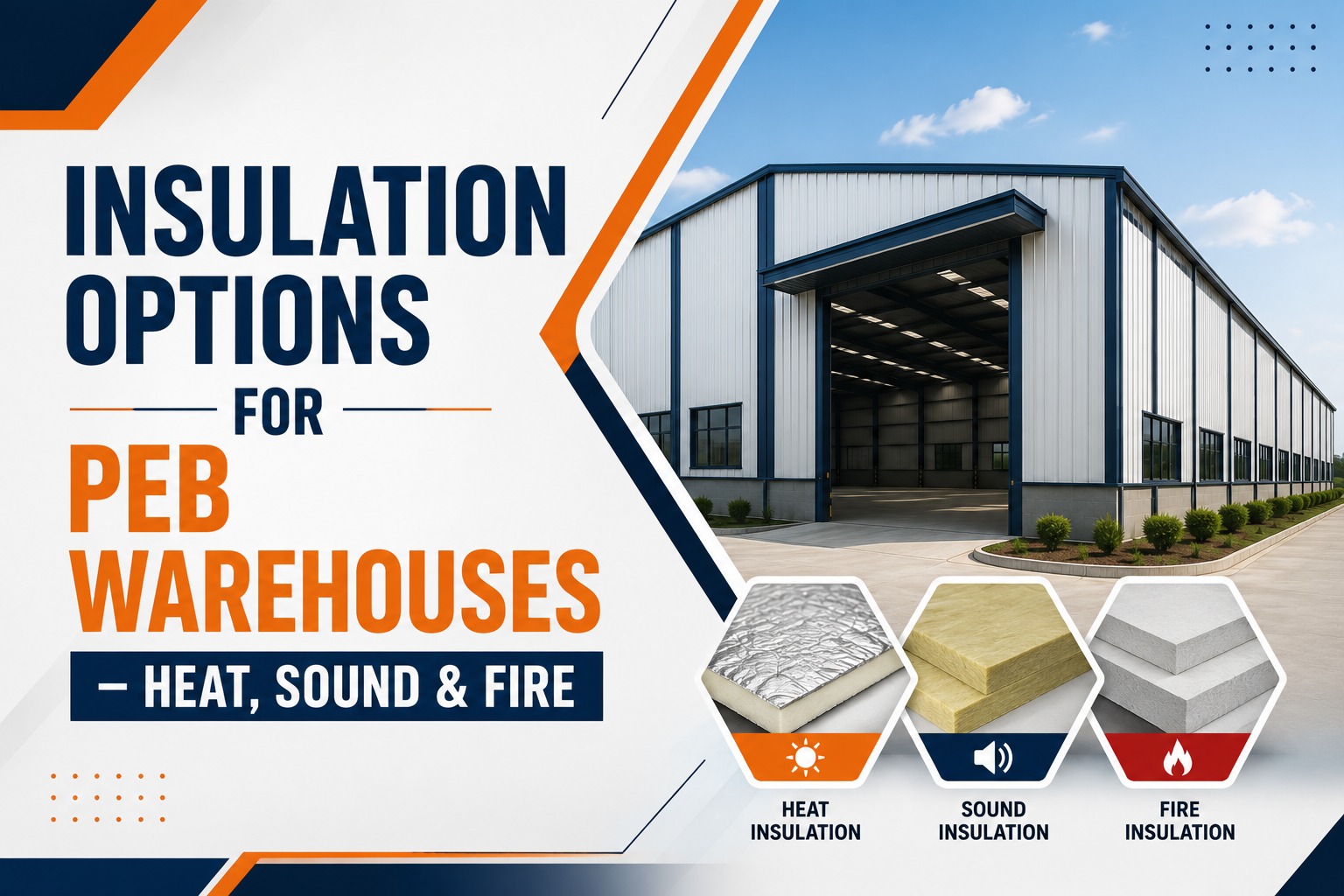
Insulation Options for PEB Warehouses – Heat, Sound & Fire
Ever walked into a metal shed around two in the afternoon in peak summer? It's not just warm, it's the kind of heat that makes you want to turn around and leave. That's what an uninsulated PEB roof does once it's been soaking up sun since sunrise, and anyone who's managed a warehouse through a Rajasthan or Gujarat summer knows exactly what I'm talking about.
For years, insulation got treated as an optional upgrade, something you'd add later if the budget allowed. That thinking has changed a lot. PEB warehouse insulation India has quietly become one of the first things people bring up during the design stage now, right alongside foundation and steel specs, and honestly, it should have been that way from the start.
Here's the part most people don't realize going in. Insulation isn't really one decision, it's three problems stacked together, heat, sound, and fire, and each one pulls you toward a slightly different material choice. Get it wrong and you end up paying for the mistake three times over, once in electricity bills, once in noise complaints, and once, hopefully never, in a fire that spreads faster than it should have. Let's get into what actually works for each of these, and where people usually go wrong.
Table of Contents
Why Heat Is the First Thing Everyone Notices
Steel conducts heat fast. A bare metal roof under direct sun can reach surface temperatures well past 60 degrees Celsius, and all of that heat radiates straight down into the working space below. Without proper thermal insulation for PEB buildings, internal temperatures can end up ten to fifteen degrees higher than outside, which is brutal for both people and equipment.
The most common fix is PEB roof insulation using PUF (polyurethane foam) panels or glass wool blankets sandwiched between the roofing sheets. PUF panels tend to perform better in terms of thermal resistance and are increasingly the go to choose for industrial warehouse insulation projects where temperature control genuinely matters, like cold storage adjacent facilities or pharma warehousing.
Glass wool is cheaper and still does a reasonable job, especially in regions that don't see extreme summer peaks. For a lot of general storage warehouses where the goods aren't temperature sensitive, glass wool with a reflective foil backing is a perfectly reasonable middle ground between cost and performance.
Read More: Fire Safety Requirements for PEB Industrial Buildings
Reflective Coatings, an Underrated Option
Before jumping straight to thick insulation panels, it's worth mentioning reflective roof coatings. These are applied directly onto the roofing sheet and reduce how much heat gets absorbed in the first place rather than trying to block heat that's already inside the material. They're not a replacement for proper insulation in hot regions, but combined with PUF panels or glass wool, they noticeably improve overall performance. For budget conscious projects, this combination often gives the best insulation for PEB warehouse setups without blowing past the material cost estimate.
Sound Insulation Matters More Than People Expect
Nobody thinks about acoustics until the warehouse is running at full capacity with forklifts beeping, machinery humming, and metal roofing amplifying every bit of ambient noise like a drum. Sound insulation for PEB warehouse structures usually comes down to the same PUF or rockwool panels used for thermal control, since dense insulation material happens to dampen sound transmission fairly well as a side benefit.
If noise reduction is a bigger priority, rockwool specifically outperforms standard glass wool for acoustic dampening because of its higher density. Manufacturing units with heavy machinery, printing presses, or anything involving constant equipment vibration benefit a lot from this upgrade, both for worker comfort and to stay within local noise regulation limits if the facility sits near residential zones.
Fire Insulation, the One Nobody Should Skip
This is where corners get cut most often, and it's the one area where cutting corners genuinely isn't worth it. Fire insulation for PEB warehouse buildings usually means using rockwool insulation, since it's naturally non combustible and can withstand extremely high temperatures without releasing toxic fumes, unlike some cheaper foam based alternatives that can actually accelerate a fire if things go wrong.
Rockwool panels are rated for fire resistance in hours, not minutes, which matters enormously if you're storing anything flammable, running electrical heavy processes, or simply want to meet fire NOC requirements without a fight. A lot of insurance providers also offer better premiums for warehouses using proper fire rated insulation, so the upfront cost difference often balances out over a few years.
Steel Warehouse Insulation, Choosing By Use Case
There's no single best answer here, it really depends on what the building is for.
For general dry storage with no major fire risk, glass wool with foil backing plus a reflective roof coating usually covers the basics without overspending.
For food, pharma, or cold chain adjacent storage, PUF panels are almost always worth the extra cost because of superior thermal performance.
For manufacturing units with heavy machinery or anything involving flammable materials, rockwool is the safer bet even though it costs more upfront, purely because of the fire safety margin it provides.
For warehouses near residential areas or with constant machinery noise, rockwool again tends to win because of its dual benefit on both fire resistance and sound dampening.
A Quick Note on Installation Quality
Even the best insulation material performs badly if installed with gaps, poor sealing, or wrong thickness for the climate zone. I've seen expensive PUF panels installed with visible gaps at the joints, basically undoing half the thermal benefit the client paid for. Whoever handles the installation should be experienced specifically with PEB roofing systems, not just general contractors doing insulation as a side job.
Check Out: Common Mistakes to Avoid When Planning PEB Warehouse
Conclusion
Insulation isn't a single decision, it's really three decisions rolled into one project, heat, sound, and fire, and each pull toward a slightly different material choice. Fortunately, most modern mixes of PUF, rockwool and reflective coatings can satisfy all three requirements rather well if the design is done carefully and is not just selected off a price list. Take the time to determine exactly what your particular warehouse requires and the insulation becomes an investment and not an afterthought, paying for itself within a couple of summers.
FAQs
What is the best insulation for PEB warehouse buildings?
It depends on the use case. PUF panels are best for thermal performance, rockwool is best for fire safety and sound dampening, and glass wool works well as a budget friendly option for general storage.
Is PEB roof insulation really necessary in India's climate?
In most parts of India, yes, especially during summer months when metal roofs can radiate serious heat into the working space below. Skipping it usually means higher cooling costs and lower worker comfort.
Which insulation material offers the best fire protection?
Rockwool is generally considered the top choice for fire insulation for PEB warehouse projects since it's non-combustible and doesn't release toxic smoke under high heat, unlike some foam-based alternatives.
Can one insulation material handle heat, sound, and fire together?
Rockwool comes closest to covering all three needs reasonably well, though PUF panels still edge it out purely on thermal performance if fire risk isn't a major concern for your facility.
Recent Post


Copyright ©2025 All Rights Reserved by nashtechpeb.com