- By Nashtech PEB Team
- Jul 01, 2026
- 0 Views
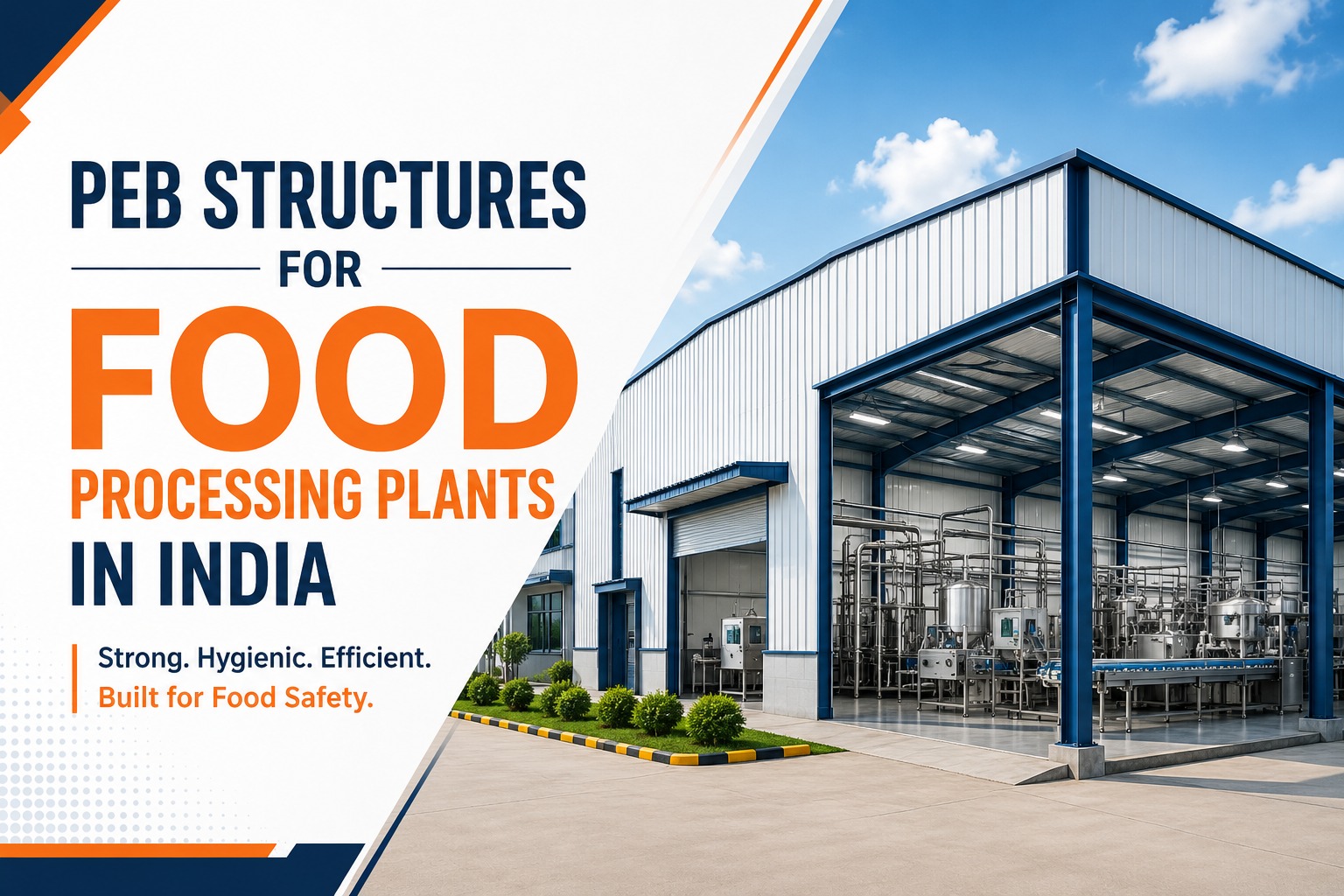
PEB Structures for Food Processing Plants in India
The food processing sector is seeing rapid growth in India due to the increasing demand for packaged foods, beverages, frozen foods, ready-to-eat foods, and dairy products. In addition to production capacity, manufacturers are also paying attention to hygiene, food safety, efficiency and acceptability to industry standards. With these requirements have come a demand for modern infrastructure in the industrial sector, and PEB structures for food processing plants in India are one of the preferred solutions for new processing plants.
Food processing plant buildings must be planned to ensure efficient material flow, hygienic production areas, temperature controlled zones and a planned layout as opposed to traditional factory buildings. All sections, ranging from raw material storage to packaging and delivery, should be capable of maintaining food safety and seamless operations. Modern Pre Engineered Buildings (PEB) can be designed to satisfy these requirements and result in less construction time, reduced maintenance costs, and provide the flexibility to add space to the facility as production expands.
Table of Contents
- Why Food Processing Plants Need Specialized Buildings
- What is a PEB Structure?
- Why PEB Structures Are Ideal for Food Processing Plants
- Applications of PEB Structures in Food Processing
- Factors to Consider Before Building a Food Processing Plant
- Choosing the Right PEB Company
- Future of PEB Buildings in India's Food Processing Industry
- Conclusion
- FAQs
Why Food Processing Plants Need Specialized Buildings
Food manufacturing is different from many other industries. Products move through multiple processing stages, and maintaining cleanliness throughout the facility is essential.
A food processing plant should provide:
- Hygienic production areas
- Efficient workflow
- Temperature-controlled spaces
- Proper ventilation
- Easy cleaning and maintenance
- Safe storage for raw materials and finished products
Modern PEB industrial buildings can be customized to support all of these operational needs.
Also Read: PEB Structures for Solar Panel Manufacturing Facilities
What is a PEB Structure?
A Pre Engineered Building (PEB) is a steel building that is engineered, fabricated, and quality-tested before arriving at the construction site.
The structure generally includes:
- Primary steel framing
- Secondary framing
- Roof and wall cladding
- Insulated panels
- Ventilation systems
- Structural accessories
Since the components are manufactured in advance, installation becomes much faster than conventional construction.
Why PEB Structures Are Ideal for Food Processing Plants
Faster Construction
Food manufacturers often work with strict project schedules to meet market demand.
Since structural members are pre-fabricated, PEB construction reduces project timelines significantly.
This allows businesses to begin production earlier and reduce overall project delays.
Hygienic Building Environment
Food safety begins with the building itself.
Modern PEB food processing buildings support:
- Smooth wall finishes
- Easy-to-clean surfaces
- Moisture-resistant cladding
- Better contamination control
This helps manufacturers maintain a cleaner production environment.
Temperature-Controlled Processing Areas
Many food products require controlled temperatures during processing and storage.
PEB structures can accommodate:
- Insulated wall panels
- Insulated roofing
- Cold rooms
- Chilled production zones
- Frozen storage areas
These systems help maintain product quality while improving energy efficiency.
Better Workflow Planning
A well-designed food processing facility should allow smooth movement of:
- Raw materials
- Processing equipment
- Packaging materials
- Finished products
- Employees
Large clear-span PEB factory buildings provide flexible layouts that improve operational efficiency.
Large Column-Free Production Floors
Food manufacturing plants often require uninterrupted production lines.
PEB structures support wide clear spans that allow:
- Better equipment placement
- Automated production systems
- Flexible machinery layouts
- Easier future modifications
This improves both productivity and space utilization.
Efficient Ventilation Systems
Proper ventilation plays an important role in food processing plants.
A good ventilation system helps:
- Remove excess heat
- Control humidity
- Improve indoor air quality
- Maintain comfortable working conditions
Modern PEB industrial buildings can integrate ventilation systems based on production requirements.
Support for Food Safety Standards
Food processing facilities must comply with strict hygiene regulations.
A professionally designed PEB food factory can support compliance with standards such as:
- FSSAI guidelines
- HACCP practices
- GMP principles
- Industry hygiene requirements
Building design becomes an important part of maintaining product quality.
Dedicated Storage Areas
Food processing plants require separate storage zones for:
- Raw materials
- Packaging materials
- Finished goods
- Temperature-sensitive products
Large-span PEB warehouse buildings allow organized inventory management while improving operational efficiency.
Fire Safety Integration
Industrial kitchens, processing equipment, and electrical systems require proper fire protection.
Modern PEB fire protection systems can include:
- Fire alarms
- Smoke detectors
- Sprinkler systems
- Emergency exits
- Fire hydrants
Integrating these systems during construction improves overall plant safety.
Easy Future Expansion
Food processing businesses often increase production capacity over time.
One major advantage of PEB structures is the ability to expand the building with minimal disruption.
Additional production bays, warehouses, or packaging areas can be added as business requirements grow.
Low Maintenance Requirements
Food manufacturers cannot afford frequent operational shutdowns for building repairs.
Modern PEB steel structures offer:
- Corrosion-resistant coatings
- Durable roofing systems
- Low-maintenance wall panels
- Long service life
This reduces maintenance costs while improving operational reliability.
Sustainability Benefits
Sustainability is becoming increasingly important in food manufacturing.
PEB buildings support environmentally responsible construction through:
- Recyclable steel
- Reduced construction waste
- Energy-efficient insulation
- Natural lighting options
- Lower environmental impact
These benefits contribute to long-term operational savings.
Applications of PEB Structures in Food Processing
PEB buildings are widely used for:
Dairy Processing Plants
Production halls, cold rooms, and storage facilities.
Beverage Manufacturing Units
Large production floors with efficient equipment layouts.
Frozen Food Processing Plants
Temperature-controlled processing and storage spaces.
Spice Processing Facilities
Dust-controlled production environments and organized storage.
Bakery and Ready-to-Eat Food Units
Clean production zones with flexible layouts and efficient workflow.
Factors to Consider Before Building a Food Processing Plant
Before starting construction, businesses should evaluate:
- Production capacity
- Product type
- Hygiene requirements
- Temperature control needs
- Future expansion plans
- Utility requirements
- Ventilation systems
- Fire safety planning
Careful planning during the design stage helps avoid costly modifications later.
Choosing the Right PEB Company
The success of a food processing project depends on selecting an experienced PEB manufacturer.
A professional company provides:
- Customized building design
- Engineering support
- Hygienic construction solutions
- Quality fabrication
- Fast project execution
- Long-term technical support
Working with the right partner ensures the building supports efficient food production for years to come.
Read More: Top PEB Manufacturers in India (2026)
Future of PEB Buildings in India's Food Processing Industry
India's food processing sector continues to expand due to increasing domestic consumption and export opportunities.
Growing investments in:
- Dairy products
- Frozen foods
- Packaged foods
- Beverage manufacturing
- Agricultural processing
are driving demand for modern industrial infrastructure.
PEB structures in food processing plants in India are likely to be the preferred choice for future food manufacturing plants due to their flexibility, durability, and rapid construction.
Conclusion
Food processing plants are not like any other industrial building! They must have safe designs, climate control systems, production workflow, and food safety regulations. PEB structures offer all these benefits and more, with the added benefits of being able to expand in the future, and reducing the costs of maintenance and construction.
Whether you are building a dairy plant, frozen food facility, beverage factory, or spice processing unit, investing in a professionally designed PEB food processing plant ensures long-term operational efficiency and business growth. As India's food manufacturing industry continues to expand, PEB technology will remain one of the most practical and reliable construction solutions.
FAQs
1. Why are PEB structures suitable for food processing plants?
They offer hygienic construction, flexible layouts, faster installation, temperature control options, and easy expansion.
2. Can PEB buildings support cold storage areas?
Yes. Insulated panels and specialized roofing systems make them ideal for cold rooms and refrigerated storage.
3. Are PEB food processing plants easy to maintain?
Yes. Their corrosion-resistant materials and easy-to-clean surfaces reduce maintenance and support hygiene.
4. Can PEB structures comply with food industry standards?
Yes. Properly designed PEB facilities can support FSSAI, GMP, HACCP, and other food safety requirements.
Recent Post
Copyright ©2025 All Rights Reserved by nashtechpeb.com