
- By Nashtech PEB Team
- Jun 29, 2026
- 0 Views
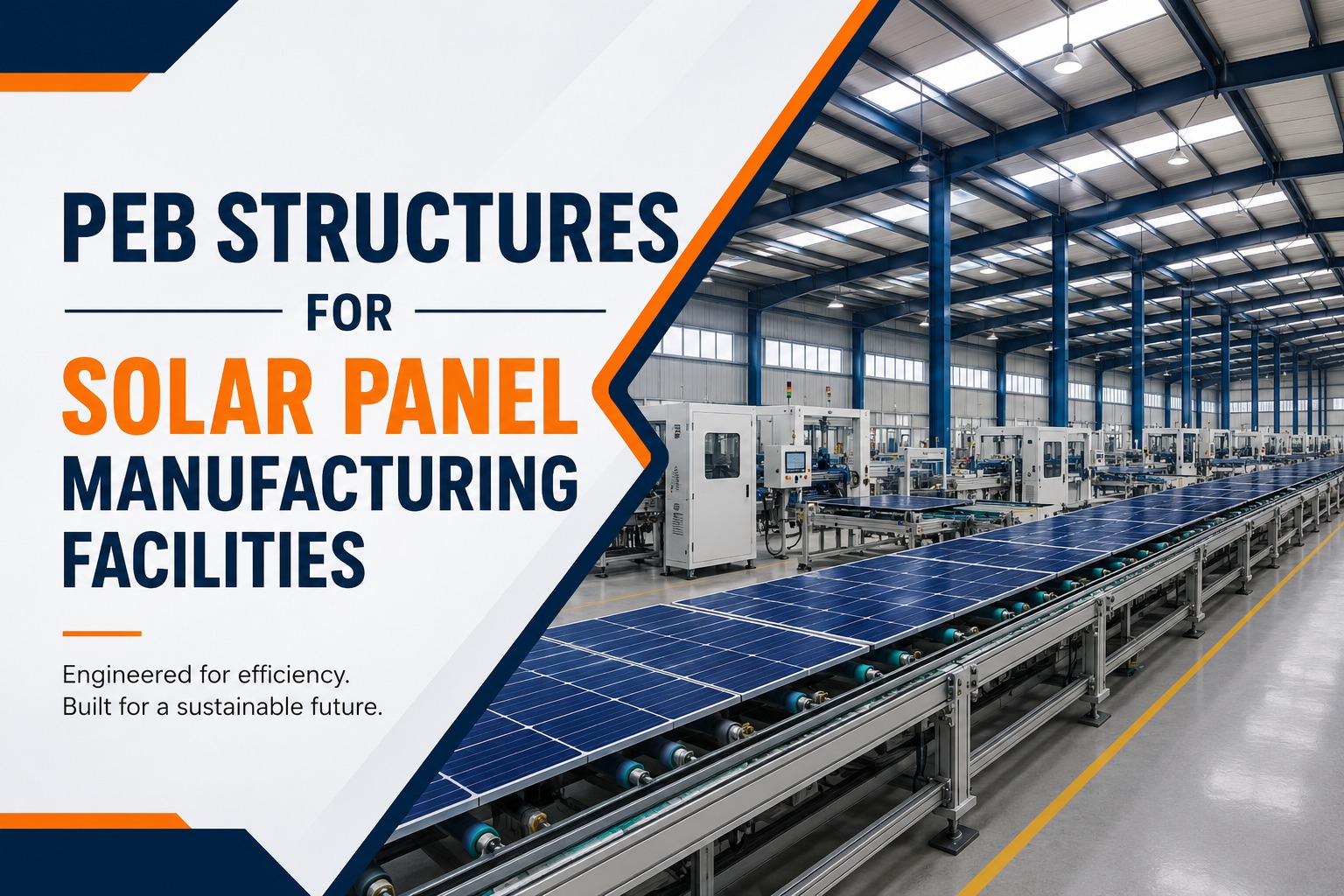
PEB Structures for Solar Panel Manufacturing Facilities
The Indian Renewable Energy Industry (REI) is witnessing a rapid transformation at an unprecedented pace. As investment in solar energy grows and the government offers incentives, the number of solar panel plants is growing in the country. The factories will need a lot of manufacturing space, well-controlled assembly lines, temperature-controlled storage space and future expansion options. This is the reason for the preference of PEB of many manufacturers for the production of solar panels compared to the traditional construction technique.
The process of building a solar manufacturing plant is quite different from that of a regular factory or warehouse. Clean and organized production environments are required for making solar modules, photovoltaic cells, aluminum frames, glass panels and electrical components. Modern Pre Engineered Buildings (PEB) are the solution that offers flexibility, speed and durability for such special operations. Their distinctive large clear spans, rapid installation timelines and minimal upkeep requirements make them a perfect choice for India's booming solar market.
Table of Contents
- Why Does the Solar Manufacturing Industry Need Modern Infrastructure?
- What is a PEB Structure?
- Why PEB Structures Are Ideal for Solar Panel Manufacturing
- Applications Within a Solar Manufacturing Facility
- Factors to Consider Before Building a Solar Manufacturing Facility
- Why Choosing the Right PEB Company Matters
- Future of PEB Buildings in India's Solar Industry
- Conclusion
- FAQs
Why Does the Solar Manufacturing Industry Need Modern Infrastructure?
The production of solar panels involves multiple stages, including material handling, assembly, testing, packaging, and storage.
A manufacturing facility should provide:
- Large uninterrupted production floors
- Controlled working environments
- Efficient material movement
- Heavy equipment support
- Future expansion capability
Traditional construction often struggles to meet these changing industrial requirements, making PEB industrial buildings a smarter alternative.
Must Know: 10 Questions to Ask Your PEB Manufacturer Before Starting Your Project
What is a PEB Structure?
A Pre Engineered Building (PEB) is a steel structure designed, fabricated, and tested before being transported to the construction site.
The building generally consists of:
- Primary steel framing
- Secondary framing
- Roof and wall cladding
- Ventilation systems
- Insulation solutions
- Structural accessories
This approach reduces construction time while maintaining excellent structural quality.
Why PEB Structures Are Ideal for Solar Panel Manufacturing
Faster Project Completion
The renewable energy sector moves quickly, and manufacturers often work with strict project schedules.
Since structural components are fabricated before reaching the site, PEB construction significantly reduces project timelines.
This allows production facilities to begin operations much earlier compared to conventional construction.
Large Column-Free Production Areas
Solar panel manufacturing requires uninterrupted production lines.
Large clear-span PEB structures provide:
- Better machinery placement
- Smooth material movement
- Flexible production layouts
- Improved workflow efficiency
Fewer internal columns also make future production changes easier.
Easy Expansion for Future Growth
The solar industry continues to expand every year.
Many manufacturers increase production capacity as market demand grows.
One major advantage of PEB factory buildings is that additional bays or sections can be added later without major structural modifications.
This flexibility supports long-term business growth.
Better Natural Lighting
Manufacturing plants consume large amounts of electricity.
Modern PEB buildings can incorporate:
- Skylights
- Roof monitors
- Transparent roof panels
These features increase natural daylight inside the factory and reduce daytime lighting costs.
Energy-Efficient Building Design
Energy efficiency is especially important for renewable energy industries.
PEB buildings support:
- Insulated roof panels
- Insulated wall systems
- Ventilation planning
- Reflective roofing
These features help reduce heat gain and improve indoor working conditions.
Temperature-Controlled Production Areas
Some stages of solar panel manufacturing require controlled environmental conditions.
Modern PEB manufacturing facilities can easily accommodate:
- Clean rooms
- Air-conditioned production zones
- Controlled storage spaces
- Humidity-controlled environments
This improves product quality and manufacturing consistency.
Heavy Equipment Support
Solar manufacturing plants use:
- Automated production lines
- Glass handling systems
- Material conveyors
- Heavy fabrication equipment
PEB structures can be engineered to support:
- Crane systems
- Heavy machinery loads
- Mezzanine platforms
- Equipment foundations
This makes them suitable for advanced manufacturing operations.
Better Warehouse Integration
Solar factories usually include warehouse space for:
- Raw materials
- Finished solar panels
- Packaging materials
- Spare components
Large-span PEB warehouse buildings improve storage efficiency while allowing easy forklift and pallet movement.
Low Maintenance Requirements
Industrial downtime can be expensive.
Modern PEB steel structures use corrosion-resistant coatings and durable roofing systems that require minimal maintenance.
This helps manufacturers focus on production rather than building repairs.
Fire Safety and Compliance
Electrical equipment and manufacturing processes require proper fire protection.
Modern industrial PEB buildings can easily integrate:
- Fire detection systems
- Sprinkler networks
- Emergency exits
- Smoke ventilation systems
These safety measures improve compliance with industrial regulations.
Sustainability Benefits
Choosing a PEB structure aligns well with the sustainability goals of the renewable energy sector.
Benefits include:
- Recyclable structural steel
- Reduced construction waste
- Faster installation
- Lower environmental impact
- Improved energy efficiency
These features make PEB an environmentally responsible construction solution.
Know More : Fire Safety Requirements for PEB Industrial Buildings
Applications Within a Solar Manufacturing Facility
PEB structures can be used for:
Solar Module Assembly Plants
Large production floors improve manufacturing efficiency.
Raw Material Warehouses
Safe storage for glass, aluminum frames, and electrical components.
Finished Goods Storage
Organized warehouse spaces protect completed solar panels before dispatch.
Testing and Quality Control Areas
Dedicated spaces for inspection and product testing.
Administrative Buildings
Office blocks, meeting rooms, and support facilities can also be integrated within the project.
Factors to Consider Before Building a Solar Manufacturing Facility
Before selecting a PEB company, businesses should evaluate:
- Production capacity requirements
- Future expansion plans
- Roof load requirements
- Ventilation design
- Insulation needs
- Fire safety planning
- Warehouse integration
- Utility infrastructure
Proper planning during the design stage improves long-term operational efficiency.
Why Choosing the Right PEB Company Matters
A professional PEB manufacturer understands the unique requirements of solar manufacturing facilities.
They provide:
- Customized structural design
- Engineering optimization
- High-quality fabrication
- Fast project execution
- Technical support
- Long-term reliability
Working with an experienced company helps ensure the building supports both current production and future growth.
Future of PEB Buildings in India's Solar Industry
India aims to become a global manufacturing hub for renewable energy products.
As investments continue increasing in:
- Solar module production
- PV cell manufacturing
- Battery manufacturing
- Renewable energy equipment
The demand for modern PEB industrial structures is expected to grow rapidly.
PEB technology is one of the best options for building future-ready solar manufacturing plants due to its speed of construction, flexibility of expansion and building efficiency.
Conclusion
The solar industry demands highly efficient, scalable, and advanced manufacturing industrial buildings. For solar panel manufacturing plants, these demands are fulfilled by PEB structures which ensure quicker construction, flexibility in layout, energy efficiency and reduced maintenance needs.
It could be a production hall, warehouse, testing home or administrative building, the PEB solution is valuable for both the long-term and the growth of the business. With the growth of renewable energy in India, PEB factory buildings will be pivotal in the modernization of solar production plants.
FAQs
1. Why are PEB structures suitable for solar panel manufacturing?
They provide large clear-span spaces, faster construction, energy-efficient design, and easy future expansion.
2. Can PEB buildings support heavy manufacturing equipment?
Yes. They can be engineered for cranes, automated production lines, and heavy machinery loads.
3. Are PEB buildings energy efficient?
Yes. Insulated panels, natural lighting, and ventilation systems help improve energy efficiency.
4. Can PEB structures include warehouses and office spaces?
Yes. PEB buildings can integrate production areas, warehouses, quality control labs, and office facilities within one project.
Recent Post
Copyright ©2025 All Rights Reserved by nashtechpeb.com