
- By Nashtech PEB Team
- Jul 22, 2026
- 0 Views
PEB for Logistics & E-Commerce Fulfilment Centres
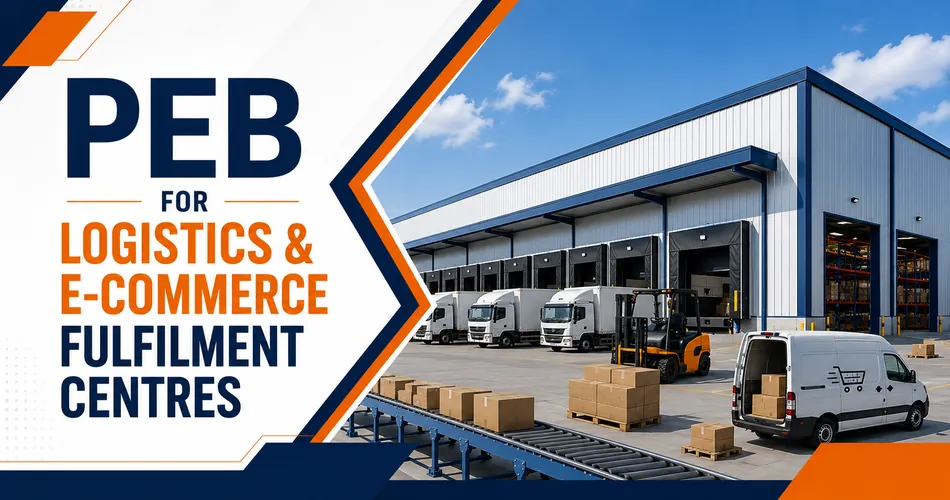
Walk into any big fulfillment hub near a highway these days and chances are you're standing inside a steel shed, not a brick building. That's not an accident. India's logistics business has grown so fast in the last few years that companies simply can't wait a year for a warehouse to get built. They need space now, and they need it to hold up under years of forklifts, racking and constant loading. That's the whole reason a PEB logistics warehouse India setup has become the default choice for anyone in this business.
So, what is PEB, actually? Short for Pre-Engineered Building. Basically, the steel frame gets designed and cut in a factory somewhere, then trucked to site and bolted together like a giant kit. No waiting on concrete to cure for weeks. No bricklayers stacking walls one row at a time in the heat. A PEB warehouse India project moves at a completely different speed than old school construction, and honestly, that's the whole appeal.
Table of Contents
Why Logistics and E-Commerce Companies Keep Choosing PEB
Here's the thing about warehouses used for logistics work. They're not like office buildings. You need huge open floors with barely any columns in the way, tall clear heights so racking can go up instead of out, and a structure tough enough to take the daily beating from stacked inventory and machinery rolling around all day. A PEB warehouse for logistics handles all of that without much fuss.
Because the steel is made in a factory under controlled conditions, quality doesn't swing from batch to batch the way it can with site mixed concrete. And there's way less material wasted too. The frame just gets assembled on site, which means fewer labourers standing around and fewer delays from rain or a shortage of masons that week.
For e-commerce companies specifically, every idle day costs money. Lost storage, missed dispatch windows, extra rent paid somewhere else while waiting for the new facility. That's precisely why so much e-commerce fulfillment centre construction happening across India right now leans on pre-engineered steel rather than the old brick and mortar route.
What a Pre-Engineered Warehouse Construction Actually Works
A typical pre-engineered warehouse India job starts with engineers running the numbers, wind load, seismic risk for that region, roof load, all of it, before a single steel plate gets cut. Once that design is locked in, fabrication starts at the factory. Compare that to conventional site-built structures, where a mid-project design change can mean tearing down half a wall and starting over.
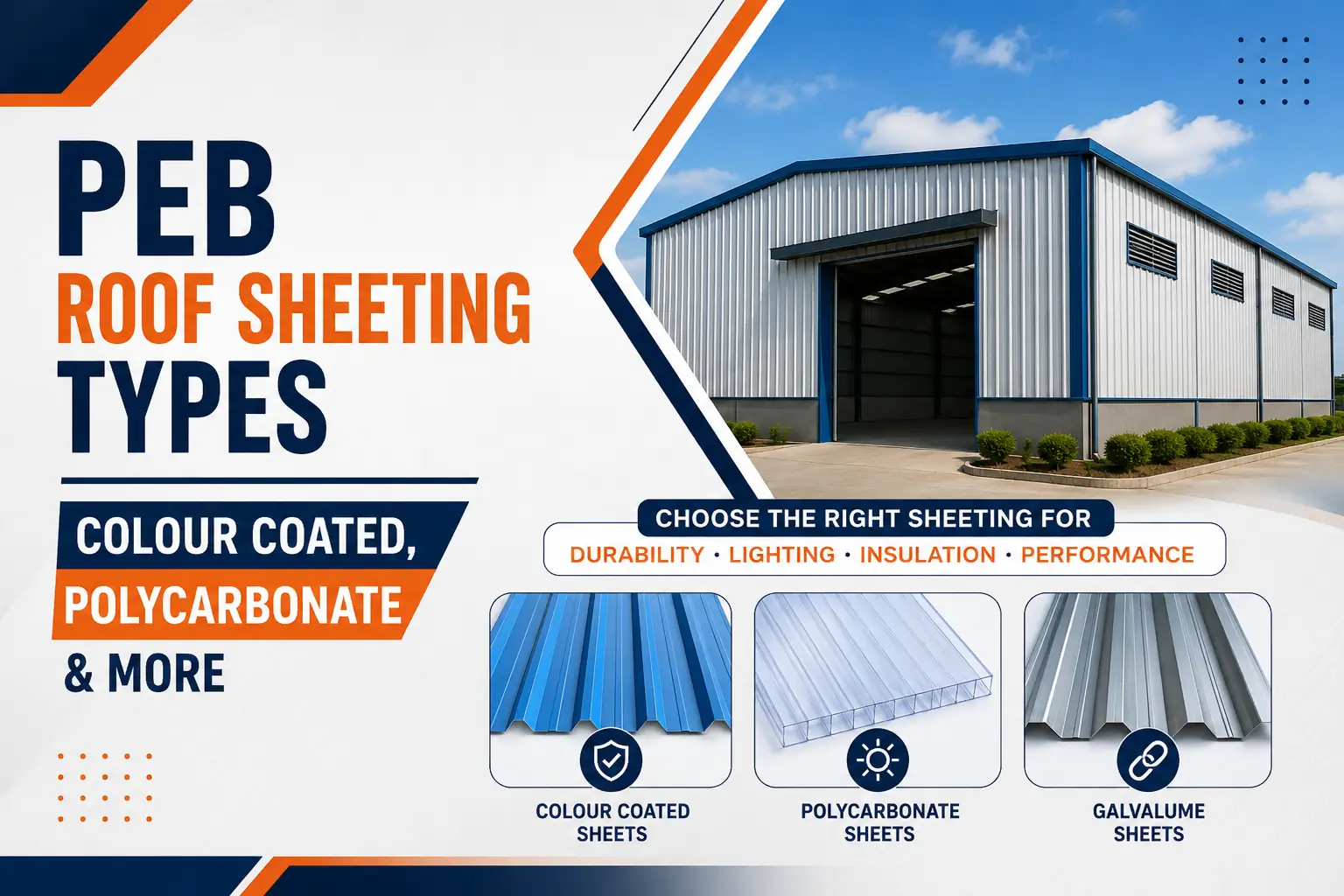
The building itself comes down to a few core parts. Primary framing, that's your columns and rafters. Secondary framing, purlins and girts. Then roof sheeting, wall cladding, and the bolts holding everything together. Since every piece arrives pre-cut to spec, the site crew is mostly assembling rather than building from scratch. That's a big part of why logistics warehouse construction India timelines have shrunk so much lately, mid-sized warehouses that used to take a year or more now come together in three to six months, sometimes less.
Read More: Warehouse Construction Using PEB
What Actually Matters to Warehouse Owners
Everyone talks about speed, sure, but it's not the only reason owners pick steel. A steel warehouse building India structure brings a few other things to the table:
- Long spans mean fewer columns cluttering the floor, so racking and pallet movement work better
- Decent fire resistance when the right coatings are used
- Room to expand later without ripping into the existing structure
- Way less upkeep, steel doesn't crack or need repainting like plastered walls do every couple of years
- Easier to meet the compliance standards e-commerce and 3PL operators expect these days
Honestly, if you look at the big fulfillment centres built along major logistics corridors over the past few years, nearly all of them run on steel framing. Masonry just doesn't compete anymore for this kind of use case.
Picking the Right PEB Manufacturer
Not all fabricators are equal, not even close. A solid PEB warehouse manufacturer India company will have real design software for load calculations, its own fabrication setup rather than outsourcing everything, and actual completed logistics projects you can go look at. Worth checking too whether they follow recognised design codes, and whether the steel is coated properly to resist rust, which matters a lot if the site is anywhere near the coast or a humid belt.
Before you sign anything, ask to visit a few of their older projects. Ask whether they actually hit the delivery dates they promised, not just what the contract says. Find out if they handle erection and installation themselves or if they just drop off steel and leave you to figure out the rest. A warehouse construction company India business can rely on will manage the whole thing, design through handover, so you're not stuck coordinating five different vendors.
Talking About PEB Warehouse Construction Cost
Cost comes up first in almost every conversation, and fair enough. PEB warehouse construction cost India wide swings based on plot size, how tall the clear height needs to be, roofing and cladding type, site location, and extras like mezzanine floors, insulation, or fire systems.
Generally speaking, PEB works out cheaper than RCC for large spans, less steel and concrete used overall, and construction wraps up faster, which saves on both labour and financing. That said, don't trust a flat per square foot number from anyone. Soil conditions change things, so does how far the site is from the nearest transport route. Get an actual quote based on your specific plot before making any decisions.
Read More: PEB Warehouse Cost Per Square Foot in India
Final Thoughts
India's warehousing demand isn't slowing down anytime soon, and pre-engineered steel is proving to be a genuinely practical answer for it. Fast, sturdy, and cheaper to run over time. Whether it's a regional distribution point or a massive e-commerce hub, PEB gives businesses the kind of speed and strength needed to actually keep up in a market that moves this quickly.
Frequently Asked Questions
1. How long does it actually take to build a PEB warehouse in India?
Most mid-sized projects wrap up in three to six months depending on size and how complex the design is. Compare that to RCC, which can easily stretch past a year for something similar in scale.
2. Can PEB handle cold storage or temperature-controlled fulfilment work?
Yes, definitely. Insulated panels and proper sealing can be added to the structure, and the framing supports the extra weight from insulation and refrigeration gear as long as that's planned from the design stage.
3. How long does a steel PEB warehouse actually last?
With decent maintenance and good quality coatings, you're looking at 30 to 50 years, sometimes more. Just keep an eye out for rust, especially if the site sits near the coast or somewhere humid.
Recent Post
Copyright ©2025 All Rights Reserved by nashtechpeb.com