- By Nashtech PEB Team
- May 25, 2026
- 0 Views
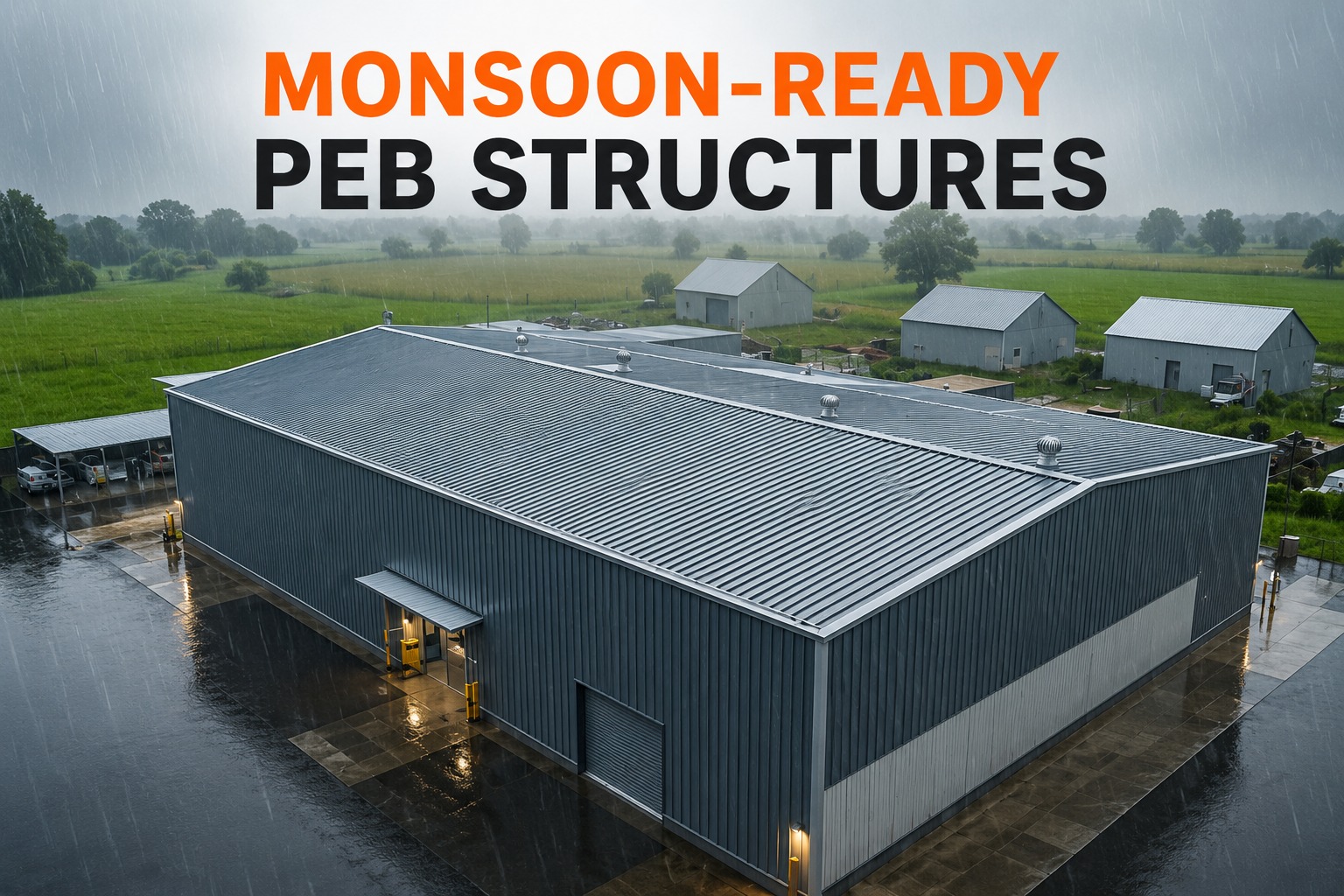
Monsoon-Ready PEB Structures: Why Steel Buildings Perform Better in Indian Weather
The monsoon period poses challenges to industrial structures across India. The heavy rain, the waterlogging as well as roof leakage, damage to the structure and structural deterioration are commonplace in traditional structures. Warehouses, factories, warehouses, and industrial sheds that are located in heavy rainfall areas often face maintenance issues when the monsoon comes. Due to this, businesses are now paying closer focus on weatherproof construction rather than only focusing on initial building costs.
In the past few years, a lot of enterprises have started to move towards Monsoon-ready PEB structures due to their superior endurance and performance in severe weather conditions. The traditional RCC as well as brick-based industrial structures might still be viable in some situations, but modern businesses today require quicker construction, less maintenance, and greater protection against the elements. This is among the main reasons PEB buildings in India are being increasingly chosen for logistics parks, warehouses and industrial projects in regions that experience monsoons.
Table of Contents
- Why Monsoon Protection Matters in Industrial Buildings
- Why Traditional Industrial Buildings Face Monsoon Problems
- What Makes PEB Structures Better for Monsoon Conditions?
- Better Roof Design for Rainwater Drainage
- Why Water Leakage is Lower in PEB Buildings
- Corrosion Protection in PEB Structures
- Faster Construction Helps Before Monsoon Arrives
- Why Warehouses Need Monsoon-Ready Structures
- Importance of Cladding Systems in PEB Buildings
- Why PEB Structures Work Better in Coastal Regions
- Industries Choosing Monsoon-Ready PEB Buildings
- Why Maintenance is Easier in PEB Structures
- Sustainability Benefits During Monsoon Conditions
- Future of Monsoon-Ready PEB Structures in India
- Conclusion
- FAQs
Why Monsoon Protection Matters in Industrial Buildings
Industrial structures are expected to be operational throughout the year with no interruptions.
However, during monsoon season structures that are poorly designed often encounter issues like:
- Roof leakage
- Water seepage
- Corrosion issues
- Damp walls
- Flooring damage
- Operational delays
For factories and warehouses the issues directly impact equipment, inventory and the daily operation.
This is why modern industries now focus heavily on weather-resistant PEB construction before starting industrial projects.
Why Traditional Industrial Buildings Face Monsoon Problems
Many conventional industrial structures in India were not designed specifically for modern industrial weather challenges.
Common issues in traditional buildings include:
- Slow drainage systems
- Cracks caused by moisture
- Roof water accumulation
- Higher long-term maintenance
In regions with heavy rainfall, these problems increase maintenance expenses significantly over time.
That is why many businesses are now comparing PEB vs traditional buildings in monsoon conditions before making construction decisions.
Read More: PEB vs RCC Structure
What Makes PEB Structures Better for Monsoon Conditions?
A pre engineered building (PEB) is designed differently from traditional construction. Instead of depending heavily on thick RCC sections, PEB systems use optimized steel structures along with engineered roofing and drainage solutions.
This improves:
- Rainwater management
- Structural efficiency
- Roofing performance
- Faster maintenance access
As a result, monsoon-ready steel buildings perform more efficiently during heavy rainfall conditions.
Better Roof Design for Rainwater Drainage
One major reason why PEB structures for Indian weather perform better is roof design. PEB roofs are generally designed with proper slope and drainage planning to avoid water accumulation.
This becomes important because standing water on roofs often causes:
- Leakage issues
- Structural stress
- Moisture-related damage
Modern PEB roofing systems help rainwater flow more efficiently, reducing long-term maintenance problems. Smart Roofing and Cladding Solutions help PEB structures handle heavy Indian monsoons with ease.
Why Water Leakage is Lower in PEB Buildings
Roof leakage is one of the most common monsoon complaints in traditional industrial buildings.
PEB structures reduce this issue because:
- Roofing sheets are precision-fabricated
- Joint systems are more controlled
- Fastener placement is engineered properly
- Drainage planning is integrated into design
When installed correctly, PEB warehouse buildings generally handle rainfall more efficiently than poorly maintained traditional structures.
Corrosion Protection in PEB Structures
Many people assume steel structures become weak during monsoon seasons. In reality, modern PEB steel structures use protective coatings and treatment systems that help improve durability.
Common protection systems include:
- Anti-corrosion coatings
- Galvanized steel components
- Protective paint systems
- Weather-resistant cladding materials
These systems help reduce moisture-related structural damage.
Faster Construction Helps Before Monsoon Arrives
Construction delays become a serious issue during rainy seasons.
Traditional construction projects often slow down because:
- Concrete curing gets affected
- Waterlogging interrupts site work
- Labor productivity reduces
In comparison, PEB construction in India is much faster because most structural components are fabricated before arriving at the site.
This allows projects to move faster even when weather conditions become challenging.
Why Warehouses Need Monsoon-Ready Structures
Warehouse operations are heavily affected by water damage.
If rainwater enters storage areas, businesses may face:
- Inventory damage
- Packaging deterioration
- Operational delays
- Increased maintenance cost
This is one reason why PEB warehouse construction is becoming more popular in logistics and storage sectors.
PEB structures provide:
- Better roofing systems
- Controlled drainage planning
- Faster maintenance access
- Large clear-span storage spaces
Importance of Cladding Systems in PEB Buildings
Wall cladding plays a major role in protecting industrial buildings from rain and moisture.
Modern PEB wall cladding systems help improve:
- Weather resistance
- Thermal performance
- Moisture protection
- Structural durability
This becomes especially useful in coastal and high-rainfall areas.
Why PEB Structures Work Better in Coastal Regions
Coastal regions in India often face:
- High humidity
- Heavy rainfall
- Moisture exposure
- Corrosion risks
Modern industrial PEB buildings are designed with materials and coatings that handle such environmental conditions more effectively.
This is one reason why many industries in coastal states now prefer steel structures for warehouses and factories.
Industries Choosing Monsoon-Ready PEB Buildings
Warehousing & Logistics
Logistics companies require uninterrupted storage operations all year round.
Manufacturing Units
Factories require stable, dry conditions for the production equipment.
Food Processing Industry
Food storage and processing facilities require controlled moisture conditions.
Pharmaceutical Warehouses
Storage facilities for medicine require security from moisture and leaks of water.
Cold Storage Facilities
Cold storage facilities require solid insulation and weatherproof structures.
Check Out: Cold Storage Warehouses Using PEB
Why Maintenance is Easier in PEB Structures
Traditional industrial buildings often develop hidden moisture-related issues over time.
In comparison, properly designed PEB industrial structures are easier to inspect and maintain because:
- Roofing systems are accessible
- Damaged sheets can be replaced faster
- Structural components are more organized
This helps industries reduce long-term operational disruptions.
Sustainability Benefits During Monsoon Conditions
PEB systems also support sustainable construction practices.
Compared to traditional methods, they generally:
- Produce less material wastage
- Reduce unnecessary site work
- Improve construction efficiency
- Use recyclable steel materials
This makes eco-friendly PEB buildings increasingly relevant in modern industrial construction.
Future of Monsoon-Ready PEB Structures in India
India’s industrial and logistics infrastructure is growing rapidly.
As businesses continue investing in:
- Warehouses
- Manufacturing plants
- Industrial parks
- Cold chain infrastructure
The demand for monsoon-resistant PEB structures is expected to increase. Companies now understand that long-term building performance matters just as much as construction speed.
Conclusion
Indian monsoons can pose serious issues in industrial facilities, specifically in manufacturing and warehouse facilities in which operational stability is essential.
This is the reason that many industries are moving towards Monsoon-ready PEB structures instead of relying entirely on traditional structures. Better drainage planning, more efficient roof systems, corrosion prevention and speedier construction all contribute to making PEB buildings more suitable for modern industrial needs.
As the industrial infrastructure continues to expand throughout India, weather-resistant PEB buildings are likely to play a significant role in the creation of strong and durable industrial areas.
FAQs
1. Why are PEB structures better for monsoon conditions?
They provide better drainage systems, improved roofing design, and stronger weather resistance.
2. Do PEB buildings reduce water leakage problems?
Yes, properly designed PEB roofing systems help minimize leakage and water accumulation issues.
3. Are PEB buildings suitable for coastal areas?
Yes, the latest PEB structures have protective coatings and materials resistant to corrosion that are suitable for coastal environments.
4. Which industries prefer monsoon-ready PEB buildings?
Warehousing, logistics, manufacturing, pharmaceutical, and food processing industries commonly prefer them.
Recent Post
Copyright ©2025 All Rights Reserved by nashtechpeb.com