
- By Nashtech PEB Team
- May 09, 2026
- 0 Views
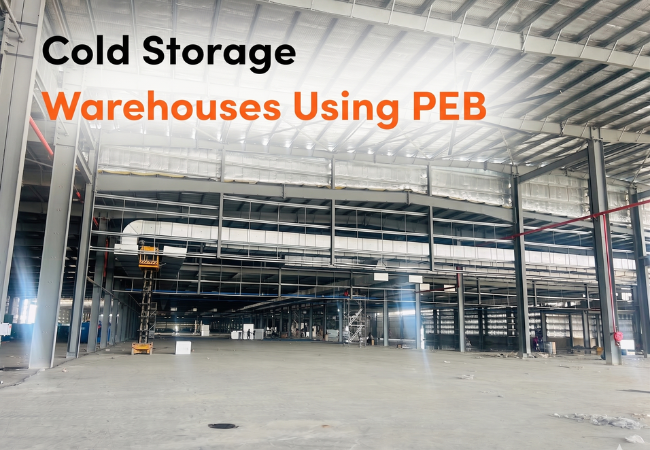
Cold Storage Warehouses Using PEB: Insulation, Panels & Temperature Control
Cold storage buildings are very different from normal warehouses. In a normal warehouse, the primary emphasis is on product safe storage. However, in a cold storage building is a part of the storage system. If insulation is poor or temperature control is not stable, the products inside start getting affected almost immediately. That is why businesses planning cold storage projects pay attention not only to the cooling equipment but also to the structure of the building.
Over the last few years, many companies have started using PEB cold storage warehouses instead of traditional RCC buildings. The reason is practical. Businesses want faster setup, easier expansion, and better internal planning. Whether it is frozen food, dairy products, medicines, or agricultural produce, industries now prefer pre engineered buildings for cold storage because they are easier to customize according to temperature and operational requirements.
Read More: PEB Structures for Automobile Manufacturing Plants in India
Table of Contents
- Why Cold Storage Projects Need Different Planning
- Why PEB Structures Work Well for Cold Storage
- Insulation is the Real Backbone of Cold Storage
- Types of Panels Used in PEB Cold Storage Warehouses
- Why Panel Installation Matters More Than People Think
- Temperature Control is More Than Just Cooling
- Airflow Planning Inside Cold Storage Facilities
- Why Businesses are Moving Towards PEB Cold Storage Warehouses
- Industries Using Cold Storage PEB Buildings
- Things Businesses Should Plan Before Construction
- Future of PEB Cold Storage Construction in India
- FAQs
Why Cold Storage Projects Need Different Planning
A normal industrial shed and a cold storage warehouse may look similar from outside, but internally they work very differently.
In a standard warehouse:
- Ventilation is important
- Open space matters
- Storage movement is the priority
But in a cold storage project:
- Temperature stability becomes critical
- Air leakage becomes a problem
- Insulation quality directly affects electricity cost
This is why companies involved in cold storage warehouse construction spend a lot of time planning insulation panels, airflow movement, and cooling efficiency before construction even begins.
Why PEB Structures Work Well for Cold Storage
There is a reason why PEB structure for cold storage are becoming common in India. The biggest advantage is flexibility.
In traditional construction, making modifications later becomes difficult. But with PEB, the structure can be designed according to:
- Required storage temperature
- Internal rack layout
- Cooling system placement
- Future expansion needs
This becomes useful especially for businesses that expect storage demand to increase later.
Another reason industries prefer PEB cold storage construction is speed. Most structural components are fabricated before arriving at the site, so installation happens much faster compared to conventional methods.
Insulation is the Real Backbone of Cold Storage
Most people focus heavily on refrigeration equipment, but experienced cold storage operators know that insulation matters just as much.
If insulation is poor:
- Cooling systems work continuously
- Electricity bills increase
- Temperature fluctuations become common
- Product quality starts getting affected
That is why insulation is never treated as an extra feature in temperature controlled warehouses using PEB. It is part of the main design itself.
A well-insulated building reduces heat transfer from outside and helps maintain stable internal temperatures.
Types of Panels Used in PEB Cold Storage Warehouses
Different cold storage projects require different insulation systems. The panel selection usually depends on what is being stored inside.
PUF Panels
PUF panels are one of the most commonly used insulation panels in cold storage warehouse construction.
They are preferred because:
- They provide strong thermal insulation
- Energy loss remains lower
- Internal temperature stays more stable
These panels are widely used for frozen food storage and pharmaceutical facilities.
EPS Panels
EPS panels are usually selected for moderate cooling applications.
They are lighter compared to some other insulation materials and are commonly used in:
- Vegetable storage
- Agriculture cold rooms
- Medium-temperature facilities
Rockwool Panels
Rockwool panels are generally preferred where both insulation and fire resistance are important. They are more common in industrial projects where safety standards are stricter.
Why Panel Installation Matters More Than People Think
Good insulation panels alone are not enough.
Even high-quality panels create problems if installation is poor. Small gaps between joints may look minor during construction, but later they start causing:
- Air leakage
- Moisture issues
- Uneven cooling
- Higher electricity consumption
This is one reason experienced companies involved in PEB cold storage warehouse projects focus heavily on sealing, alignment, and finishing during panel installation. Choosing the right execution partner makes all the difference — learn how to top PEB manufacturers in India for your project.
Temperature Control is More Than Just Cooling
Many people assume cold storage simply means installing refrigeration units. In reality, maintaining temperature inside a warehouse is much more complicated. Different products need different conditions.
For example:
- Frozen foods require sub-zero temperatures
- Fruits and vegetables need controlled cooling
- Medicines require stable regulated temperatures
Even slight variations can affect product quality.
That is why temperature controlled warehouse design involves careful planning of:
- Cooling systems
- Air circulation
- Panel insulation
- Internal movement space
All these systems need to work together.
Airflow Planning Inside Cold Storage Facilities
One mistake often seen in poorly designed cold storage buildings is uneven airflow. Some sections remain colder while others develop moisture problems. This usually happens because airflow planning was ignored during design.
In properly planned PEB cold storage warehouses, airflow is considered from the beginning.
This includes:
- Fan placement
- Rack spacing
- Air movement direction
- Ventilation balance
Good airflow improves cooling efficiency and helps maintain consistent storage conditions throughout the warehouse.
Why Businesses are Moving Towards PEB Cold Storage Warehouses
Faster Setup
Businesses do not want projects getting delayed for months. Since most steel components are prepared earlier, PEB warehouse construction usually moves faster than RCC projects.
For industries dealing with seasonal demand, this becomes extremely important.
Better Internal Space
Cold storage operations require proper rack layouts and organized movement areas.
PEB structures provide larger open spaces with fewer internal columns, which improves storage efficiency.
Easier Expansion Later
Many businesses start with limited storage capacity and expand later.
With PEB structures, future expansion becomes much easier compared to conventional concrete buildings.
Lower Maintenance Issues
Properly designed steel structures with quality insulation systems are easier to maintain over time.
For cold storage facilities running continuously throughout the year, this matters a lot.
Industries Using Cold Storage PEB Buildings
Today, cold storage warehouses using PEB are used in many sectors.
Food Industry
Frozen food companies require temperature-controlled storage for products before transportation and distribution.
Agriculture Sector
Farmers and exporters use cold storage for fruits, vegetables, and agricultural produce.
Dairy Businesses
Milk products require stable cooling conditions to maintain quality.
Pharmaceutical Industry
Medicines and vaccines often require strict temperature-controlled environments.
Seafood and Meat Processing
These industries depend heavily on reliable cold storage infrastructure.
Things Businesses Should Plan Before Construction
Before starting a cold storage project, companies usually evaluate:
- Temperature requirement
- Storage capacity
- Product type
- Cooling system load
- Future expansion possibility
Ignoring these things early often creates operational problems later.
That is why India PEB construction companies spend significant time understanding operational requirements before finalizing the design.
Future of PEB Cold Storage Construction in India
India’s cold chain sector is growing steadily. Food processing, agriculture exports, pharmaceutical distribution, and online grocery businesses are all increasing demand for modern cold storage infrastructure.
As this demand grows, PEB cold storage warehouses are likely to become even more common because they offer:
- Faster execution
- Better flexibility
- Easier customization
- Practical expansion options
For many industries, this approach simply makes more operational sense.
Conclusion
Cold storage buildings are not just about creating a covered space. Their performance depends on insulation quality, airflow planning, panel installation, and temperature stability.
This is why many industries now prefer cold storage warehouses using PEB instead of traditional construction methods. They provide flexibility, faster construction, and better support for modern cooling systems.
As India’s cold storage and logistics sector continues to grow, pre engineered buildings for cold storage will continue becoming an important part of industrial infrastructure development.
FAQs
1. Why are PEB structures preferred for cold storage warehouses?
They offer faster construction, flexible layouts, and better support for insulation systems.
2. Which panels are commonly used in cold storage buildings?
PUF panels, EPS panels, and Rockwool panels are commonly used depending on storage requirements.
3. Why is insulation important in cold storage warehouses?
Proper insulation helps maintain stable temperatures and reduces electricity consumption.
4. Can PEB cold storage warehouses be expanded later?
Yes, PEB structures are easier to expand compared to traditional RCC buildings.
Recent Post

Copyright ©2025 All Rights Reserved by nashtechpeb.com