
- By Nashtech PEB Team
- May 18, 2026
- 0 Views
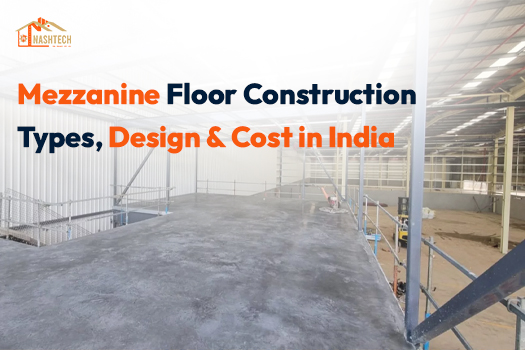
Mezzanine Floor Construction: Types, Design and Cost in India
Mezzanine floor construction is a smart way to maximize vertical space in warehouses, offices, and homes without expanding the building footprint. With steel structures, modern design, and efficient load management, it offers a cost-effective and scalable solution for industrial and commercial space optimization in India.
As urbanization accelerates and the cost of property continues to rise homeowners and businesses across India are seeking out more efficient ways to maximise the space available. A highly efficient options are mezzanine floor design that enables owners of homes to construct more usable floor space without increasing the size of the building footprint. In recent years, the demand for steel mezzanine floors has increased significantly as warehouses and industrial facilities expand. Many companies now prefer working with experienced PEB manufacturers in India to build strong and efficient mezzanine floor structures for storage and operational spaces.
A mezzanine floor can be described as an intermediate floor that is constructed between the primary floors of a building. It generally covers a portion of the floor which is supported using structural elements like steel beams or columns. Because it makes use of the vertical height of buildings efficiently, it is now a sought-after structural and architectural solution for factories, warehouses, offices, retail stores and residential homes.
Recent years have seen demand for mezzanine floors made of steel has risen dramatically due to the growing number of warehouses for logistics, manufacturing buildings, and commercial spaces. Companies are increasingly utilizing mezzanine structures to create offices, storage spaces or operational areas, without the expense of a new structure.
This guide will explain everything you should be aware of mezzanine floor construction in India, including its various types, mezzanine floor design calculation, design calculations and construction details, costs and current trends that are shaping the industry.
Also Read: Warehouse Construction Using PEB
Table of Contents
- Overview of Mezzanine Floor Construction
- What is Mezzanine Floor Construction?
- Types of Mezzanine Floors
- Mezzanine Floor Design
- Mezzanine Floor Design Calculations
- Steel Mezzanine Floor Construction Details
- Mezzanine Floor Construction Cost in India
- Factors Affecting Mezzanine Floor Cost Per Square Foot
- How to Calculate Mezzanine Floor Cost in India?
- Mezzanine Floor House Design
- Latest Trends in Mezzanine Floor Construction
- Conclusion
- Frequently Asked Questions (FAQs)
Overview of Mezzanine Floor Construction
| Feature | Details |
|---|---|
| Structure Type | Intermediate floor built between existing floors |
| Common Materials | Concrete slabs, steel structures and wood panels |
| Primary Uses | Warehouses factories, offices retail areas, houses |
| Construction Method | A reinforced structure system or steel framework |
| Design Considerations | Structural stability, capacity for load and safety features |
| Cost Determination | Based on the materials, design complexity and the project's specifications |
This report explains the reasons mezzanine floors are commonly used in modern commercial and industrial project construction in India.
What is Mezzanine Floor Construction?
Mezzanine floor construction is the process of constructing an intermediate floor in an existing structure to increase the floor space. As opposed to fully-fledged floor mezzanine levels are usually supported by beams, columns or structural structures and is designed to be integrated into the structure of the building.
They are particularly useful in high-ceilinged buildings and where floor space vertically can be used effectively.
The concept mezzanine floors are becoming increasingly relevant in fields like:
- Warehouses for industrial use
- Logistics facilities
- Retail showrooms
- Commercial offices
- Manufacturing plants
- Residential homes
Since they enable companies to increase their operating space rapidly mezzanine floors are thought of as an efficient and cost-effective solution to optimize space.
Types of Mezzanine Floors
Different kinds of mezzanine floors can be constructed based on the requirements of the building as well as the load capacity and the intended usage.
Steel Mezzanine Floor
One of the most common solutions in the industrial and warehouse setting is the steel mezzanine floor. It consists of steel beams, columns and decking panels which offer a strong structural level.
Key Features
- Structural strength of high quality
- Long life span
- Quick installation
- It is suitable for storage loads that are heavy.
Due to these benefits, steel mezzanine floor construction features are commonly employed in warehouses for logistics and industrial establishments.
Concrete Mezzanine Floor
Concrete made up mezzanine flooring is constructed through concrete slabs which are reinforced with reinforcements, which are supported by beams and columns
Benefits
- Extremely durable and strong
- For heavy machinery, it is suitable.
- Long life of the structure
But concrete mezzanine floors need more time and effort to prepare structurally as compared to steel systems.
Rack Supported Mezzanine Floor
Mezzanine floors supported by racks are typically employed in warehouses. In this type of system storage racks storage racks themselves serve as a supporting structure to the platform.
Advantages
- Space-efficient storage solution
- Perfect for distribution and logistics centers.
- Maximizes storage capacity in vertical directions
Free Standing Mezzanine Floor
A mezzanine floor free-standing on its own is an independent structure that is supported through its own columns, rather than the walls of a building.
Advantages
- Flexible installation
- It is possible to relocate or expand it.
- Little impact on the current structures of buildings
In warehouses and factories, mezzanine floors are often integrated with durable roofing and cladding systems that protect the building from weather conditions and improve structural performance.
Mezzanine Floor Design
A mezzanine floor design should be planned carefully for safety efficiency as well as structural stability. Engineers take into consideration a variety of factors when creating a mezzanine design.
Load Capacity
A major and crucial aspects in mezzanine flooring design to determine the capacity of the load.
The structure must be able to support:
- Equipment weighs
- Storage loads
- Personnel traffic
The accuracy of the load calculation ensures that the floor is safe and stable during the process.
Structural Framework
The structural framework typically consists of:
- Steel beams
- Structural columns
- Decking systems
They distribute the loads equally and contribute to the structural integrity of the mezzanine floor. Engineers often design customised steel structures based on the load requirements, floor span, and layout of the mezzanine platform.
Also Read: What is Rigid Frame Structure?
Accessibility
Depending on how the building is designed, mezzanine floors may be available accessible through ladders, stairs or lifts.
Safety Features
Modern mezzanine floors are on safety, including:
- Guardrails
- Fire protection systems
- Anti-slip flooring
- Access routes for emergencies
These components guarantee compliance with building safety standards.
Mezzanine Floor Design Calculations
An accurate engineering analysis is vital for ensuring the safety of mezzanine flooring construction. Structural engineers conduct mezzanine floor design calculations for determining the proper dimensions and load-bearing capacities of the structure.
Key design calculations include:
Dead Load Calculation
Dead load is the term used to describe the weight of structural parts that are permanently constructed like floor panels, beams and support columns.
Live Load Calculation
Live load refers to movable items like people, storage products, and even machinery.
Deflection Analysis
Engineers study beam deflection to ensure that the structure does not sag excessively under pressure.
Structural Stability
Structural calculations establish the necessary beam thickness, column spacing as well as support structures.
Steel Mezzanine Floor Construction Details
The steel mezzanine floor construction process is relatively quick compared to conventional building expansion.
Step 1: Site Assessment
Engineers check the arrangement of the building such as height of the ceiling, area of the floor and the area of floor.
Step 2: Structural Design
The detailed structural drawings are drawn according to requirements for load and building specifications. During the structural design stage, engineers may also integrate a light gauge framing system to support lightweight partitions, interior wall structures, and service areas within mezzanine platforms in modern industrial buildings.
Step 3: Fabrication
Components made of steel including columns and beams are manufactured in factories.
Step 4: Installation
The frame is made on site with connectors and bolts made of steel.
Step 5: Decking Installation
The mezzanine floor is constructed using flooring panels or decking materials.
Step 6: Finishing
Safety lighting, staircases, railings and other safety features are also added.
Many industries choose to work with experienced industrial PEB building company to ensure that mezzanine structures meet safety standards and load-bearing requirements.
Mezzanine Floor Construction Cost in India
A mezzanine floor construction cost in India can't be calculated by a fixed cost since every project is unique in specifications for design and structure.
The total cost of the project is based on a variety of factors, including flooring area, material selection structure complexity and the installation requirements.
Due to this, the mezzanine floors are usually made to order and the end cost will be arrived at once the engineering analysis and planning are complete.
Structural engineers or construction experts are normally consulted by companies that intend to install mezzanine floors to get the most convenient plan and design to adopt in their construction.
Factors Affecting Mezzanine Floor Cost Per Square Foot
While a fixed cost cannot be determined, a variety of important elements affect the mezzanine floor price per square foot.
Material Selection
The type of concrete used, steel or any other form of structural material may influence the total cost of the project.
Design Complexity
The design of mezzanine flooring that is custom made and need specific structural elements could make construction more expensive.
Load Bearing Requirements
Floors designed for industrial heavy loads require more robust structures to support them.
Floor Area
The dimensions that the floor of mezzanine determines how much of material and installation work needed.
Additional Features
The staircases and safety railings fire protection systems, and lighting are all factors that can affect the overall project costs.
How to Calculate Mezzanine Floor Cost in India?
Many engineering firms are now offering mezzanine floor cost calculator India tools that help businesses determine the cost of projects.
They typically take into account:
- Floor size
- Structural capacity to carry loads
- The thickness of the steel and its grade
- Materials for decking
- Security systems
By using this information, companies can determine the likely construction costs prior to launching the construction.
Mezzanine Floor House Design
Modern architecture has seen mezzanine floor home design is growing in popularity particularly in urban homes with high ceilings.
Mezzanine floors are often used by homeowners to:
- Study rooms
- Home offices
- Spaces in libraries
- Guest rooms
- Storage areas
This is the design strategy that enables the home owners to utilize the most of the vertical space without creating an obstructed and modern interior design.
Latest Trends in Mezzanine Floor Construction
Many technological innovations are creating the future for mezzanine building in India.
Modular Mezzanine Systems
Prefabricated systems are modular and are easily installed and designed.
Smart Warehouse Platforms
Contemporary mezzanine systems of an automated warehouse and logistics IT.
Sustainable Steel Construction
Mezzanine floors made of steel are becoming increasing in popularity due to the fact that it is recyclable and eco-friendly.
Integrated Industrial Platforms
Modern mezzanine floors are designed to work with modern industrial automation systems and storage solutions.
Conclusion
Mezzanine floors have emerged as among the top effective options for maximising the space available in modern buildings. In factories, warehouses or offices, residential residences, and mezzanine floor construction can be a useful solution to expand the usable floor space without extending the footprint of a building.
As the logistic infrastructure has expanded and industrial growth has increased and modern architectural designs have been adopted the mezzanine floor has also become a normal feature of industrial and commercial construction projects across the whole of India.
Through the right choice of mezzanine floor design, materials, structural computation, home owners and businesses are able to create strong and efficient spaces that add value and productivity to the property.
If you are planning to add a mezzanine platform in a warehouse or industrial building, working with a leading PEB company in India ensures better structural design, faster construction, and long-term durability.
Frequently Asked Questions (FAQs)
1. What is mezzanine floor construction?
Mezzanine floor construction is the process of building one floor in between floors of a structure to provide additional space. It is extensively utilized in offices, warehouses and commercial buildings.
2. What factors affect mezzanine floor construction cost in India?
The cost is determined by elements like the materials used, the structure complexity, floor space, load requirements and security features.
3. What materials are used in steel mezzanine floor construction?
Steel mezzanine floors usually use structural steel beams, columns decking panels, decking and flooring systems which is made up of metal to provide strength and durability.
4. Where are mezzanine floors commonly used?
Mezzanine floors are commonly used in factories, warehouses, offices, retail stores and even residential buildings to expand the floor area.
Recent Post


Copyright ©2025 All Rights Reserved by nashtechpeb.com