
- By Nashtech PEB Team
- Aug 03, 2026
- 0 Views
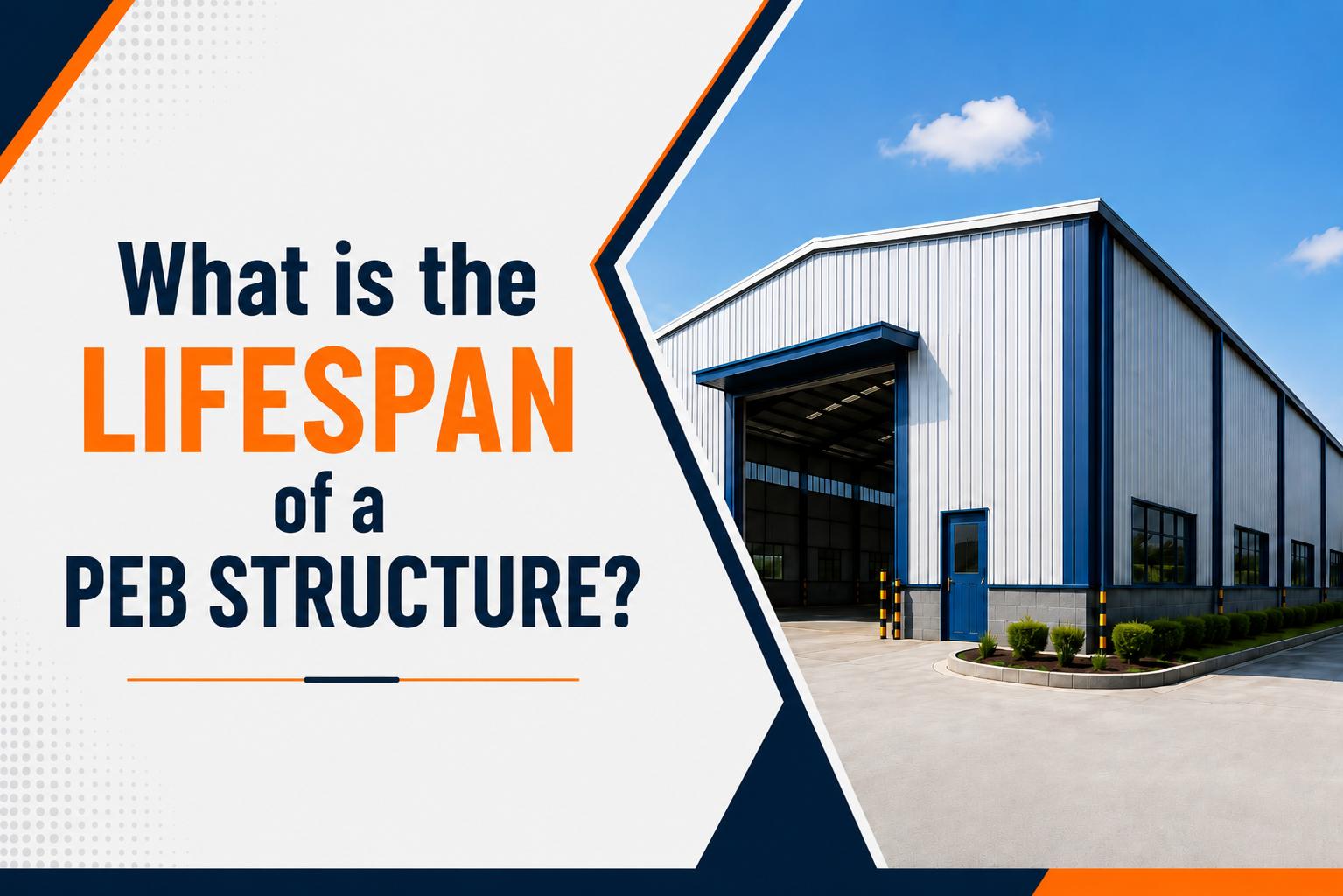
What is Lifespan of PEB Structure?
People ask this question a lot before they commit to steel. Brick has this reputation for lasting forever, so naturally there's some doubt when it comes to the lifespan of a PEB structure. Truth is, a properly built steel structure holds up a lot longer than most people expect, often outlasting the assumptions people carry over from older, cheaper steel sheds built decades ago.
Fabrication standards have come a long way. Coatings are better. Engineering software catches problems that used to slip through. A shed built today isn't the same product as something thrown together in the eighties, and that gap really shows once you look at how long modern structures actually last on site.
Table of Contents
- PEB Building Lifespan, Roughly Speaking
- What Actually Determines PEB Structure Life Expectancy
- So, How Long Do PEB Buildings Last?
- Why Pre Engineered Building Lifespan Varies So Much
- Why Steel Holds Up the Way It Does
- Staying On Top of PEB Structure Maintenance
- PEB Building Service Life Versus Traditional Construction
- Climate Changes Everything for PEB Steel Structure Lifespan
- PEB Building Life in India, Region by Region
- Final Thoughts
- Frequently Asked Questions
PEB Building Lifespan, Roughly Speaking
Most estimates put PEB building lifespan somewhere between thirty and fifty years. Sometimes longer, sometimes shorter, depending on a handful of things working together rather than one clean number that applies to every site equally.
A shed sitting near the coast, dealing with salty air and constant humidity, wears differently than one out in a dry inland district. A structure handling heavy vibration from machinery all day ages differently than a quiet storage shed that barely sees traffic. Where a particular building lands in that thirty to fifty year window really depends on these details.
Check Out: PEB Construction Process Step By Step
What Actually Determines PEB Structure Life Expectancy
A lot goes into PEB structure life expectancy, and steel grade is usually near the top of the list. Thicker, higher quality steel simply resists stress and rust better than thinner material chosen just to save money upfront.
Coating quality matters even more, honestly. Galvanised steel or a properly primed paint job keeps rust at bay far longer than a rushed or minimal coating job. And design accuracy counts too, a structure engineered specifically for its local wind load, seismic risk and roof load handles stress far better over the years than something built off a generic template with no thought given to where it's actually sitting.
So, How Long Do PEB Buildings Last?
Ask how long do PEB buildings last and the honest answer is, it depends where and how it's used. A dry goods warehouse in a mild climate, checked on periodically, tends to land on the higher end of that range without much drama. A building sitting near salt air or constant chemical exposure without the right protective coating shows wear a lot sooner, sometimes needing serious repair well before it hits anywhere near its theoretical max age.
Buildings that get checked regularly, especially around the roof seals and any early rust spots, consistently outlast the ones nobody bothers looking at for years at a stretch. That part isn't complicated, it's just easy to skip.
Why Pre Engineered Building Lifespan Varies So Much
Pre engineered building lifespan swings a fair bit from site to site, and foundation quality is one reason people overlook. A shed sitting on a weak or poorly reinforced foundation shifts unevenly over time, and that uneven settling puts stress on the steel frame above it, no matter how well that frame itself was built.
Bolted joints need attention too. Steel expands and contracts with the seasons, and over years that movement can loosen bolts slightly. Catching this during a routine check is nothing. Letting it go unnoticed for a decade is how small problems turn into expensive ones.
Why Steel Holds Up the Way It Does
PEB building durability basically comes down to the material itself, plus whatever protection it's given. Steel doesn't crack or crumble the way plastered brick does under years of weather. It bends slightly under pressure instead of snapping, which actually works in its favour during earthquakes or strong wind events compared to more rigid masonry.
But none of that durability is automatic just because it's steel. Skip the anti corrosion coating and rust creeps in, slowly at first, then not so slowly. That's exactly why getting the coating spec right at the design stage matters so much if the goal is decades of use rather than just a handful of years before problems start.
Staying On Top of PEB Structure Maintenance
Regular PEB structure maintenance stretches out service life by a wide margin compared to a building nobody ever checks on. A basic routine really isn't complicated:
- Look over the roof sheeting once or twice a year for damage or loose fasteners
- Clear out gutters and drainage before monsoon hits
- Watch for surface rust, especially near joints and welds
- Touch up coating wherever it's starting to wear thin
- Check that bolted connections haven't loosened
- Deal with any water pooling near the foundation right away, not later
Catching a loose bolt or a small rust patch early costs almost nothing to fix. Ignore it for a few years and it turns into a real repair bill.
Read More: After-Sales Service & AMC for PEB Buildings
PEB Building Service Life Versus Traditional Construction
Stack PEB building service life up against RCC and there's a decent case for steel. RCC structures deal with cracking, spalling, and waterproofing failures as the years go by, and fixing those problems isn't cheap. Steel dodges most of that, though it brings its own headache around corrosion that concrete doesn't really deal with in the same way.
Overall, a steel structure that's been built properly and looked after holds its own against traditional buildings over a similar multi decade stretch, usually with less money spent on repairs along the way.
Climate Changes Everything for PEB Steel Structure Lifespan
Climate probably matters more than people think when it comes to PEB steel structure lifespan. Salty, humid coastal air speeds up corrosion a lot faster than a dry inland climate does, which means coastal buildings need better coatings and more frequent inspection just to reach the same lifespan as something built somewhere less harsh.
Industrial areas dealing with chemical exposure face a similar challenge, often needing specific coatings built to resist particular chemical reactions rather than just standard weatherproofing. Bringing up local climate conditions with the contractor during design, rather than after construction wraps up, makes a real difference here.
PEB Building Life in India, Region by Region
PEB building life in India shifts quite a bit depending on where the structure actually sits. Coastal states like Gujarat, Maharashtra, Tamil Nadu and Kerala deal with higher corrosion risk thanks to humidity and salt in the air, while drier states further north and west generally see steel wear less aggressively. Monsoon intensity plays into this too, areas getting hit hard by seasonal rain need dependable roof sealing and drainage or they'll run into water damage well before the structure's expected lifespan is up.
Given all that, a lifespan number that works fine for a shed out in Rajasthan won't necessarily hold for something built along the Konkan coast. Which is exactly why site specific planning matters so much instead of leaning on one generic figure for every project.
Final Thoughts
A properly designed PEB structure, built with the right coatings and given a reasonable amount of upkeep, can comfortably run thirty to fifty years, sometimes well beyond that depending on climate and how hard it gets used. Steel itself is tough, but that toughness only shows up fully when the right choices get made at the design and fabrication stage, backed up by consistent maintenance once the building is actually in use. Anyone planning a structure meant to last for decades should treat maintenance as part of the plan from day one, not something dealt with after problems already show up.
Frequently Asked Questions
1. What is the average lifespan of a PEB structure in India?
Most well built and properly maintained structures last somewhere between thirty and fifty years, though that range shifts based on regional climate, steel quality, coating choices, and how consistently maintenance actually happens over the years.
2. Does a PEB structure need more upkeep than a traditional building?
Not really more, just different. PEB needs periodic checks for rust and loose bolts, while RCC buildings deal with their own issues around cracking and waterproofing. Both need regular attention if they're going to hit their full expected lifespan.
3. Can a PEB structure last longer than fifty years?
Yes, plenty do. With consistent maintenance, timely coating touch ups, and fixing small issues before they turn into big ones, a lot of PEB structures keep performing well past the typical range, especially in milder climates without heavy corrosive exposure.
Recent Post

Copyright ©2025 All Rights Reserved by nashtechpeb.com