- By Nashtech PEB Team
- Jul 08, 2026
- 0 Views
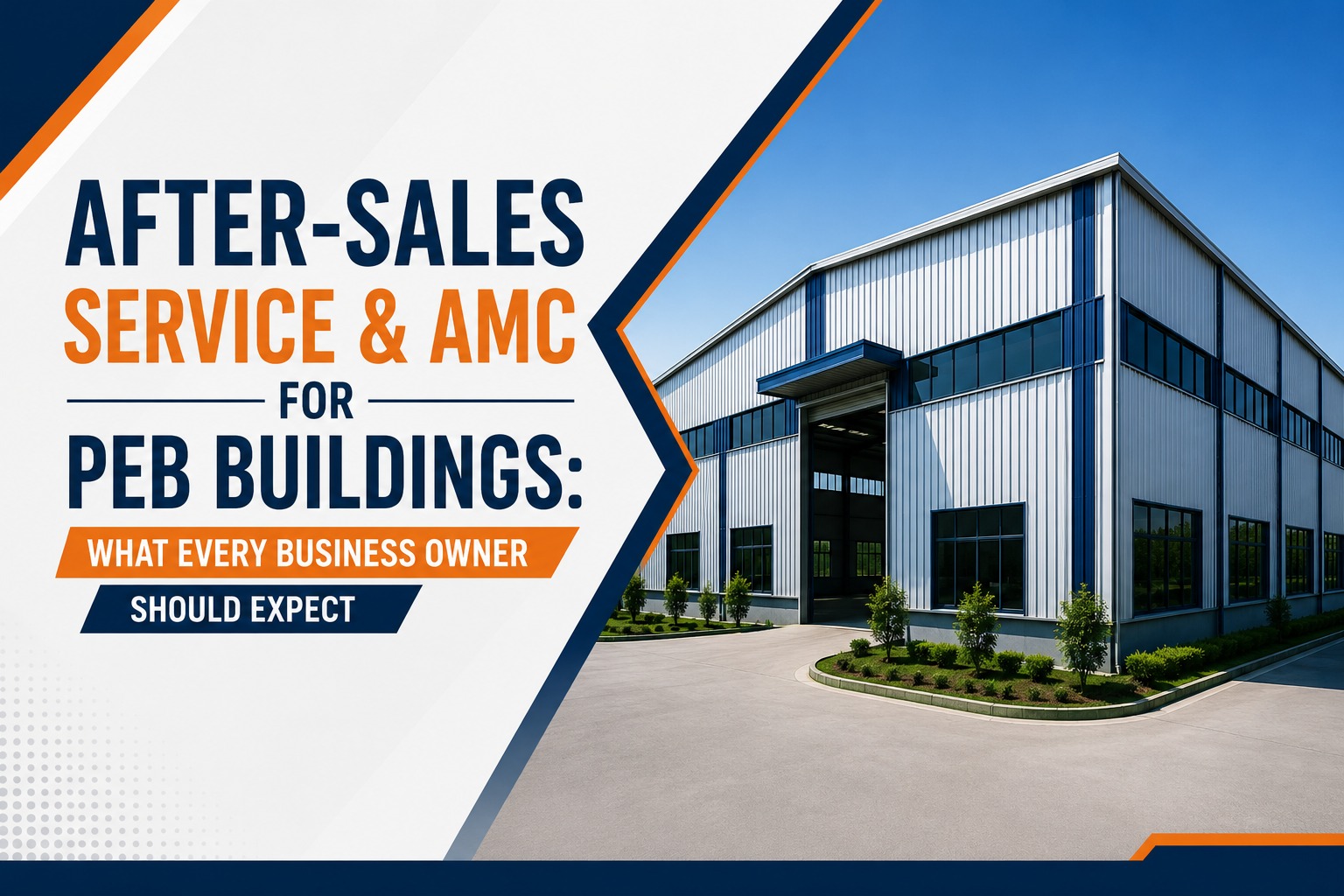
After-Sales Service & AMC for PEB Buildings: What Every Business Owner Should Expect
Putting up a Pre Engineered Building (PEB) is no small investment. It's a warehouse, manufacturing, logistics, industrial shed, or commercial facility, and you're expecting it to support your operations over the next decade or more. When choosing a PEB company, most owners invest time in design, quality and construction time. These are important things, after all, fair enough? However, one other point often goes unnoticed: after-sales service and Annual Maintenance Contract (AMC).
The point is: while a building can be built in a few months, maintaining it is a different story and a difficult one at that, and it's never ending.
Although a well-constructed PEB building will be durable, it cannot simply be abandoned after completion. As with any type of industrial property, it requires periodic exams and proactive maintenance. If you are looking to keep the building performing as intended then you must check on roof panels, fasteners, gutters, expansion joints, sealants, and drainage systems on a regular basis. This is why a PEB building maintenance contract is so important. A planned maintenance strategy allows businesses to prevent issues from occurring in the first place, reduce downtime and also extend the life of the building, instead of reacting when things go wrong.
Also Read: Land Requirements & Site Preparation for PEB Projects
Table of Contents
- Why After-Sales Service Actually Matters
- So, What Exactly Is an AMC for PEB Buildings?
- Preventive Maintenance Beats Emergency Repairs, Every Time
- What's Typically Covered in a PEB Building Maintenance Contract?
- What Do You Actually Get Out of an AMC?
- How Often Should You Actually Inspect a PEB Building?
- Signs Your PEB Building Needs Attention
- Picking the Right PEB Company for AMC Services
- Mistakes Businesses Keep Making
- Good After-Sales Support Says a Lot About a PEB Company
- Conclusion
- FAQs
Why After-Sales Service Actually Matters
There's a common assumption that once a PEB project is handed over, the manufacturer's job is done. That's not how it should work. The relationship between a business and its PEB company ought to continue well beyond the day construction finishes.
Good after-sales service for PEB buildings helps in a few concrete ways:
- It keeps the structure in solid condition over time
- It catches small issues before they turn into expensive repairs
- It improves overall building safety
- It keeps operations running smoothly
- It protects the long-term value of your investment
Honestly, how well a company supports you after the project is often a better indicator of its professionalism than how the project itself was handled.
So, What Exactly Is an AMC for PEB Buildings?
An Annual Maintenance Contract (AMC) is simply a scheduled service agreement between the building owner and the PEB company. Instead of waiting around for something to break and then fixing it, an AMC is built around regular inspections, preventive maintenance, and timely servicing.
A good PEB building maintenance contract essentially keeps tabs on the structural health of your building throughout its working life — so nothing sneaks up on you.
Preventive Maintenance Beats Emergency Repairs, Every Time
Industrial buildings run year-round. They don't get a break, and neither should your maintenance schedule.
Small issues — a loose fastener here, a blocked gutter there — can seem trivial at first glance. Ignore them long enough, though, and they tend to snowball into:
- Roof leakage
- Corrosion
- Structural wear
- Water damage
- Production interruptions
Catching these problems early, through preventive maintenance, is almost always cheaper and less disruptive than dealing with them once they've already caused damage.
What's Typically Covered in a PEB Building Maintenance Contract?
Every company structures its packages a little differently, but a solid PEB AMC service usually covers the following areas.
Periodic structural inspection. Engineers go through the primary steel members — columns, rafters, bracing systems, structural connections — looking for anything that hints at wear or damage before it starts affecting operations.
Roof inspection. The roof takes the brunt of the weather — sun, rain, dust, wind, all of it. Inspections here typically look at the roofing sheets, fasteners, flashings, sealants, and ridge caps. Catching issues early is really the only way to stay ahead of water leakage and corrosion.
Wall cladding inspection. Wall panels need regular checks too — surface damage, loose fasteners, corrosion, and joint condition all get looked at. Keeping the wall system in good shape isn't just about looks; it directly affects how well the building holds up against the weather.
Gutter and downpipe cleaning. Industrial roofs pick up dust, leaves, and general debris throughout the year, and blocked drainage can lead to water accumulation, overflow, roof leakage, and eventually structural deterioration. Regular cleaning keeps the water moving the way it's supposed to.
Fastener tightening. Vibration, weather exposure, and everyday operations can loosen fasteners over time. Routine checks make sure bolts stay secure, roof fasteners remain tight, and structural joints hold their stability — which matters a lot for overall safety.
Sealant inspection. Sealants around joints, roof penetrations, skylights, and flashings tend to crack or wear down eventually. Replacing them when needed keeps the building weather-resistant and prevents water from seeping in where it shouldn't.
Corrosion inspection. Modern PEB buildings come with protective coatings, but industrial environments — especially ones with moisture or chemical exposure — can still take a toll on steel over time. Inspections here are about catching surface rust, coating damage, or corrosion-prone spots early, so the building's lifespan doesn't take a hit.
A few extras worth mentioning. Depending on the AMC package and the type of building, some contracts also include roof cleaning, skylight inspection, expansion joint checks, ventilator servicing, mezzanine inspection, crane support inspection, and minor repair work.
What Do You Actually Get Out of an AMC?
A longer building life. Regular maintenance protects structural components and stretches out the overall service life of the building — plain and simple.
Lower repair costs. Fixing small things is almost always cheaper than replacing major structural elements down the line. Preventive maintenance keeps those unexpected big bills from showing up.
Better safety. Routine inspections flag potential safety issues before they become a problem for workers or operations.
Stronger weather protection. Keeping the roofing, gutters, and sealants in good condition makes the building more resilient against rain, wind, and general moisture buildup.
Less downtime. Unplanned repairs have a way of interrupting production or warehouse work at the worst possible time. Scheduled maintenance keeps disruptions to a minimum and keeps the business running.
How Often Should You Actually Inspect a PEB Building?
This depends a bit on the building type and the environment it's operating in, but as a general rule of thumb, most industrial facilities do well with:
- A general inspection every six months
- Roof inspections both before and after the monsoon
- Drainage cleaning ahead of the rainy season
- A full structural inspection once a year
If your facility sits in a coastal area or deals with chemical exposure, you'll probably want to inspect more often than that.
Signs Your PEB Building Needs Attention
Keep an eye out for these warning signs — if you notice any of them, it's worth scheduling an inspection sooner rather than later:
- Water leakage
- Rust formation
- Loose roofing sheets
- Damaged wall panels
- Blocked gutters
- Unusual structural movement
- Cracked sealants
Catching these early almost always saves you from a much bigger, much costlier structural problem later on.
Picking the Right PEB Company for AMC Services
Not every company offers the same level of after-sales support, so it's worth asking a few pointed questions before you sign a PEB maintenance contract:
- What exactly is included in the service?
- How frequently will inspections happen?
- Are emergency visits part of the package?
- Will you get inspection reports after each visit?
- Are replacement materials included, or billed separately?
A company that can answer these clearly — and backs it up with real technical support — is generally a safer long-term bet.
Read More : 10 Questions to Ask Your PEB Manufacturer Before Starting Your Project
Mistakes Businesses Keep Making
It's surprisingly common for building owners to ignore maintenance entirely until something visibly breaks. Some of the more frequent mistakes include:
- Skipping annual inspections altogether
- Brushing off minor roof leaks
- Putting off corrosion treatment
- Letting gutters clog up
- Delaying fastener replacement
None of these save money in the long run — they just push the cost further down the road, where it tends to get bigger.
Good After-Sales Support Says a Lot About a PEB Company
A PEB manufacturer worth trusting doesn't vanish the moment the project is handed over. The good ones stick around, offering technical guidance, scheduled inspections, maintenance recommendations, repair assistance, and honest evaluations of how the building is performing over time.
At the end of the day, strong after-sales service is what helps a business actually get its money's worth out of the investment.
Conclusion
Building a PEB building is only the first step. Regular inspections, preventive maintenance, and reliable technical support are essential for keeping it in top shape after the installation. A good PEB building maintenance agreement will reduce repair costs, make the building safer, extend the life of the building and give the business the peace of mind that it will not suffer the disruptions that nobody wants to experience in their operations.
To invest in quality after sales service and an AMC is one of those that pays off quietly over the years, whether you are running a warehouse, factory, logistics center or industrial shed. A company with PEB experience that you can trust won't complete construction of your facility, but will be there for you long after the last nail is hammered.
FAQs
What is a PEB building maintenance contract?
It's an Annual Maintenance Contract (AMC) that covers scheduled inspections, preventive maintenance, and ongoing servicing of PEB structures.
Why is AMC important for industrial buildings?
It helps catch issues early, keeps repair costs down, improves safety, and extends how long the building lasts.
What's usually covered under a PEB AMC?
Structural inspections, roof maintenance, gutter cleaning, fastener checks, sealant inspection, and corrosion monitoring are the usual suspects.
How often should a PEB building be inspected?
Once a year at minimum for a full structural check, with roof and drainage inspections done before and after the monsoon season.
Recent Post
Copyright ©2025 All Rights Reserved by nashtechpeb.com