
- By Nashtech PEB Team
- Jul 06, 2026
- 0 Views
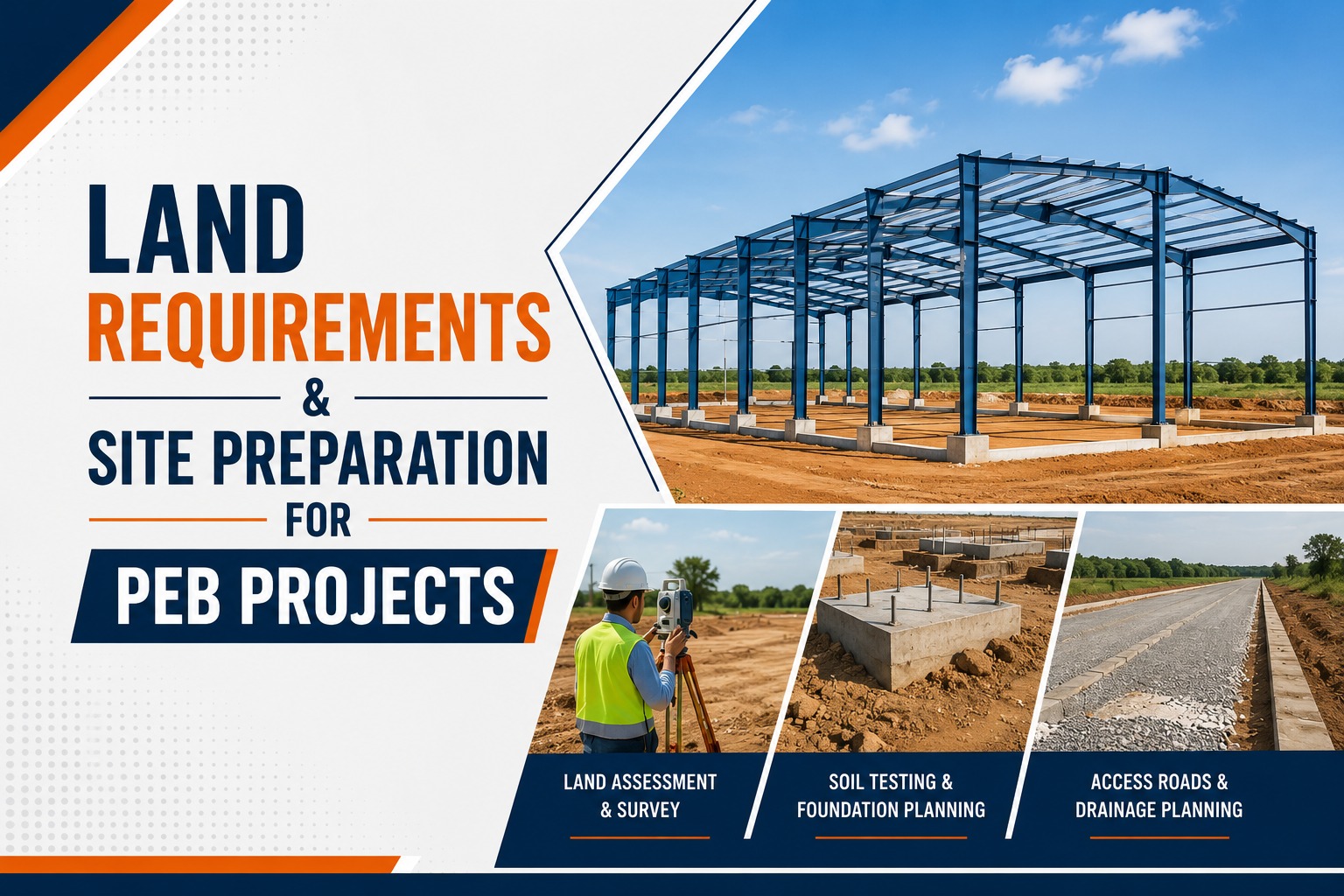
Land Requirements & Site Preparation for PEB Projects: A Complete Planning Guide
The first steps in the Pre Engineered Building (PEB) process start well before the steel even arrives onsite. Though most businesses pay attention to the design and fabrication of the building, and to its construction timetable, many projects fail because of the one critical factor that is often missed: the choice of land and preparation of the site. Selecting an appropriate plot and the correct preparation will prevent problems with construction time, foundations, drainage and unforeseen additional project cost later on. That is why PEB site preparation India is regarded as one of the most crucial stages of any kind of industrial project.
In each PEB project, whether it is a warehouse, factory, logistics center, food processing plant, or manufacturing facility, the first step is to comprehend the land. The quality of the construction work and the building's performance are directly impacted by factors like drainage, soil condition, site level, accessibility, and availability of utilities. A well-ready site will accelerate construction, as well as ensure the longevity and stability of the structure. Planning in advance of construction helps save on time and dollars.
Table of Contents
- Quick Checklist Before Starting a PEB Project
- Why Site Preparation Matters in PEB Construction
- Choosing the Right Land for a PEB Project
- Soil Testing: The First Technical Step
- Site Survey and Layout Planning
- Foundation Planning
- Site Access for Construction Equipment
- Space for Material Storage
- Environmental Considerations
- Safety During Site Preparation
- Common Mistakes During Site Preparation
- How Professional PEB Companies Simplify Site Preparation
- Why Good Site Preparation Saves Money
- Conclusion
- FAQs
Quick Checklist Before Starting a PEB Project
|
Requirement |
Why It Matters |
|
Land ownership verification |
Prevents legal issues |
|
Soil testing |
Determines foundation type |
|
Site leveling |
Ensures structural stability |
|
Drainage planning |
Prevents waterlogging |
|
Utility access |
Supports construction and operations |
Why Site Preparation Matters in PEB Construction
No matter how well a PEB structure is designed, poor site conditions can affect the overall project.
A properly prepared site helps:
- Improve foundation performance
- Reduce construction delays
- Minimize future maintenance
- Prevent water accumulation
- Ensure accurate structural alignment
Professional PEB project site preparation creates a strong base for long-term industrial infrastructure.
Choosing the Right Land for a PEB Project
Before purchasing or developing industrial land, businesses should evaluate several important factors.
Industrial Zoning
The land should be approved for industrial or commercial use according to local development regulations.
Accessibility
The site should allow smooth movement of:
- Trucks
- Construction equipment
- Raw materials
- Finished goods
Easy access improves logistics and reduces transportation costs.
Future Expansion
Businesses should also consider future growth.
Selecting a larger site allows additional warehouse space, production units, or office buildings to be added later without relocating operations.
Soil Testing: The First Technical Step
A soil investigation is one of the most important stages of PEB construction site preparation.
A geotechnical survey helps engineers understand:
- Soil bearing capacity
- Groundwater level
- Soil composition
- Foundation suitability
The results determine which type of foundation is most appropriate for the project.
Skipping soil testing can lead to structural issues and increased construction costs.
Read More: PEB Foundation Types: Isolated, Raft & Pile — Which Suits Your Soil?
Site Survey and Layout Planning
Once the land is finalized, a detailed site survey is carried out.
The survey identifies:
- Plot boundaries
- Existing structures
- Natural slopes
- Road access
- Utility locations
Accurate surveys help engineers prepare an efficient building layout.
Site Clearing
Before construction begins, the land should be cleared completely.
This includes removing:
- Trees and shrubs
- Old structures
- Rocks and debris
- Waste materials
- Unwanted vegetation
A clean site allows construction activities to begin without unnecessary interruptions.
Land Leveling
An uneven construction site can create foundation problems.
Proper site leveling ensures:
- Uniform foundation levels
- Better drainage
- Easier construction
- Improved structural accuracy
Modern equipment helps achieve precise grading for industrial projects.
Drainage Planning
Drainage is often underestimated during industrial construction.
Poor drainage may cause:
- Waterlogging
- Soil erosion
- Foundation weakening
- Operational inconvenience
A proper industrial site development plan includes:
- Surface drainage
- Stormwater management
- Rainwater flow planning
This protects both the building and surrounding infrastructure.
Utility Planning
Construction cannot proceed efficiently without basic utilities.
Before work starts, businesses should plan for:
- Electricity connection
- Water supply
- Temporary construction power
- Drainage systems
- Internet and communication infrastructure
Early utility planning helps prevent project delays.
Foundation Planning
The type of foundation depends entirely on:
- Soil conditions
- Building size
- Structural loads
- Crane systems
- Future expansion plans
Professional engineers use soil test reports to design the most suitable foundation for the PEB structure.
Site Access for Construction Equipment
Industrial construction requires movement of:
- Cranes
- Trucks
- Excavators
- Concrete mixers
- Fabricated steel members
The construction site should have adequate access roads to support heavy equipment during the project.
Space for Material Storage
PEB components arrive in phases during construction.
The site should provide sufficient space for storing:
- Steel sections
- Roofing sheets
- Fasteners
- Insulation materials
- Accessories
Proper storage protects materials from damage before installation.
Environmental Considerations
Many industrial projects require environmental planning before construction.
Businesses should evaluate:
- Natural drainage patterns
- Tree preservation (where applicable)
- Dust control measures
- Waste disposal
- Noise management
These practices contribute to smoother project execution and regulatory compliance.
Safety During Site Preparation
Construction safety begins before steel erection.
During PEB site preparation India, safety measures should include:
- Proper fencing
- Warning signage
- Controlled site access
- Equipment safety checks
- Worker protective equipment
A safe construction site reduces the risk of accidents and delays.
Common Mistakes During Site Preparation
Many businesses face avoidable delays because of poor planning.
Some common mistakes include:
- Skipping soil investigations
- Ignoring drainage planning
- Inadequate site leveling
- Poor access roads
- Insufficient material storage space
- Delayed utility connections
Addressing these issues early helps keep the project on schedule.
How Professional PEB Companies Simplify Site Preparation
An experienced PEB construction company assists clients throughout the planning stage.
Services often include:
- Site evaluation
- Soil investigation coordination
- Building layout planning
- Foundation recommendations
- Construction scheduling
- Utility planning support
Working with professionals reduces technical errors and improves project efficiency.
Why Good Site Preparation Saves Money
Proper planning may seem like an additional effort at the beginning, but it reduces overall project costs.
Benefits include:
- Faster construction
- Lower foundation repair costs
- Better drainage performance
- Reduced project delays
- Improved structural stability
A well prepared site can provide a better base for future industrial success.
Conclusion
The key to a successful PEB project is to start long before fabrication and installation. Selection of appropriate land, soil testing, drainage, surface preparation and provision of services are all important aspects which can affect the building's performance.
From warehouses to factories, logistics centres to industrial sheds, investing in quality PEB site preparation in India is essential for a smoother construction process, robust foundations, and a reduction in potential future complications. With proper planning and collaboration with experienced engineers, businesses can create industrial infrastructure that is safe, efficient, and capable of future expansion.
FAQs
1. Why is soil testing important before PEB construction?
It determines the soil's bearing capacity and helps engineers design the correct foundation.
2. What does site preparation include for a PEB project?
It includes land clearing, leveling, soil testing, drainage planning, utility setup, and foundation preparation.
3. Can poor site preparation affect a PEB building?
Yes. It can lead to foundation issues, drainage problems, construction delays, and higher maintenance costs.
4. Why should businesses work with experienced PEB companies during site preparation?
Professional companies help with planning, engineering, foundation recommendations, and efficient project execution.
Recent Post
Copyright ©2025 All Rights Reserved by nashtechpeb.com