
- By Nashtech PEB Team
- Jul 31, 2026
- 0 Views
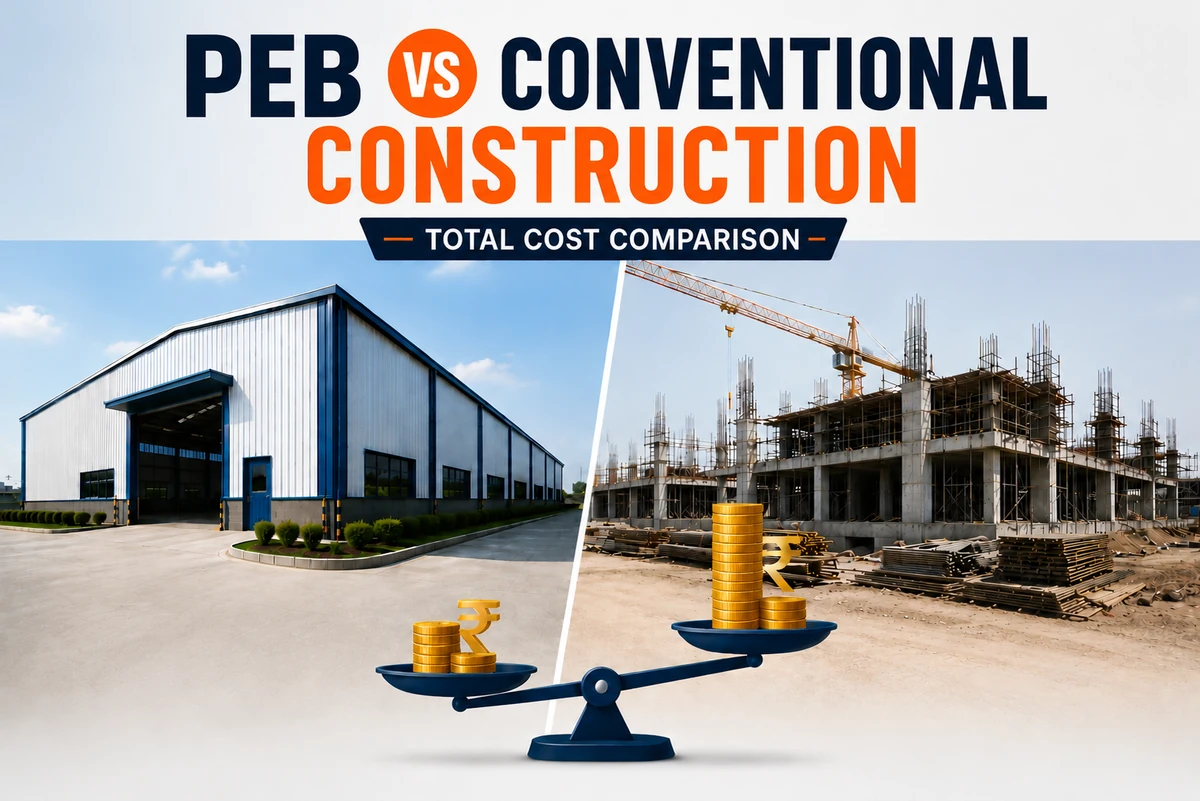
PEB vs Conventional Construction – Total Cost Comparison
Anyone comparing building options for a warehouse or factory eventually runs into the same debate. Steel structure or traditional brick and concrete. The PEB vs conventional construction question comes up in nearly every planning meeting, and the answer usually depends on more than just the initial quote sitting on the table. Looking at total cost over the life of a building tells a very different story than comparing two numbers side by side on day one.
Construction cost is only part of the equation. Time to completion, maintenance over the years, and how well a structure performs under actual working conditions all factor into which option makes better financial sense in the long run.
Table of Contents
- Understanding PEB vs RCC Construction Basics
- Comparing PEB vs Traditional Construction Timelines
- Running a Proper PEB Construction Cost Comparison
- Pre Engineered Building vs Conventional Building Structural Differences
- PEB Building Cost vs RCC Over the Full Lifecycle
- PEB vs Conventional Warehouse Construction for Logistics Use
- Key PEB Construction Benefits Worth Weighing
- Understanding PEB Building Cost in India Regionally
- Final Verdict on PEB vs Conventional Building Cost
- Final Thoughts
- Frequently Asked Questions
Understanding PEB vs RCC Construction Basics
Before getting into numbers, it helps to understand what separates these two approaches. PEB vs RCC construction comes down to how the structure gets built. RCC, reinforced cement concrete, involves pouring concrete on site, curing it over weeks, and building up walls and columns layer by layer. PEB structures use steel components fabricated in a factory, then transported and assembled on site through bolted connections.
This fundamental difference in process shapes almost every other comparison that follows, from timeline to labour cost to how the building performs decades down the line.
Know More: PEB vs RCC Structure
Comparing PEB vs Traditional Construction Timelines
Time is money on any construction site, and this is where PEB vs traditional construction shows one of its biggest gaps. RCC buildings typically take a year or longer for mid to large sized structures, since concrete needs curing time between stages and brickwork progresses slowly compared to bolting together pre cut steel.
PEB structures, built from factory fabricated components, often complete in three to six months for similar sized projects. That difference in timeline means a business can start operations, generate rental income, or begin production months earlier with steel, which directly affects overall project economics beyond just the construction bill itself.
Running a Proper PEB Construction Cost Comparison
A fair PEB construction cost comparison needs to account for more than material and labour on day one. Financing costs during construction, for instance, run for a shorter period with PEB simply because the build finishes faster, which reduces total interest paid on construction loans.
Labour cost also differs meaningfully. RCC construction typically requires a larger workforce over an extended period, masons, carpenters for shuttering, and general labour for weeks at a stretch. PEB projects need fewer people on site since most of the heavy fabrication work already happened at the factory before anything reached the location.
Check Out: Hidden Costs in PEB Construction
Pre Engineered Building vs Conventional Building Structural Differences
Structurally, a pre engineered building vs conventional building comparison reveals some clear advantages for steel. PEB structures allow much longer column free spans, which means more usable floor area without support columns breaking up the space. This matters a lot for warehouses and factories where open floor plans support better racking layouts and equipment movement.
Conventional RCC buildings, by contrast, often need more frequent columns to support the same span, reducing usable floor area and complicating internal layout planning, particularly for facilities that need flexibility to rearrange operations later.
PEB Building Cost vs RCC Over the Full Lifecycle
Looking purely at upfront numbers, PEB building cost vs RCC can sometimes appear similar depending on design specifications and local material rates. The real difference shows up over time. Steel structures generally require less maintenance, since properly coated steel resists weathering far better than plastered walls, which crack and need repainting every few years in most climates.
RCC structures also face higher repair costs as they age, particularly around waterproofing and structural cracks that develop from settling or weather exposure. Factoring in these ongoing costs over a twenty or thirty year period usually tips the total cost comparison further in favour of steel, even in cases where initial quotes looked evenly matched.
PEB vs Conventional Warehouse Construction for Logistics Use
For warehouse and logistics facilities specifically, PEB vs conventional warehouse construction almost always favours steel due to the operational demands involved. Warehouses need tall clear heights for racking, wide open floors for material movement, and structures capable of handling constant equipment traffic day after day. PEB buildings are essentially designed with these exact requirements in mind, while RCC structures often need additional reinforcement and design work to match the same functional specifications.
Faster construction also matters more in logistics, where delays directly translate into lost storage capacity or missed contracts with clients needing space urgently.
Key PEB Construction Benefits Worth Weighing
Several recurring PEB construction benefits show up consistently across cost comparisons, regardless of project size or location.
- Shorter construction timelines that reduce financing and labour costs
- Long column free spans that maximise usable floor space
- Lower long term maintenance thanks to durable, properly coated steel
- Easier future expansion without major demolition of existing structure
- Reduced material wastage since fabrication happens under controlled factory conditions
- Better resistance to certain structural issues like cracking that affect masonry over time
Each of these benefits contributes to a stronger overall financial case, particularly when the comparison extends beyond just the first year of construction cost.
Understanding PEB Building Cost in India Regionally
PEB building cost in India varies quite a bit by region, influenced by steel prices, local labour rates, and transport distance from fabrication units to the actual construction site. States with established industrial infrastructure tend to offer more competitive PEB pricing due to shorter supply chains, while remote locations see higher costs purely from logistics involved in getting steel components to site.
RCC costs follow a similar regional pattern, though the impact of location tends to be somewhat different since concrete and brick sourcing usually happens more locally compared to steel, which often travels from a centralised fabrication facility.
Final Verdict on PEB vs Conventional Building Cost
When the full picture gets considered, construction speed, labour requirements, long term maintenance, and structural flexibility, the PEB vs conventional building cost comparison generally favours pre engineered steel structures for most industrial and warehouse applications. RCC still holds relevance for certain building types, particularly smaller structures or projects where architectural design flexibility matters more than speed or open floor space.
For anyone building a warehouse, factory shed, or large scale storage facility, running the numbers across the full project lifecycle rather than just the initial quote usually makes the financial case for steel construction fairly clear.
Final Thoughts
Choosing between PEB and conventional construction comes down to weighing upfront cost against long term value rather than focusing on a single number from an early quote. Faster build times, lower maintenance, and better space utilisation consistently push total cost of ownership in favour of steel for most industrial and logistics projects, even when initial pricing looks comparable on paper.
Frequently Asked Questions
1. Is PEB always cheaper than RCC construction?
Not always at the initial quote stage, since specific design requirements and local material rates can shift numbers either way. Over the full project lifecycle, though, PEB usually works out more cost effective due to faster construction and lower long term maintenance.
2. How much faster is PEB construction compared to RCC?
PEB structures typically complete in three to six months compared to a year or longer for similar sized RCC buildings, though exact timelines depend on project size and site conditions.
3. Does PEB construction limit design flexibility compared to RCC?
PEB does have some standard design parameters, but modern PEB systems allow considerable customisation for span, height and layout. RCC still offers more flexibility for complex architectural shapes, though most industrial and warehouse projects do not require that level of design complexity.
Recent Post


Copyright ©2025 All Rights Reserved by nashtechpeb.com