
- By Nashtech PEB Team
- May 13, 2026
- 0 Views
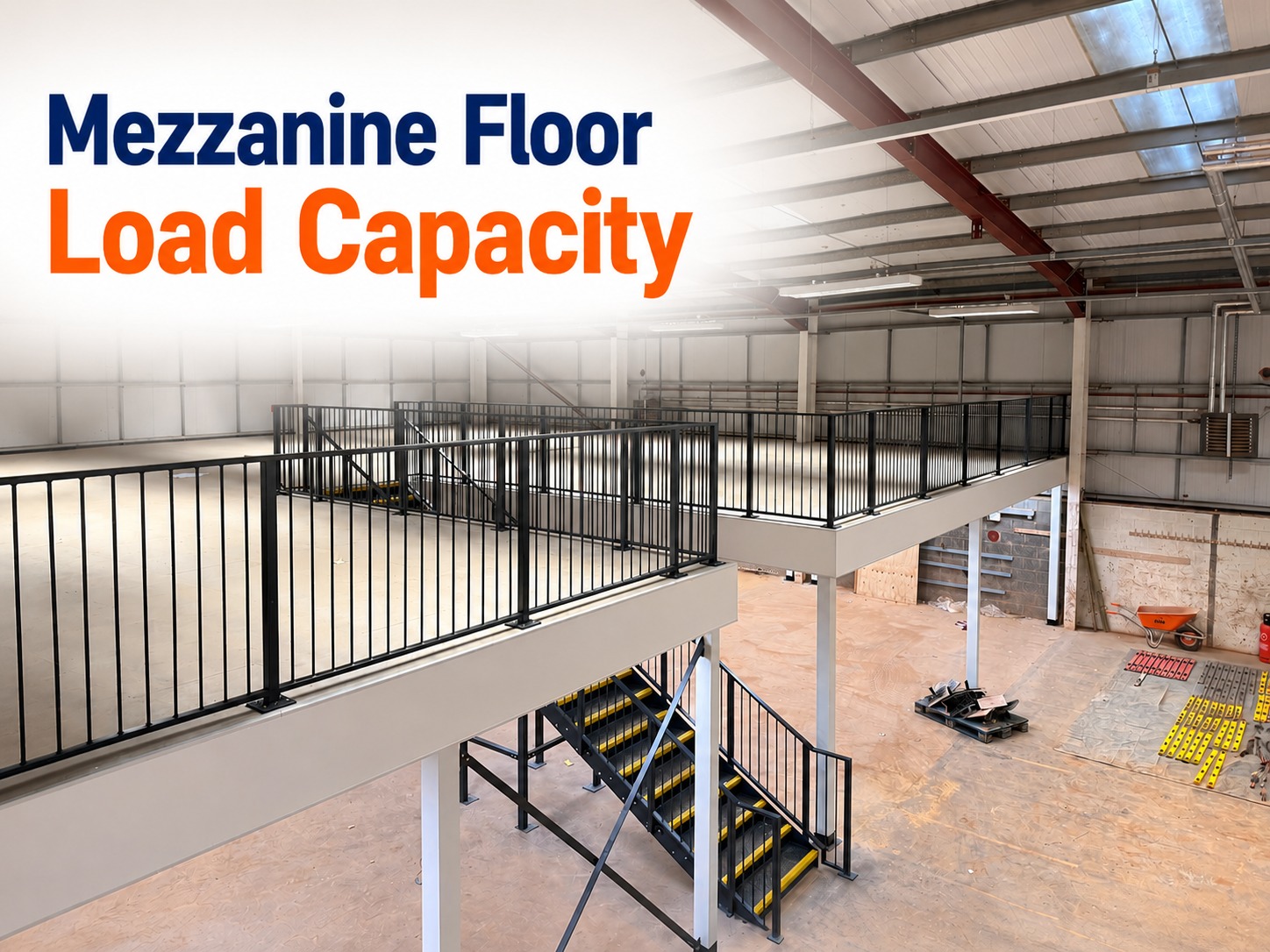
Mezzanine Floor Load Capacity: What Every Warehouse Owner Must Know
Warehouse space can become expensive quickly. As storage capacity increases business owners confront the same challenge that the warehouse remains the same, however the operational demands continue to grow. Some businesses shift to larger warehouses, while others attempt to utilize the space more effectively. This is precisely the case where mezzanine floors can be beneficial. Instead of spreading outward companies can create more useful floors within the building.
But adding a mezzanine floor is not only about creating extra storage. One of the biggest things warehouse owners need to understand is mezzanine floor load capacity. A mezzanine may look simple from outside, but the entire performance of the structure depends on how much load it can safely handle. If load planning is ignored, operational problems start appearing very quickly from structural stress to safety risks and storage limitations.
Table of Contents
- Why Load Capacity Matters in Warehouse Mezzanine Floors
- What is Mezzanine Floor Load Capacity?
- Different Types of Loads Considered in Mezzanine Design
- Why Warehouse Usage Changes Load Planning
- Common Mistakes Warehouse Owners Make
- Materials Used in Warehouse Mezzanine Floors
- Importance of Structural Design in Mezzanine Floors
- Why Column Placement Matters
- Mezzanine Floors in PEB Warehouses
- Industries Commonly Using Mezzanine Floors
- Safety Considerations in Mezzanine Floor Construction
- Why Professional Design Matters
- Future of Mezzanine Floors in Warehousing
- Conclusion
- FAQs
Why Load Capacity Matters in Warehouse Mezzanine Floors
A mezzanine floor is expected to support daily warehouse activity continuously. That includes:
- Stored goods
- Racks and shelving systems
- Workers moving around
- Trolleys or pallet movement
- Equipment loads in some cases
If the floor isn't built to withstand these forces, the structure could begin to show signs of issues with performance over time.
This is the reason that reputable firms involved in the warehouse mezzanine floor construction take a long time studying how the space will be utilized prior to deciding on the layout.
What is Mezzanine Floor Load Capacity?
In simple terms, mezzanine floor load capacity refers to the amount of weight a mezzanine floor can safely carry without affecting structural stability.
This includes:
- Dead load
- Live load
- Point load in specific areas
For warehouse projects, load calculation becomes more important because storage patterns often change over time.
A warehouse storing lightweight cartons today may start handling heavier industrial products later. That is why proper planning becomes critical during the initial stage itself.
Different Types of Loads Considered in Mezzanine Design
Dead Load
Dead load refers to the weight of the mezzanine structure itself.
This includes:
- Steel beams
- Flooring deck
- Columns
- Railings and accessories
Even before warehouse operations begin, the structure already carries this permanent load.
Live Load
Live load refers to moving or changeable weight placed on the floor during operations.
This may include:
- Inventory storage
- Workers
- Material handling equipment
- Racks and shelving systems
In most warehouse mezzanine systems, live load becomes the most important factor during design planning.
Point Load
Point loads occur when heavy weight is concentrated in one small area instead of being distributed evenly.
Examples include:
- Heavy machinery
- Industrial storage racks
- Pallet stacking zones
Ignoring point load calculations is one of the common mistakes seen in poorly planned mezzanine floors.
Why Warehouse Usage Changes Load Planning
Each warehouse operates in a different way.
A mezzanine floor within an e-commerce warehouse could primarily accommodate lightweight storage containers and industrial warehouses can store machine components or large quantities of inventory.
This is the reason mezzanine floor design for warehouses is not identical for every project.
Some businesses require:
- Light-duty mezzanine floors
- Medium-load storage platforms
- Heavy-duty industrial mezzanine systems
The structure must match actual operational use instead of just maximizing floor area.
Common Mistakes Warehouse Owners Make
Assuming All Mezzanine Floors Are Similar
A common mistake is to assume that every mezzanine floor functions exactly the same way.
In actuality loads requirements can differ greatly dependent on:
- Industry type
- Storage method
- Inventory weight
- Equipment movement
A mezzanine suitable for office storage may fail completely in an industrial warehouse environment.
Ignoring Future Expansion
A lot of warehouse operators design mezzanine floors for current activities.
If storage capacity increases or the type of inventory changes, the floor will not be able to support the demands of operational use.
That is why experienced mezzanine floor manufacturers usually discuss future scalability during planning itself.
Poor Rack Planning
Sometimes, the structure is strong enough, however the wrong rack layout can result in an uneven distribution of load.
This could result in localized stress in certain areas or floors.
Materials Used in Warehouse Mezzanine Floors
Modern mezzanine floors are made of steel as it offers better durability and elasticity.
Typical components include:
- Steel columns
- Beams and joists
- Decking sheets
- Staircases and railings
For industrial applications, steel mezzanine floor systems are usually preferred because they can handle higher loads more efficiently.
Importance of Structural Design in Mezzanine Floors
Good mezzanine floors are not designed only for appearance or storage area. Structural planning plays the biggest role in long-term performance.
During mezzanine floor structural design, engineers generally evaluate:
- Load distribution
- Beam spacing
- Column positioning
- Floor vibration control
- Equipment movement requirements
A properly designed mezzanine floor improves both safety and operational efficiency.
Why Column Placement Matters
Warehouse owners often focus mainly on the storage area, but column placement also affects usability.
Too many columns may:
- Reduce movement space
- Affect forklift operation
- Create storage limitations
At the same time, reducing columns without proper structural planning creates load issues.
This balance is extremely important in industrial mezzanine floor design.
Mezzanine Floors in PEB Warehouses
Today, many warehouses are built using pre-engineered buildings (PEB). Mezzanine floors are commonly integrated into these structures because steel buildings allow easier structural coordination.
A properly planned PEB mezzanine floor system helps businesses:
- Increase storage capacity
- Use vertical space efficiently
- Reduce warehouse expansion cost
This is particularly useful in industrial warehouses and logistics warehouses in which land costs are high.
Industries Commonly Using Mezzanine Floors
Logistics & Warehousing
Distribution centers employ mezzanine floors to store inventory and for operational space.
E-commerce Warehouses
Online retail businesses often require additional storage levels because of increasing inventory volume.
Manufacturing Units
Industrial buildings utilize mezzanine floors to accommodate platforms for machines as well as storage for spare parts or operating areas.
Retail and Commercial Storage
Many businesses use mezzanine systems for stock management inside commercial storage facilities.
Safety Considerations in Mezzanine Floor Construction
The capacity of the load is directly linked to the safety of warehouses.
Some important safety considerations include:
- Proper load calculation
- Anti-slip flooring
- Guard rails and staircases
- Fire safety planning
- Regular structural inspection
If you do not take these aspects into consideration, it could lead to grave operational risks in the future.
Why Professional Design Matters
A mezzanine floor might appear easy after its installation, however the technology behind it is crucial.
Experienced companies involved in warehouse mezzanine floor construction understand how operational requirements affect structural performance.
Good design helps businesses avoid:
- Overloading problems
- Structural instability
- Future modification issues
- Storage inefficiencies
This is why warehouse owners should focus on long-term usability instead of only initial cost.
Future of Mezzanine Floors in Warehousing
Warehousing demand is growing rapidly in India due to:
- E-commerce expansion
- Logistics growth
- Industrial manufacturing
- Supply chain development
As storage needs grow, companies are attempting to utilize the space available in warehouses more effectively.
Due to this, industrial mezzanine floor systems are predicted to be more prevalent in the modern warehouse design.
Conclusion
A mezzanine level isn't simply a new platform within the warehouse. The performance is very dependent on the correct load calculation and structural planning.
Knowing mezzanine floor load capacity can prevent future issues for warehouse operators. The various elements of the rack, from planning to design, determine the space's effectiveness in the long run. Experienced peb manufacturers in India follow the same principle — ensuring every structural element is engineered with precision before installation begins.
A well designed mezzanine level will continue to be a key solution in maximizing the usable space within a warehouse without increasing the building footprint as the warehouses become more storage based.
FAQs
1. What is mezzanine floor load capacity?
It is the weight that mezzanine floors can safely carry during the course of its work.
2. Why is load calculation important in mezzanine floors?
Proper load calculation helps prevent structural stress, safety risks, and operational problems.
3. Which industries commonly use mezzanine floors?
Warehousing, logistics, manufacturing, and e-commerce industries commonly use mezzanine floor systems.
4. Can mezzanine floors be added inside PEB warehouses?
Yes, mezzanine floors are commonly integrated into PEB warehouse structures for additional storage space.
Recent Post



Copyright ©2025 All Rights Reserved by nashtechpeb.com