- By Nashtech PEB Team
- Nov 02, 2026
- 0 Views
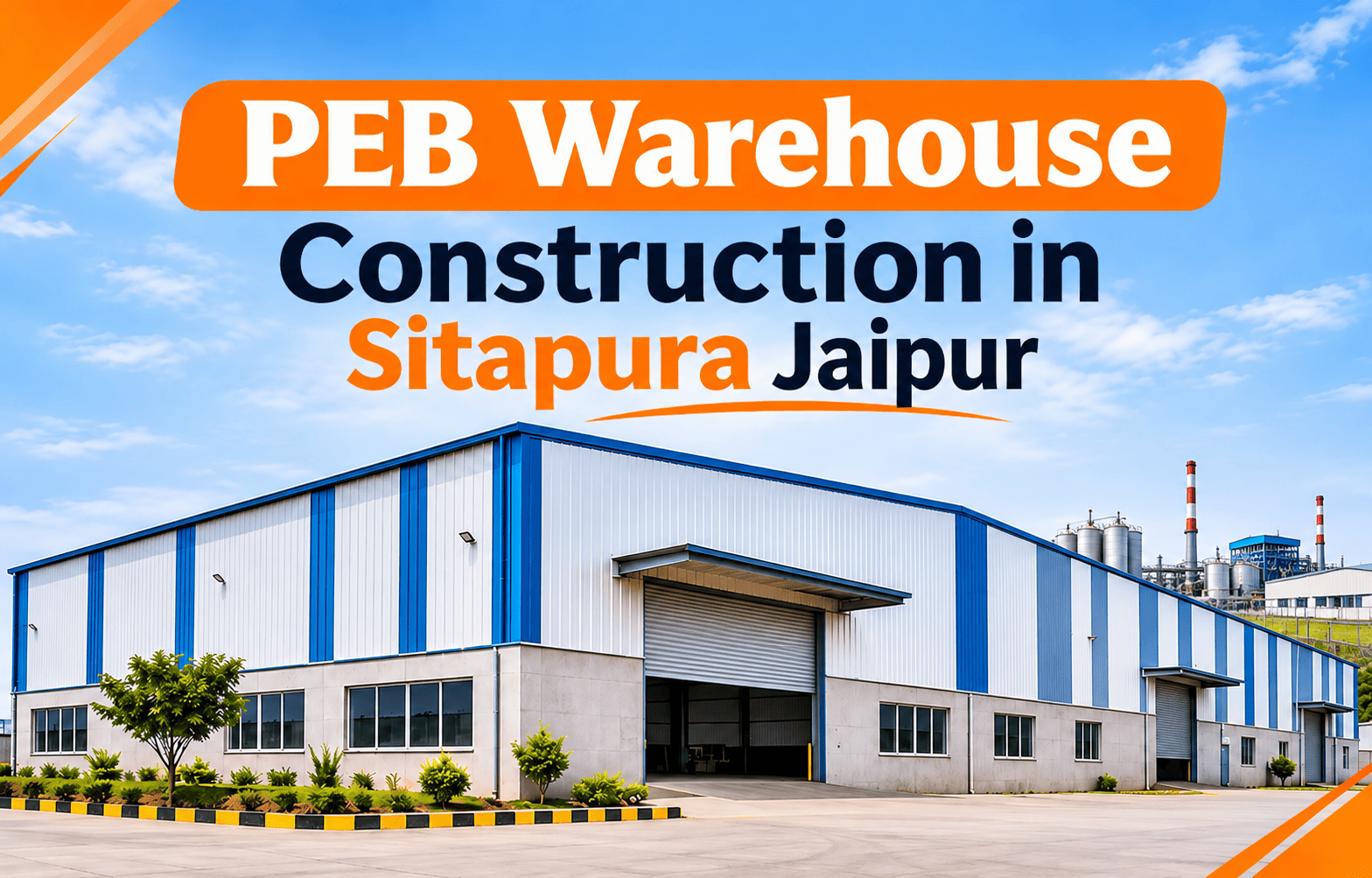
PEB Warehouse Construction in Sitapura Jaipur: Cost and Approval Guide
Explore PEB warehouse construction in Sitapura, Jaipur. Learn about construction costs, RIICO approvals, fire NOC, design, materials and project timelines.
Ask any logistics manager in Jaipur what they struggle with most and the answer is usually space. Stock arrives, orders spike and the godown that looked fine last year is stacked to the roof. For many businesses around Sitapura, the fix is a steel warehouse that’s ready in weeks, not months.
A Pre-Engineered Building (PEB) is fabricated in a factory and assembled on your plot, which makes it a popular choice here. This guide covers what a PEB warehouse in Sitapura, Jaipur involves, what drives the cost and which approvals to sort out before you start.
Table of Contents
- Why Sitapura Works for Warehouses
- Check Your Plot Before Anything Else
- Choosing the PEB Right Size and Layout
- What Drives the Cost of a PEB Warehouse
- PEB Flooring and Foundations
- Keeping the Warehouse Cool and Dry
- Approvals You Should Plan For
- PEB Fire Safety Is Not Optional
- Timeline: What to Expect
- Picking the Right PEB Manufacturer in Jaipur
- Conclusion
- FAQ's
Why Sitapura Works for Warehouses
Sitapura is a RIICO-developed industrial area and RIICO built an Export Promotion Industrial Park here. It sits close to the airport, Tonk Road and the Jaipur-Delhi route, so trucks can get in and out without crossing the city. That’s why you’ll see exporters, handicraft and jewellery businesses, packaging units and distributors setting up here.
A PEB warehouse suits this kind of use. You get a wide, column-free floor for racking and forklifts, quick construction and the option to extend later when stock grows.
Check Your Plot Before Anything Else
Start with the paperwork on the land. Is it a RIICO allotted plot or private land nearby? RIICO plots usually come with conditions on ground coverage, setbacks, permitted activity and construction deadlines. A warehouse is not always treated the same as a manufacturing unit, so confirm that your intended use is allowed under your allotment.
Also look at the plot shape, the width of the access road and the turning space for trucks. A 40-foot container needs far more room than most people picture.
Choosing the PEB Right Size and Layout
Decide what you’ll store and how it will move. A warehouse for loose cartons is very different from one for palletised racking or cold storage.
Sit down with your PEB manufacturer and settle three things early: the clear span, the eave height and the loading dock plan. Taller eaves allow high-bay racking and give you more storage on the same land, which often works out cheaper than buying extra plot. Dock levellers, canopies and truck bays should be planned now, because moving them later is awkward.
What Drives the Cost of a PEB Warehouse
There is no single fair rate and anyone quoting one without seeing your drawings is guessing. Rates in Jaipur change with steel prices, so always get a current written quotation. The main cost drivers are:
- Steel weight, which depends on span, height, bay spacing and design loads
- Roof and wall sheeting, including thickness, coating and colour
- Insulation, since Jaipur summers are harsh
- Foundation and flooring, which depend on soil and racking loads
- Doors, skylights and ventilators
- Transport and erection, based on distance and site access
Ask for a quote that lists steel tonnage, sheet specification and exactly what’s included. Two quotes that look equal in price can hide a big difference in steel quality. Keep a buffer for civil work as well, since foundations, flooring and drainage are often priced separately.
PEB Flooring and Foundations
Warehouse floors take a beating from forklifts and racking. A soil investigation report tells your engineer how deep and wide the footings should be and it’s cheap compared with fixing a settled floor later.
Tell your designer the heaviest load your racking will carry per pallet position. Point loads from racks are far higher than most people expect and they decide the floor thickness and reinforcement.
Keeping the Warehouse Cool and Dry
Summer heat in Jaipur can damage stock and make the building uncomfortable to work in. Use insulated roof sheets or add glass wool or PUF insulation. Ridge-mounted turbo ventilators and translucent skylights reduce heat and cut your lighting bill.
During the monsoon, make sure the gutters, downpipes and plinth height are designed to keep water out. A raised floor level helps a lot.
Approvals You Should Plan For
Approvals are where many projects lose time. The exact list depends on your plot and what you’ll store, but expect to deal with the following:
- Building plan approval, from RIICO for allotted plots, or from the relevant local authority for private land
- Fire NOC, which matters even more for warehouses storing packaging, textiles, plastics, or other combustible goods
- Electricity connection from the discom, plus approval of your load requirement
- GST registration and trade or business licences, depending on your operation
- Pollution control consent, if your activity requires it
Rules and fees change and RIICO has been moving building plan approvals onto online systems. RIICO has said it would adopt an online building plan approval system developed by the state’s Urban Development and Housing Department. Confirm the current process directly with the RIICO Sitapura unit office or a local consultant before you submit anything.
Check Out: Documents Required for PEB Construction Approval in India
PEB Fire Safety Is Not Optional
Warehouses carry a lot of fuel in the form of boxes, pallets and plastic wrap. Plan fire safety into the design, not as an afterthought. That means clear exits, hydrant or sprinkler provisions where required, fire extinguishers, adequate aisle widths and access for fire tenders around the building. Your design and fire NOC requirements should match.
Read More : Fire Safety Requirements for PEB Industrial Buildings
Timeline: What to Expect
Once the drawings are approved and foundations are ready, steel fabrication and erection can move quickly, often within weeks for a standard warehouse. In practice, approvals and civil work decide the real schedule. Start the paperwork while the design is being finalised and you’ll save weeks.
Picking the Right PEB Manufacturer in Jaipur
A supplier who has built in Jaipur knows the wind loads, the soil and the approval process. Visit a finished project, check the steel grade and coating system and ask who handles erection. Request structural design calculations, not just drawings and find out what after-sales support is included.
Conclusion
A PEB warehouse in Sitapura can be a smart, fast and flexible investment, as long as you do the groundwork. Confirm your plot conditions, plan the size and loading layout around real operations, compare quotations on specifications and start approvals early.
Get these right and you’ll have a strong warehouse that can grow with your business.
FAQ's
1.How long does it take to build a PEB warehouse in Jaipur?
Fabrication and erection can take a few weeks for a standard building once foundations are ready. Approvals and civil work often take longer than the steel itself.
2.Do I need a fire NOC for a PEB warehouse?
Usually yes, depending on size, height and stored material. Check the current requirement with the local fire department.
3.Can I build a warehouse on a RIICO plot in Sitapura?
It depends on your allotment terms and permitted use. Check them with RIICO before finalising any design.
4.What affects the cost of a PEB warehouse the most?
Steel weight, roof and wall sheeting, insulation, flooring and transport are the biggest factors. Always get an itemised quotation.
5.Can I extend my PEB warehouse later?
Yes, in most cases. It’s easiest if future expansion is planned in the original design and foundation.
Recent Post
Copyright ©2025 All Rights Reserved by nashtechpeb.com