
- By Nashtech PEB Team
- May 18, 2026
- 0 Views
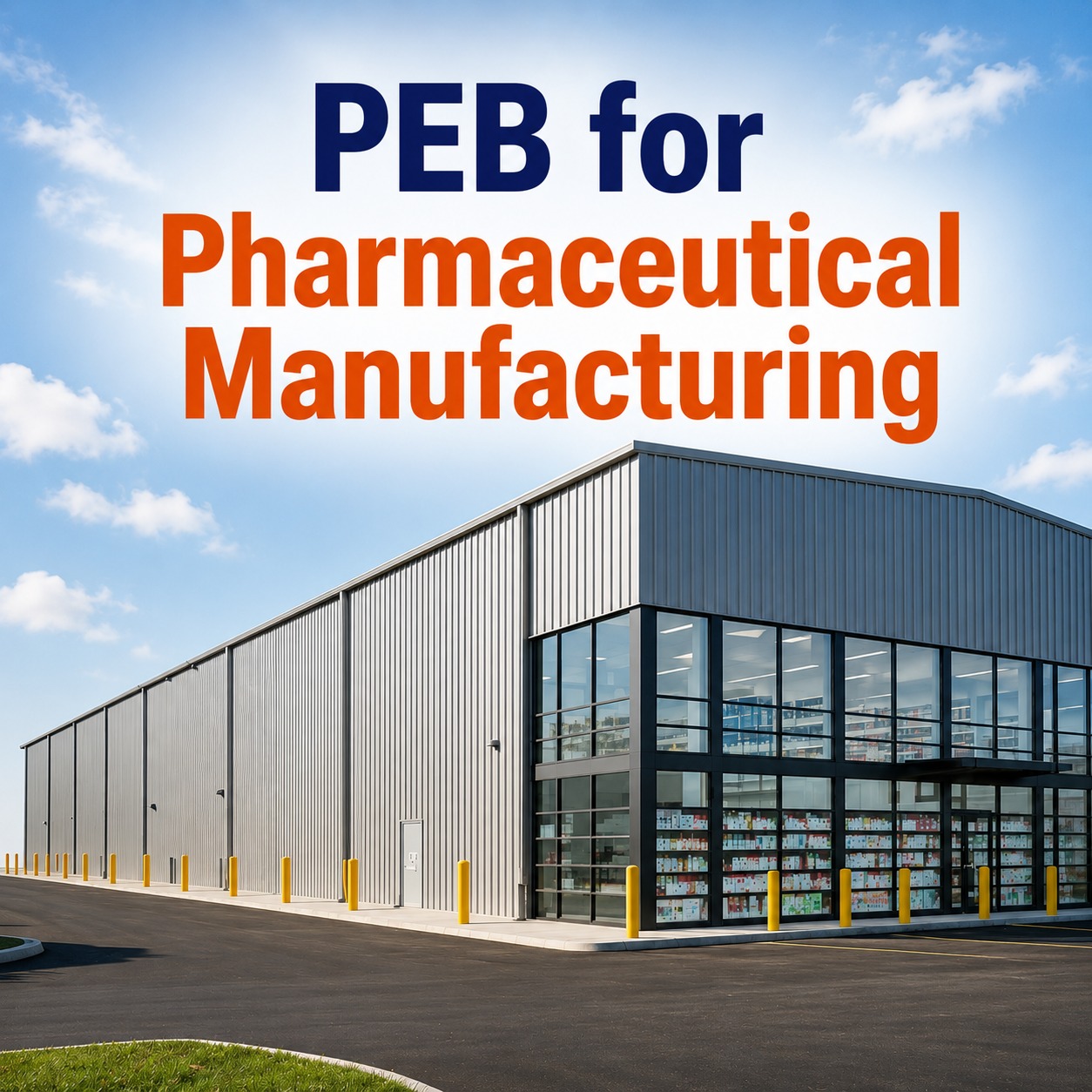
PEB for Pharmaceutical Manufacturing: GMP Compliance & Cleanroom Design
There is no similarity between pharmaceutical manufacturing and regular industrial manufacturing. In most of the factories, the emphasis is primarily placed on the production capacity and operational workflow. However, in a pharmaceutical plant the building itself is used in the manufacture of the product. Product safety is directly impacted by cleanliness, controlled air quality, temperature stability and contamination prevention. This is why pharmaceutical companies invest a significant amount of time in planning their infrastructure even before the construction of the building starts.
Many companies have decided to try pharmaceutical production with PEB over the past several years, as it is quicker to build and provides greater flexibility for a controlled production environment. Previously, most of the pharmaceutical plants were constructed via traditional RCC construction, whereas in the modern industry, pre engineered buildings are becoming increasingly popular for the pharma industry as they are easy to expand, arranged in an organized format, and can easily be integrated into cleanroom systems. In the health sector, speed and efficiency are as crucial as production itself for the development of pharmaceutical companies.
Table of Contents
- Why Pharmaceutical Buildings Need Specialized Design
- What is GMP Compliance in Pharmaceutical Construction?
- Why PEB is Becoming Popular in Pharma Manufacturing
- Importance of Cleanroom Design in Pharma Facilities
- How PEB Supports Cleanroom Construction
- Importance of HVAC Systems in Pharmaceutical PEB Buildings
- Materials Used in Pharmaceutical PEB Buildings
- Why Layout Planning Matters in Pharma Facilities
- Different Areas Inside Pharmaceutical Manufacturing Units
- Why PEB Structures Help Future Expansion
- Benefits of PEB for Pharmaceutical Manufacturing
- Common Mistakes in Pharmaceutical Building Planning
- Industries Using Pharma PEB Buildings
- Future of Pharmaceutical PEB Construction
- Conclusion
- FAQs
Why Pharmaceutical Buildings Need Specialized Design
A pharmaceutical facility cannot be designed like a standard warehouse or factory.
Inside a pharma unit, companies need to control:
- Air contamination
- Humidity levels
- Temperature conditions
- Dust movement
- Cleanroom airflow
Even minor contamination can affect medicines, vaccines, or healthcare products. That is why pharmaceutical infrastructure follows strict standards and controlled operational environments.
This is also why many companies now focus on GMP compliant PEB structures during project planning.
Read More: Mezzanine Floor Construction: Types, Design and Cost in India
What is GMP Compliance in Pharmaceutical Construction?
GMP known as Good Manufacturing Practices. These are the quality criteria that pharmaceutical companies adhere to when making pharmaceutical products.
In construction terms, GMP compliance affects:
- Building layout
- Material selection
- Airflow systems
- Hygiene planning
- Cleanroom separation
The building must support proper operational flow while reducing contamination risks.
That is why pharmaceutical manufacturing facility design requires much more detailed planning compared to regular industrial buildings.
Why PEB is Becoming Popular in Pharma Manufacturing
There are practical reasons behind the increasing use of PEB structures for pharmaceutical manufacturing.
The pharmaceutical industry often expands quickly due to changing production demand. Traditional construction methods can slow down expansion because modifications become difficult later.
PEB structures solve many of these issues because they offer:
- Faster construction
- Flexible layouts
- Easier future expansion
- Better integration with cleanroom systems
Modern pharmaceutical growth needs smarter PEB manufacturing solutions for faster and scalable infrastructure.
This makes them suitable for modern pharmaceutical infrastructure projects.
Importance of Cleanroom Design in Pharma Facilities
Cleanrooms are one of the most important parts of pharmaceutical manufacturing.
A cleanroom is a controlled environment where:
- Air quality is regulated
- Dust particles are minimized
- Temperature and humidity are controlled
- Contamination risks are reduced
Different pharmaceutical products require different cleanroom standards depending on the production process.
This is why cleanroom design in pharmaceutical PEB buildings requires careful planning from the initial stage itself.
How PEB Supports Cleanroom Construction
Steel structures provide flexibility during cleanroom planning.
In PEB pharma buildings, cleanroom sections can be integrated more efficiently because layouts can be customized according to operational flow.
This becomes useful for:
- Production zoning
- Separate operational areas
- HVAC system planning
- Controlled movement pathways
PEB structures also allow easier installation of insulated panels and cleanroom wall systems.
Importance of HVAC Systems in Pharmaceutical PEB Buildings
HVAC systems play a major role in pharmaceutical manufacturing facilities.
They help maintain:
- Controlled air pressure
- Temperature balance
- Air filtration
- Humidity control
Without proper HVAC planning, maintaining GMP conditions becomes difficult.
That is why experienced companies involved in pharmaceutical PEB construction usually coordinate structural planning with HVAC and cleanroom requirements together.
Materials Used in Pharmaceutical PEB Buildings
Material selection becomes very important in pharmaceutical projects because surfaces must support hygiene and easy maintenance.
Common materials include:
- Insulated wall panels
- PUF panels
- Epoxy flooring
- Stainless steel components
- Cleanroom ceiling systems
These materials help maintain cleanliness and controlled operational conditions.
Why Layout Planning Matters in Pharma Facilities
A pharmaceutical plant is not designed only for production machinery.
The layout must also control:
- Employee movement
- Raw material flow
- Finished product handling
- Waste disposal pathways
Poor planning may increase contamination risk.
That is why pharma cleanroom layout planning is treated as a critical part of construction.
Different Areas Inside Pharmaceutical Manufacturing Units
Most pharmaceutical facilities include separate operational zones.
Production Area
This is where medicine or healthcare product manufacturing takes place.
Cleanroom Section
Controlled environments are maintained here according to required standards.
Storage & Warehouse Area
Raw materials and finished products are stored under controlled conditions.
Quality Control Laboratories
Testing and inspection activities are performed here.
Packaging Section
Products are packed and prepared for distribution.
Why PEB Structures Help Future Expansion
Pharmaceutical businesses often increase production capacity over time.
One major advantage of pre engineered buildings for the pharmaceutical industry is easier expansion. Additional sections or operational zones can usually be added more efficiently compared to RCC buildings. This becomes important for companies planning future growth.
Benefits of PEB for Pharmaceutical Manufacturing
Faster Construction
Pharma companies often work with strict timelines. PEB structures reduce construction time because most components are fabricated before arriving at the site.
Flexible Cleanroom Planning
Steel buildings allow better customization for cleanroom integration and airflow systems.
Easier Maintenance
Properly designed PEB pharma buildings are easier to maintain and modify when operational requirements change.
Better Space Utilization
Large clear-span spaces improve workflow and equipment placement inside the facility.
Expansion Flexibility
PEB structures make future production expansion more practical.
Common Mistakes in Pharmaceutical Building Planning
Ignoring Workflow Movement
Operational movement inside the facility must be planned carefully to reduce contamination risks.
Poor HVAC Coordination
HVAC systems and structural planning should work together from the beginning.
Choosing Wrong Materials
Improper material selection can create maintenance and hygiene issues later.
Lack of Future Planning
Some companies only plan for present production needs and later struggle during expansion.
Industries Using Pharma PEB Buildings
PEB structures are now widely used in:
- Medicine manufacturing plants
- Vaccine production units
- Nutraceutical industries
- Healthcare product facilities
- Biotechnology production centers
These industries require controlled environments and organized production layouts.
Future of Pharmaceutical PEB Construction
India’s pharmaceutical industry is growing rapidly, especially in exports and healthcare manufacturing.
As companies continue expanding production capacity, the demand for:
- GMP compliant buildings
- Cleanroom-integrated facilities
- Faster industrial construction
Will continue increasing.
Because of this, PEB for pharmaceutical manufacturing is expected to become more common in modern pharma infrastructure development.
Conclusion
The construction of pharmaceuticals is so much more than just providing industrial space. Results of any design element of the building, ranging from the airflow layout to the cleanroom layout have a direct impact on the quality and safety of the product being manufactured.
That is why many pharmaceutical companies are now opting for PEB structures for pharmaceutical manufacturing. They offer flexibility, quick construction and improved infrastructure planning for GMP.
The pharmaceutical industry in India continues to expand, and pre engineered buildings for pharma will play a major role in contributing towards the efficiency and future preparedness of the pharmaceutical industry manufacturing facilities.
FAQs
1. Why are PEB structures used in pharmaceutical manufacturing?
They provide faster construction, flexible layouts, and easier integration with cleanroom systems.
2. What is GMP compliance in pharmaceutical buildings?
It refers to standards that ensure safe and hygienic manufacturing environments.
3. Why is cleanroom design important in pharma facilities?
Cleanrooms help control contamination, air quality, and operational hygiene.
4. Can pharmaceutical PEB buildings be expanded later?
Yes, PEB structures allow easier future expansion compared to traditional RCC buildings.
Recent Post
Copyright ©2025 All Rights Reserved by nashtechpeb.com