
- By Nashtech PEB Team
- May 27, 2026
- 0 Views
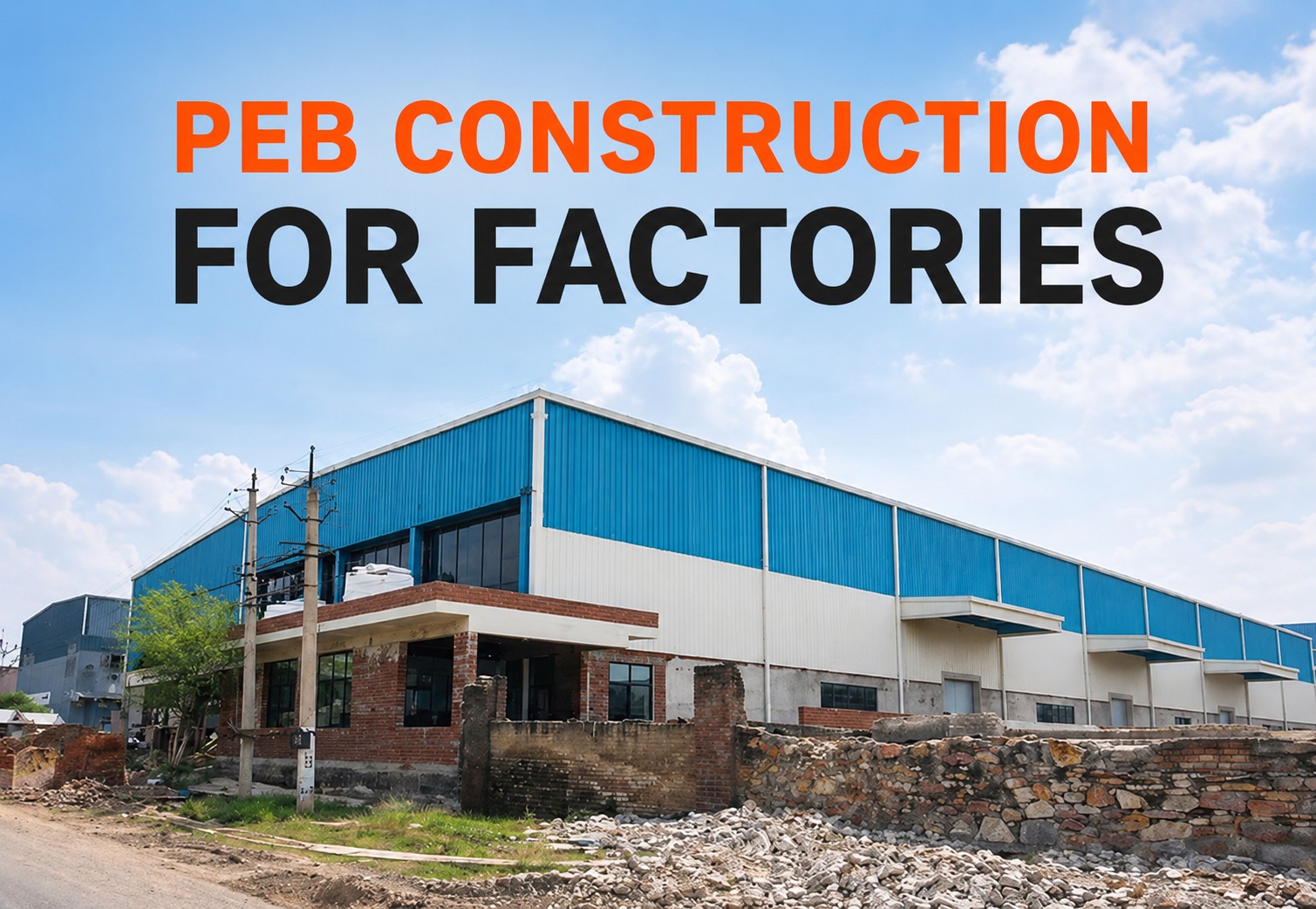
PEB Construction for Factories: Faster Setup & Better Industrial Performance
The construction of factories in India has drastically changed in the past decade. In the past industrial buildings were constructed using standard RCC techniques, projects could take months and sometimes years to be completed. Modern industries do not require lengthy construction times or structures that are difficult to expand in later. Manufacturers are now looking for buildings that are easier to construct, better in terms of performance, and more feasible for future growth. This is among the primary reasons behind why PEB construction for factories is becoming increasingly sought-after throughout India.
Modern factories will accommodate heavy equipment manufacturing pipelines, systems for storage and well-organized operational movements. In addition to functionality, companies additionally focus on speed of construction as well as maintenance costs and longevity. This is where PEB factory buildings offer a major advantage. With faster installation, large clear-span spaces, and flexible layouts, pre engineered factory structures are helping businesses build modern industrial facilities more efficiently than traditional construction methods.
Table of Contents
- What is PEB Construction?
- Why Modern Factories Prefer PEB Construction
- Benefits of PEB Construction for Factories
- Industries Using PEB Factory Buildings
- Why PEB is Better Than Traditional Factory Construction
- Importance of Crane Systems in Factory PEB Buildings
- Sustainability Benefits of PEB Factory Construction
- Growing Demand for PEB Factory Buildings in India
- Future of Factory Construction Using PEB Technology
- Conclusion
- FAQs
What is PEB Construction?
PEB stands for Pre Engineered Building. In this construction method, steel structural components are designed and fabricated before they reach the construction site. Instead of carrying out all structural work at the site, the building framework is manufactured in advance and assembled systematically during installation.
A typical PEB factory structure generally includes:
- Steel columns and rafters
- Roof and wall cladding
- Purlins and girts
- Ventilation systems
- Crane support systems if required
This organized process helps reduce project delays and improves construction efficiency.
Read More: PEB Construction Process Step By Step
Why Modern Factories Prefer PEB Construction
Manufacturing industries today work under strict production timelines and operational targets.
Factories require buildings that support:
- Faster setup
- Efficient workflow
- Large machinery layouts
- Storage integration
- Future expansion capability
Traditional construction often creates limitations because it takes longer and becomes harder to modify later. This is why many industries are now choosing PEB factory construction in India.
Benefits of PEB Construction for Factories
Faster Project Completion
One of the biggest advantages of PEB factory construction is speed.
Traditional factory projects usually involve:
- Long civil work timelines
- Higher labor dependency
- Weather-related interruptions
- Slow structural execution
In comparison, most structural parts in a pre engineered factory building are fabricated before reaching the site. This allows installation work to happen much faster, helping industries start production operations earlier.
Strong and Durable Structure
Factory buildings must handle continuous industrial operations for years.
Modern PEB steel factory buildings are designed to support:
- Heavy operational loads
- Machinery weight
- Wind loads
- Crane systems in some industries
Steel structures also provide better structural consistency and durability when properly designed and maintained.
Cost-Effective Construction Solution
Industries today focus heavily on cost control and operational efficiency.
PEB systems help reduce:
- Construction delays
- Material wastage
- Labor dependency
- Long-term maintenance expenses
Because of this, cost-effective factory construction using PEB is becoming increasingly common in industrial development projects.
Also Read: How to Reduce PEB Construction Cost Without Compromising Quality
Large Clear-Span Spaces
Factories generally require large open areas for production lines, machinery placement, and material movement.
PEB structures support clear-span designs with fewer internal columns, helping create:
- Better workflow movement
- Flexible machine layouts
- Easier forklift operations
- Organized storage planning
This improves overall operational efficiency inside manufacturing facilities.
Easier Future Expansion
Industrial businesses often expand gradually as production demand increases. One major advantage of PEB industrial factory buildings is that future expansion becomes easier compared to traditional RCC structures. Additional bays and structural sections can usually be integrated more efficiently.
Lower Maintenance Requirements
Traditional industrial buildings often develop issues such as:
- Roof leakage
- Structural cracks
- Moisture damage
- Surface deterioration
Modern PEB factory buildings use treated steel and durable cladding systems that require less maintenance over the long term.
This helps industries reduce operational interruptions and maintenance costs.
Better Construction Quality
Most structural components in a pre engineered steel factory building are manufactured in controlled fabrication facilities.
This improves:
- Structural accuracy
- Material quality
- Fabrication consistency
- Construction efficiency
Compared to completely site-dependent construction methods, PEB systems provide more organized execution.
Better Ventilation and Lighting Options
Modern factories need proper airflow and natural lighting for efficient working conditions.
PEB structures can easily include:
- Turbo ventilators
- Skylights
- Ridge ventilation systems
- Insulated roofing panels
This improves the internal working environment inside the factory.
Industries Using PEB Factory Buildings
Automobile Manufacturing
Automobile plants require large-span industrial spaces and crane-compatible structures.
Engineering & Fabrication Units
Heavy fabrication industries use PEB factory sheds for machinery operations and production movement.
Food Processing Units
Food industries require organized layouts and controlled operational spaces.
Pharmaceutical Manufacturing
Many pharma companies now use PEB industrial buildings because they support cleanroom and ventilation planning.
Warehousing & Logistics
Warehouse and factory operations are often integrated inside modern industrial projects.
Why PEB is Better Than Traditional Factory Construction
Traditional factory construction often faces problems like:
- Longer execution time
- Higher maintenance
- Limited flexibility
- Difficulty in future expansion
In comparison, PEB factory construction provides:
- Faster installation
- Better space utilization
- Easier expansion capability
- Organized structural systems
This makes PEB structures more suitable for modern industrial requirements
Importance of Crane Systems in Factory PEB Buildings
Many manufacturing industries require overhead crane systems for material movement.
Modern PEB factory structures can be designed with:
- Crane gantry systems
- Reinforced steel framing
- Crane-support beams
This improves industrial workflow and operational efficiency.
Sustainability Benefits of PEB Factory Construction
Industries today are also focusing more on sustainable construction practices.
PEB systems support sustainability because they:
- Reduce material wastage
- Use recyclable steel materials
- Improve construction efficiency
- Minimize unnecessary site work
This makes eco-friendly factory construction using PEB increasingly relevant in industrial development.
Growing Demand for PEB Factory Buildings in India
India’s industrial sector is expanding rapidly across:
- Manufacturing corridors
- Logistics hubs
- Industrial parks
- Export-oriented industries
As businesses continue focusing on faster setup and efficient operations, demand for PEB factory construction in India is expected to grow steadily.
Future of Factory Construction Using PEB Technology
Modern manufacturing industries now require buildings that support:
- Speed
- Flexibility
- Scalability
- Operational efficiency
PEB technology combines all these advantages together, making it one of the most practical solutions for future industrial development.
As industrial infrastructure continues growing in India, PEB factory buildings are expected to become the preferred choice for modern manufacturing projects.
Conclusion
Factory construction today is no longer only about creating industrial space. Industries now need buildings that support productivity, future expansion, operational efficiency, and long-term durability.
This is why many businesses are moving toward PEB construction for factories. Faster execution, better structural strength, lower maintenance, and cost-effective project planning make PEB technology highly suitable for modern manufacturing facilities.
As India’s industrial growth continues accelerating, pre engineered factory buildings will play an even bigger role in shaping the future of industrial construction.
FAQs
1. What is PEB construction for factories?
It is a factory construction method using pre-engineered steel building systems.
2. Why are factories choosing PEB structures?
Factories prefer PEB structures because they provide faster construction, better durability, and easier expansion.
3. Are PEB factory buildings cost-effective?
Yes, they help reduce construction time, material wastage, and long-term maintenance costs.
4. Which industries commonly use PEB factory buildings?
Automobile, engineering, food processing, pharmaceutical, and manufacturing industries commonly use them.
Recent Post
Copyright ©2025 All Rights Reserved by nashtechpeb.com