
- By Nashtech PEB Team
- Jul 11, 2026
- 0 Views
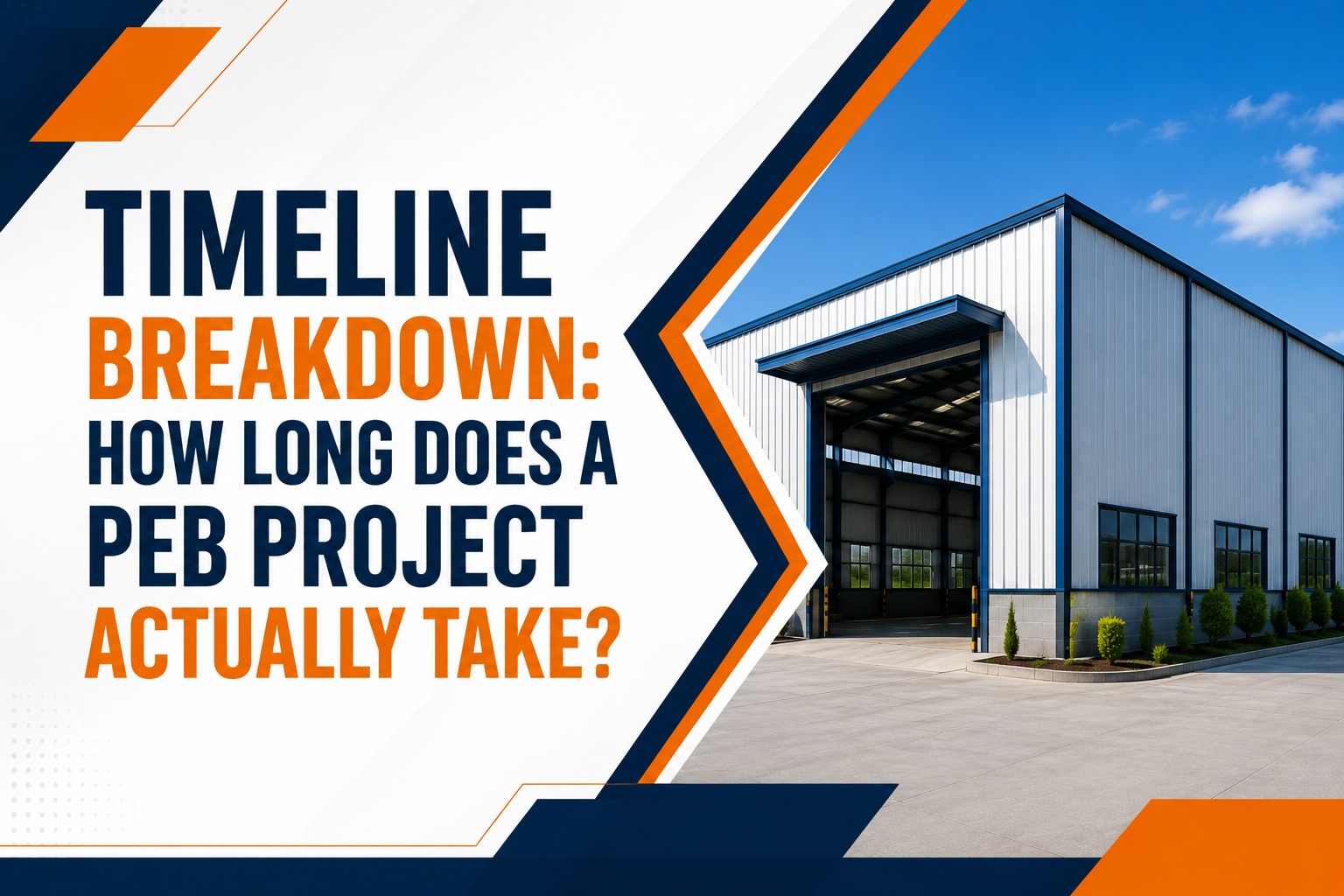
Timeline Breakdown PEB: How Long Does a PEB Project Actually Take?
How long will it actually take? It is usually the first question anyone asks once they have decided on a PEB structure, and honestly, it should be. Money matters, but time is the thing that quietly makes or breaks a project. A delayed warehouse means delayed operations, delayed revenue, and a lot of awkward calls explaining to stakeholders why the shed still isn't ready.
The frustrating part is that the PEB construction timeline India businesses expect rarely gets a straight answer. Talk to three vendors and you'll hear three different numbers - three months from one, six from another, and someone will swear they can hand over the keys in forty-five days. None of them are exactly lying; they're just quoting best-case scenarios, worst-case scenarios, or numbers pulled from a completely different-sized project.
Having tracked these builds from the first site visit to the day the client walks in with the keys, I can tell you the real answer isn't a single number at all. The PEB construction timeline India projects follow depends on several stages, each with its own rhythm, common delays, and practical challenges. That's why one warehouse comes together in ten weeks while a nearly identical one somewhere else takes eight months. So instead of throwing out a vague estimate, let's walk through the PEB project timeline stage by stage and see where the time really goes.
Table of Contents
- Stage 1: Design and Approvals (2 to 6 weeks)
- Stage 2: Fabrication (4 to 10 weeks)
- Stage 3: Civil and Foundation Work (3 to 6 weeks, often parallel)
- Stage 4: Erection and Assembly (3 to 8 weeks)
- Stage 5: Roofing, Cladding, and Finishing (2 to 5 weeks)
- Stage 6: Final Inspections and Handover (1 to 3 weeks)
- So, Realistically, How Long Does It Take?
- FAQs
Stage 1: Design and Approvals (2 to 6 weeks)
Before a single sheet of steel gets cut, there's paperwork and design work to get through. This includes architectural drawings, structural calculations, soil testing reports, and getting the necessary approvals from local authorities. In cities with strict zoning or fire NOC requirements, this stage alone can stretch to six weeks or more. In smaller towns with lighter regulation, it can wrap up in two.
This is also where a lot of people rush things and regret it later. A design finalized too fast usually means changes mid construction, and changes mid construction always cost more time than doing it right the first time.
Stage 2: Fabrication (4 to 10 weeks)
Once the design is locked, the steel members get fabricated, usually in a factory far from your actual site. This is the part of the PEB construction process that's genuinely faster than traditional building methods, since everything from columns to purlins is being manufactured under controlled factory conditions instead of being poured and cured on site.
Fabrication time depends heavily on the order backlog at the manufacturer's plant. A smaller regional fabricator might turn your order around in four weeks. A larger, more in demand manufacturer with a full order book might take closer to ten. If you're planning a PEB warehouse construction timeline around a hard deadline, ask about their current production backlog before signing anything. It matters more than people think.
Read More: Why Prefab Steel Buildings Are Taking Over Construction
Stage 3: Civil and Foundation Work (3 to 6 weeks, often parallel)
While fabrication is happening at the factory, foundation work usually starts on site. This includes excavation, footing construction, anchor bolt placement, and curing time for concrete. Smart project managers run this in parallel with fabrication rather than waiting for the steel to arrive before starting site work, and that overlap is honestly where a lot of time gets saved on a well-managed project.
Concrete curing needs a minimum of about 21 to 28 days for full strength, though partial curing allows some early erection work to begin sooner. Rushing this stage is one of the more common ways projects run into trouble later, since a weak foundation shows up as cracks and settling long after everyone's moved on to other things.
Stage 4: Erection and Assembly (3 to 8 weeks)
This is where the steel building construction timeline really becomes visible to anyone watching. Trucks arrive with pre-cut and pre-drilled members, and a crew bolts the frame together on site. Watching an experienced erection crew work is honestly kind of satisfying, columns go up, rafters get lifted into place, and within days you can see the actual shape of the building.
For a mid sized warehouse, erection typically takes three to five weeks. Larger or more complex structures with mezzanines, cranes, or multiple bays can take six to eight weeks. Weather plays a real role here too. Monsoon delays in coastal or high rainfall regions are common and worth building into your schedule as a buffer, not an afterthought.
Stage 5: Roofing, Cladding, and Finishing (2 to 5 weeks)
Once the frame is up, roofing sheets, wall cladding, insulation, doors, and ventilation systems get installed. This stage also includes electrical rough in, plumbing, flooring work, and painting. It sounds quick on paper but this is often where projects quietly slip behind schedule, mostly because of coordination issues between multiple contractors working the same site at once.
Stage 6: Final Inspections and Handover (1 to 3 weeks)
Before handover, there are usually fire safety inspections, structural certifications, and utility connection sign offs to get through. In regions with heavier bureaucracy, this stage can stretch out unpredictably. Building in a buffer here saves a lot of stress toward the end of the project.
So, Realistically, How Long Does It Take?
Putting it all together, a straightforward pre engineered building construction project, say a mid sized industrial warehouse without major complications, typically takes anywhere from four to seven months from the day design starts to the day you get keys. Simpler structures with quick approvals can be done faster, sometimes in three months. Larger or more complex builds with mezzanines, cranes, or multiple phases can stretch past eight or nine months.
If someone quotes you six weeks for a full warehouse from scratch, ask a lot of follow up questions. It's not impossible for very small structures, but for anything of real industrial size, that number usually means corners are being cut somewhere in the process.
The PEB building construction time advantage over traditional RCC construction is real, often cutting total project duration by nearly half, but it only holds true when each stage is planned and managed properly rather than rushed through to hit an arbitrary date.
FAQs
What is the average PEB construction timeline in India?
For a mid-sized industrial or warehouse project, most builds take between four and seven months from design approval to final handover, though this varies based on location, size, and manufacturer backlog.
Why does PEB construction take less time than RCC construction?
Because most of the structural fabrication happens in a factory while site work like foundations happens in parallel, instead of waiting for each phase to finish one after another like traditional construction requires.
What causes delays in a PEB project timeline?
The most common culprits are approval delays, manufacturer backlog during fabrication, monsoon weather during erection, and poor coordination between multiple contractors during the finishing stage.
Can a PEB warehouse be built faster than four months?
Yes, for smaller structures with quick approvals and available fabrication slots, some projects wrap up in around three months. It's less common for larger industrial builds.
Does foundation work happen before or after the steel arrives?
Ideally both happen at the same time. Foundation and civil work proceed on site while fabrication is underway at the factory, which is one of the biggest reasons the overall PEB construction process is faster than conventional building.
Recent Post
Copyright ©2025 All Rights Reserved by nashtechpeb.com