Open Hours: Mon - Sun 8.00 am - 6.00 pm
khasra no. 1337 behind mama bhanja hotel
PEB Manufacturers in Panipat
Panipat is India's "Cast-off Capital" - the world's largest textile recycling city, processing millions of tonnes of second-hand clothing and fabric waste into shoddy yarn, blankets, and recycled fibre every year. Alongside this unique industrial identity, Panipat sits on NH-44, India's longest national highway connecting Delhi to Kanyakumari, making it one of North India's most strategically located logistics nodes. A rapidly expanding refinery, petrochemical, and thermal power industrial belt adds further dimension to a city that is far more industrially complex than its textile reputation suggests. Nashtech PEB has been building Wind Zone IV compliant pre-engineered steel structures for Panipat's textile recycling units, logistics parks, and heavy industrial facilities since 2013.

India's Cast-off Capital - Three Industries, One City
Most people know Panipat from the three battles that shaped the subcontinent. The industrial world knows it differently: as the city that processes the world's discarded clothes into usable fibre, yarn, and blankets at a scale no other city on earth can match. Over 400 textile recycling units operate in and around Panipat, sorting, shredding, and reprocessing post-consumer textile waste from Europe, the US, and domestic sources. The shoddy industry as it is called locally employs hundreds of thousands and generates billions in annual revenue.
But Panipat is not just textiles. The city hosts India's largest grassroots petroleum refinery Indian Oil Corporation's Panipat Refinery, one of the country's biggest along with a naphtha cracker complex and petrochemical unit. The National Fertilizer Limited (NFL) plant and a major thermal power station add further industrial weight. This heavy industrial belt has its own construction requirements process sheds, maintenance workshops, chemical storage structures, and ancillary manufacturing units that are distinct from the recycling industry's needs.
And threading everything together is NH-44 — India's longest national highway, running from Srinagar to Kanyakumari, passing directly through Panipat. This makes Panipat one of North India's most important logistics staging points, sitting 90 km from Delhi and on the primary freight route to Punjab, Haryana, and beyond. Logistics parks, cold chain facilities, and distribution centres are building out rapidly along both sides of this corridor. Nashtech PEB serves all three of Panipat's industrial identities: textile recycling, heavy industrial, and NH-44 logistics from our fabrication base in Bagru, Jaipur, approximately 6-7 hours from Panipat via NH-48 and NH-44.
NH-44 - India's Longest Highway is Panipat's Logistics Superpower
Panipat's position on NH-44 at 90 km from Delhi and on the freight corridor to Punjab, Himachal Pradesh, Jammu, and beyond makes it a natural distribution staging point. Logistics parks and cold chain facilities being developed along Panipat's NH-44 interchange zones benefit from some of the lowest land costs within 100 km of Delhi a window that is closing as land prices rise. Nashtech PEB builds large-span warehouses for this corridor with the speed that location-driven logistics investments require.
Site Visit for Panipat Projects
We schedule site visits for Panipat industrial projects within 48–72 hours of your enquiry. Our team evaluates the plot location, site access, soil conditions, utility availability, and project requirements before preparing the structural design and project proposal.
Industrial Areas & Zones We Serve in Panipat
From the dense textile recycling clusters of Panipat city to the refinery complex on the outskirts, the HSIIDC estates to the NH-44 logistics corridor Nashtech PEB serves Panipat's full and varied industrial geography.
Panipat Textile Recycling Cluster
The core of Panipat's shoddy industry is hundreds of sorting, shredding, spinning, and weaving units concentrated in and around Panipat city. Structural requirements here are dominated by wide-span sorting sheds, shoddy yarn spinning factory sheds, blanket weaving units, and bale storage warehouses. Fire safety design and dust extraction ventilation provisions are critical in this sector.
HSIIDC Industrial Estate - Panipat
The Haryana State Industrial and Infrastructure Development Corporation estate in Panipat hosts engineering goods, auto ancillary, packaging, and light manufacturing units. Active demand for factory sheds, expansion bays, and finished goods warehouses for both established manufacturers and new industrial allottees.
Panipat Refinery & Petrochemical Complex
Indian Oil Corporation's Panipat Refinery is one of India's largest grassroots refineries. The refinery and its associated naphtha cracker and petrochemical complex generate constant demand for ancillary industrial structures maintenance workshops, chemical storage sheds, contractor fabrication yards, and warehouse facilities for refinery operations and turnaround management.
NFL & Fertiliser Belt
National Fertilizer Limited's Panipat plant and associated chemical storage and distribution infrastructure require industrial sheds and warehouses built to chemical storage compliance standards. Nashtech PEB builds fertiliser and agri-input storage structures that meet PESO and state authority requirements for bulk chemical storage.
NH-44 Logistics & Warehousing Corridor
Both sides of NH-44 through Panipat are actively developing as logistics park and warehousing real estate driven by low land costs relative to Delhi NCR and excellent highway connectivity north and south. Large-span PEB warehouses with dock provisions and modern internal heights are the dominant structure type in this rapidly growing corridor.
Samalkha & Surrounding Industrial Belt
Samalkha, adjacent to Panipat on the NH-44 corridor, has its own HSIIDC estate and growing industrial activity in food processing, packaging, and light manufacturing. Its position between Panipat and Sonipat makes it part of the same logistics and industrial corridor that Nashtech PEB serves as a continuous belt.
PEB Structures We Build in Panipat
Industrial buildings for Panipat's textile sector require wide-span layouts, proper ventilation, and sufficient height for efficient material handling and storage. Textile recycling, warehousing, and processing units also need designs that support safe operations and smooth workflow. Nashtech PEB plans every structure according to the specific needs of the industry and the project site.
Textile Sorting & Recycling Sheds
Wide-span sorting halls (20–30m clear span), shredding and spinning factory sheds, and blanket weaving units with open-ridge ventilation for fibre dust management. Fire-rated cladding options for high-combustibility textile waste environments. Export-audit compliant structural documentation included.
Bale Storage Warehouses
High-clearance PEB warehouses (6–8m eave height) for compressed textile bale stacking maximising vertical storage density without the column obstructions that disrupt forklift and bale handler movement. Wide door openings for bale transport vehicles.
Logistics & Distribution Warehouses
Large-span, column-free warehouses for logistics operators, FMCG distributors, and cold chain operators along the NH-44 corridor. Dock-level loading provisions, modern internal heights, and insulation options for temperature-sensitive goods.
Refinery & Petrochemical Ancillary Structures
Maintenance workshops, contractor fabrication yards, chemical storage sheds, and turnaround inventory warehouses for the Panipat Refinery complex built to IOC contractor specification standards with fire-rated cladding and appropriate structural documentation.
Industrial Factory Sheds
General-purpose PEB factory sheds for HSIIDC estate units engineering goods, auto ancillary, packaging, and food processing. Single and multi-bay configurations with crane integration available for heavier manufacturing requirements.
Cold Chain & Agro Storage
Insulated by PEB warehouses and cold storage shells for Panipat's food processing and agri-commodity sector, the city sits in Haryana's productive agricultural belt. Pre-insulated panel systems with proper vapour barrier design for temperature-controlled storage.
How Industrial Buildings Are Being Developed in Panipat's
Industrial Growth Is Expanding Beyond Textiles
Panipat is known for its textile industry, but the city is also growing in logistics, engineering, petrochemicals, and manufacturing. This steady expansion has increased the demand for industrial construction in Panipat, with businesses looking for durable and efficient industrial buildings.
Factory Buildings Are Planned Around Daily Operations
Every manufacturing unit has different production requirements. That's why factory shed construction in Panipat focuses on machinery layout, storage space, ventilation, and smooth movement of raw materials and finished products.
Warehousing Is Growing Along NH-44
Panipat's location on NH-44 has made it an important logistics destination in North India. Many industrial warehouse construction projects in Panipat are designed with large clear spans, loading docks, and easy truck access to support modern supply chain operations.
Businesses Need Faster Project Completion
Manufacturers and warehouse operators often work with strict timelines. Because of this, PEB construction in Panipat is becoming the preferred option as it reduces construction time while maintaining structural quality.
Buildings Are Designed for Long-Term Use
Industrial buildings today are planned with future expansion in mind. Whether it's adding a warehouse, production bay, or office section, the structure can be extended with minimal disruption to existing operations.
Proper Execution Improves Project Quality
A successful project depends on proper planning, fabrication, civil work, and erection. Experienced PEB manufacturers in Panipat follow a structured execution process that helps complete projects on time while maintaining consistent quality.
Why Panipat Businesses Choose Nashtech PEB
For textile recycling units upgrading for export compliance, logistics operators on NH-44, refinery ancillaries, and HSIIDC industrial investors across Panipat.
Specific structural knowledge of the textile recycling industry wide sorting spans, fibre dust ventilation, fire safety design, bale warehouse heights, and export-buyer audit documentation.
All Panipat structures designed for Wind Zone IV with internal pressure calculations for large-door sorting sheds and high-eave bale warehouses, the two most wind-critical structure types in the city.
IS 800 and IS 1893 compliant drawings with full wind load documentation accepted by HSIIDC, Haryana DTCP, and export buyer audit teams for supplier facility compliance checks.
End-to-end from soil testing through to handover with documentation one contractor, one timeline, full accountability across civil, fabrication, erection, and compliance paperwork.
How We Execute PEB Projects in Panipat
An 8-step process built around Panipat's specific requirements: Wind Zone IV large-door pressure calculations, fibre dust ventilation design for textile sheds, alluvial Gangetic plain soil profiles, and export-audit-ready documentation.
1. Site Visit & Sector Assessment
We visit your plot within 48–72 hours. For textile recycling clients, we assess the planned process layout at this stage: sorting line orientation, shredding unit position, bale storage area because ventilation design and door placement are structural decisions that must be made before the first drawing is prepared.
2. Soil Testing
Panipat sits on the Indo-Gangetic alluvial plain generally workable soil with good bearing capacity in most industrial zones, but with variable profiles near the Yamuna flood plain to the east. Soil testing confirms bearing capacity and depth before foundation design. For the large-footprint structures common in Panipat, column loads are significant and foundation design must be based on tested data.
3. Wind Zone IV Design with Internal Pressure Calculation
Structural design to Wind Zone IV per IS 875 Part 3. For sorting sheds and bale warehouses with large door openings, we calculate the open-door internal pressure coefficient separately; this significantly increases load on the upwind wall and roof, and must be designed explicitly. Cladding fastener layout and door frame reinforcement specified accordingly.
4. Ventilation Design for Textile Units
For textile recycling clients, ventilation system type and sizing is confirmed at design stage: open ridge ventilation for sorting halls, mechanical exhaust integration provisions for shredding units, and side-wall louvre positioning for cross-ventilation. These are structural features built into the PEB frame not afterthought additions to a completed shell.
5. Fabrication & Dispatch
Fabrication at our Bagru, Jaipur facility. Dispatch to Panipat approximately 6-7 hours via NH-48 and NH-44. The NH-44 route is Panipat's main material; its materials arrive on the same corridor that feeds the client's commercial operations, with no unusual routing or cross-country haul required.
6. Foundation & Civil Work
Foundation constructed to soil-tested design. For large-span sorting halls and bale warehouses, column footings are proportioned for the actual wind uplift loads calculated in Step 3 not standard generic sizes. Anchor bolt placement and base plate levelling verified before erection begins.
7. Steel Erection & Cladding
Sequential erection of primary frames, secondary framing, purlins, and girts. For textile units, ridge ventilators and louvre panels are installed as part of the standard erection sequence, not as a separate fit-out phase. For logistics warehouses, dock frame boxes and high-bay door frames are installed to approved layout during erection.
8. Handover with Export-Audit Documentation
Handover documentation includes as-built drawings, structural calculation report (wind Zone IV), foundation design, maintenance manual, and for textile recycling clients a ventilation design summary that can be submitted to export buyer auditors as part of the factory compliance file.
PEB Structure Cost Per Sq Ft in Panipat
PEB construction costs in Panipat depend on the building type, span, height, ventilation needs, and project specifications. Final pricing is prepared after a site visit, soil testing, and a detailed assessment of the project requirements.
| Structure Type | Typical Span | Cost Per Sq Ft | Note |
|---|---|---|---|
| Textile Sorting / Recycling Shed | 20m – 30m clear span | ₹340 – ₹600 | Ridge ventilation & fire-rated cladding included |
| Bale Storage Warehouse | 18m – 30m clear span | ₹310 – ₹560 | High eave height; Wind Zone IV fastener spec |
| Logistics / Distribution Warehouse | 24m – 36m clear span | ₹300 – ₹550 | Column-free; dock & insulation available |
| Factory / Industrial Shed | 12m – 24m clear span | ₹300 – ₹550 | HSIIDC estate units; crane integration available |
FAQ's
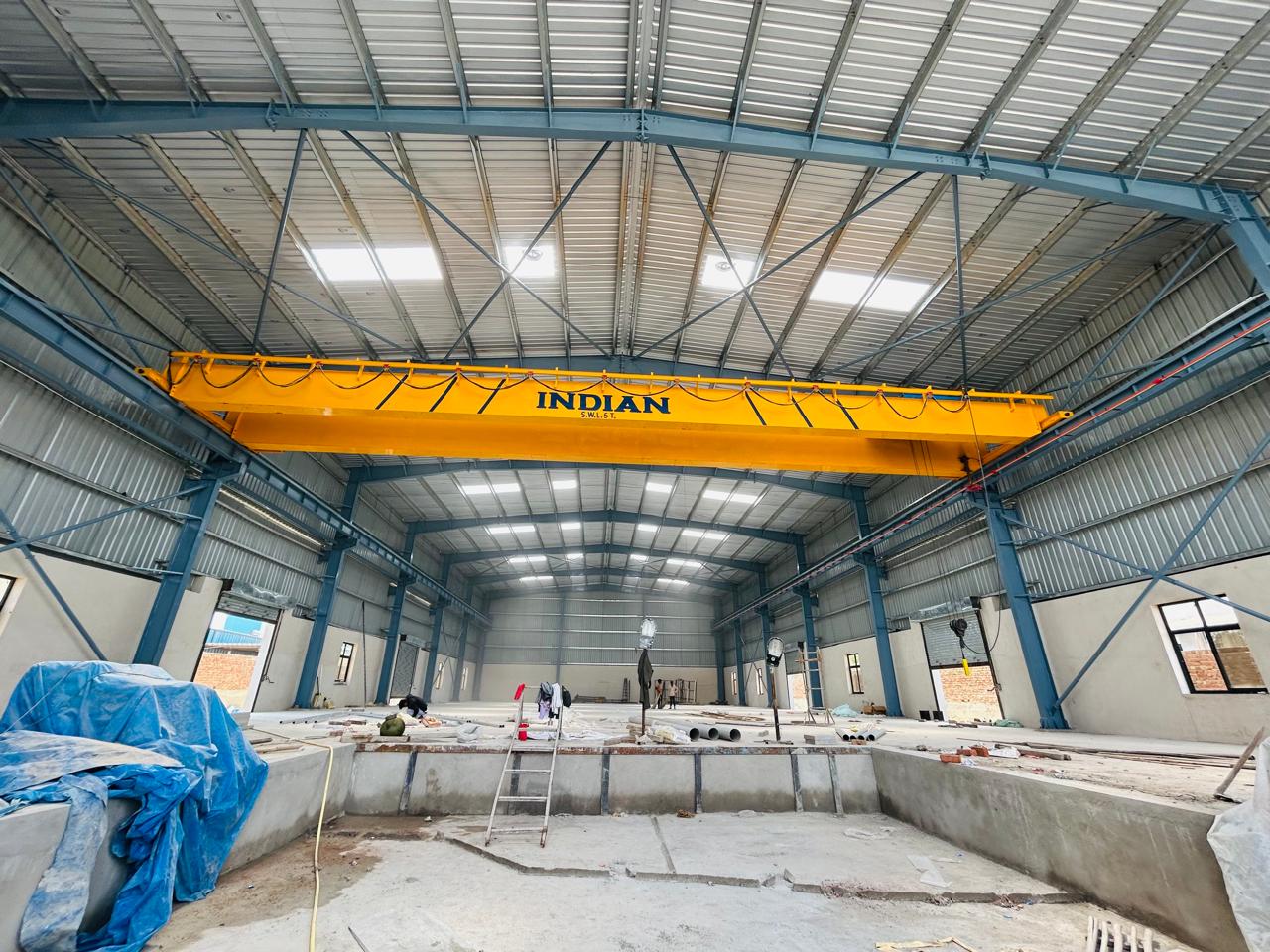
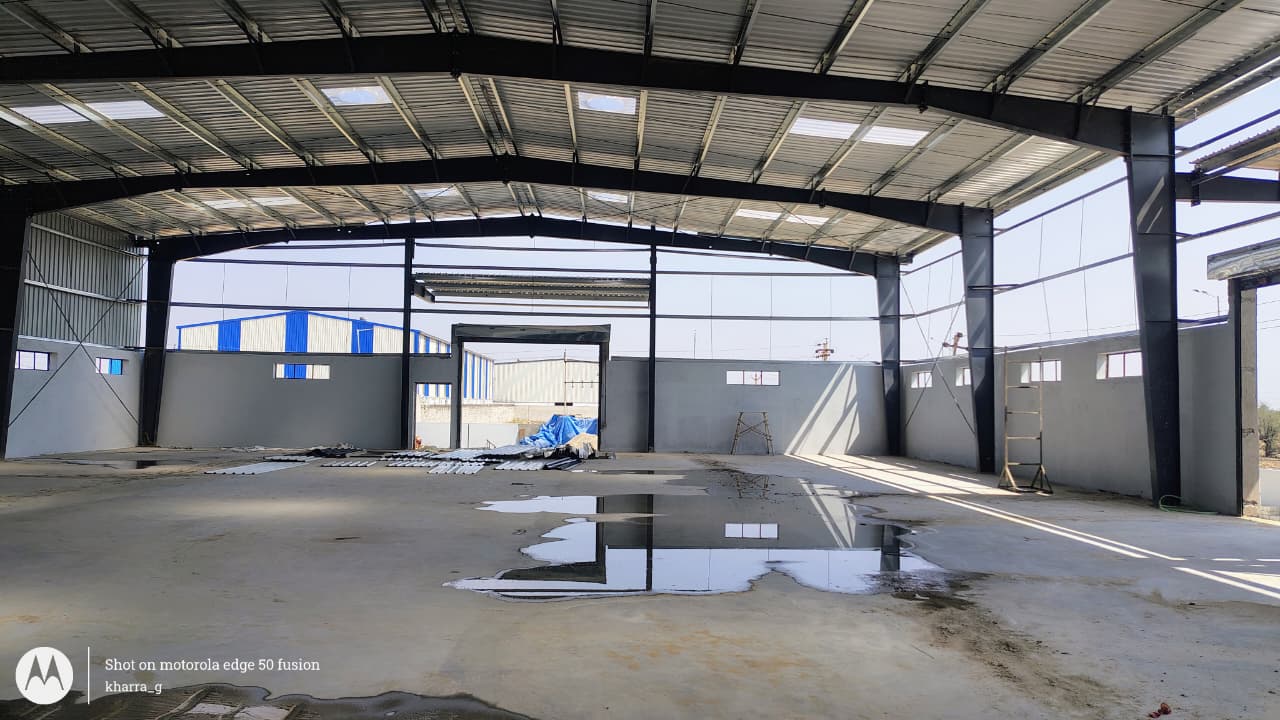
Our Completed PEB Projects
Industries We Serve
in Panipat & NH-44 Belt
From world-scale textile recycling and spinning to petrochemicals, logistics hubs, and agricultural processing.
Send Project Details
Drop your requirements here, and our Panipat technical team will review and revert quickly.
Contact Nashtech
Jaipur, Rajasthan 303007
Copyright ©2025 All Rights Reserved by nashtechpeb.com